


Without media integrity, elections mean little for democracy

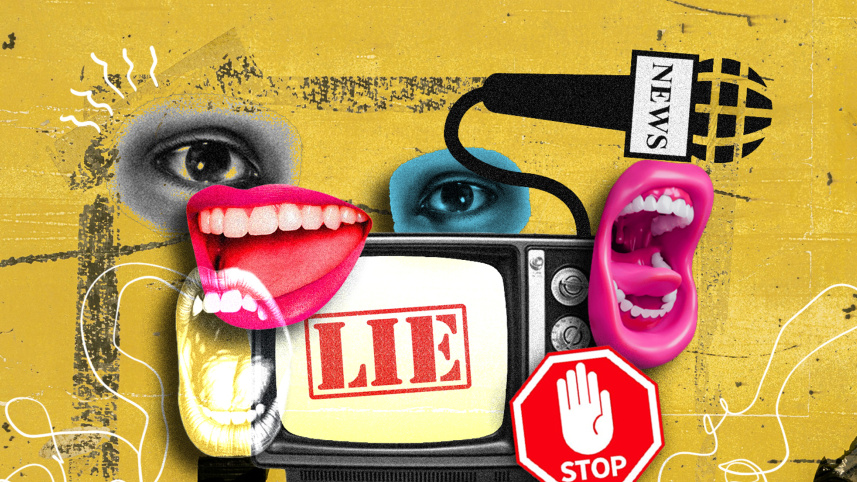
The 2026 election in Bangladesh was the first big political test after the July uprising, and it reminded us of something very basic: elections are not decided only inside polling booths. They are also decided in the information environment that surrounds voters in the weeks and months before they cast their ballots.
Bangladesh now has more information than at any time in its history. Many people use smartphones. News websites and YouTube channels are multiplying. Social media has become the main gateway to news for large parts of the population. This has created an abundance of information, but abundance does not automatically produce trust. Instead, we are living in what scholars call an “information disorder” where professional journalism, partisan propaganda, coordinated disinformation, and rumours flow through the same channels and fight for the same attention, often crowding out real information.
 For all latest news, follow The Daily Star's Google News channel.
 The February election made this disorder visible in a very concrete way. In the nights before polling day, fact-checking groups like Dismislab, Rumor Scanner and FactWatch ran live debunking operations and flagged dozens of false claims circulating on Facebook and Telegram, from fabricated ballot-stuffing videos to forged statements about lockdowns and polling centre closures. The Daily Star logged 24 pieces of election-related disinformation in one night and later documented 100 separate items on polls day, including photocards mimicking news agencies, edited videos, and several deepfakes.
So, the first lesson here is straightforward: access is not the problem anymore. The real question is the integrity of the information that people actually receive and trust.
The information disorder around the election did not appear in a vacuum. It emerged in a media environment already shaken by structural and political challenges. For instance, in December 2025, mobs attacked the offices of Prothom Alo and The Daily Star in Dhaka and set the building on fire. Journalists were trapped for hours. These attacks were not only about two media houses. They sent a broader message that journalism could be punished physically for taking the “wrong” line.
Unsurprisingly, both local and international actors reacted. Unesco publicly expressed concern about the safety of journalists in the run-up to the 12 February vote, pointing to recent attacks on media outlets and to the wider risks reporters face during political crises. A coalition led by ARTICLE 19 and other organisations submitted recommendations to the Election Commission and Unesco, calling for specific measures to protect journalists’ safety and working conditions during the electoral period.
Even before the election, Unesco and local partners have tried to build some protective infrastructure offering journalists mental health support and assistance with legal harassment and threats.
Efforts such as this matter because, as many reporters will admit, physical, legal and psychological safety shape what can be reported at all. When newsrooms have to worry about arson and court cases, investigative journalism and critical commentary are usually the first to suffer. Unesco’s global trend reporting notes that worldwide, freedom of expression has declined and self-censorship among journalists has risen sharply in the last decade. Bangladesh fits into this wider pattern.
The other side of the story—much less visible but just as important—is the political economy of media. The Media Resources Development Initiative (MRDI) has pointed out how fragile many Bangladeshi outlets have become. A 2022 MRDI-linked trust survey found that audiences increasingly rely on online and social media sources while remaining wary of their accuracy. In addition, it documented the tension between the need for clicks and the duty to verify.
One common theme in both international research and local commentary is that more voices do not automatically mean better democracy. The current media environment offers a wide range of outlets and pages, from mainstream newspapers to partisan YouTube channels and anonymous Telegram groups. The problem is that this diversity is layered on top of algorithmic incentives that reward outrage and emotional content. Moreover, Bangladeshi editors and legal experts have warned that bots and coordinated networks can create a false impression of “public opinion,” which then puts pressure on politicians and journalists alike. And the mix of domestic and cross-border disinformation is not unique to Bangladesh. Because of this, the debate on media integrity cannot stop at “more access.” What citizens need is access to information that is accurate, contextualised and credible enough to help them make choices. In a country where smartphone use is widespread but digital literacy is uneven, that is not a small task.
The 2026 election showed both the potential and the limits of this approach. Fact-checking organisations debunked dozens of viral claims in real time. Many media outlets amplified this work. Yet undecided voters remained a primary target for disinformation campaigns that exploited religious identity, nationalism, and fear of instability. Media literacy helps, but it cannot carry the full burden when economic incentives and political interests pull in the opposite direction.
The 2026 election has seen turnout above 60 percent, and that in itself is a sign that citizens still care about formal politics and are willing to queue to express their preferences. The question now is whether the new political settlement will strengthen or weaken media integrity. It is tempting to blame “the media” as a whole for all the pathologies of the information space. It is just as tempting to romanticise journalists as lone heroes who will somehow fix the problem through personal bravery. Both narratives are misleading. The evidence from Bangladesh and other countries points to a more complicated picture.
Media integrity rests on three pillars that work together. First, journalists need to be physically and legally safe enough to pursue independent stories. Second, news organisations require sustainable business models and internal standards that reward verification over virality. Third, citizens need support to navigate a chaotic information environment without being blamed for problems that are built into platform design and political strategies.
The urgency of media integrity will become even sharper as the country moves towards local government and city corporation elections. Considering the history of local government elections, in many ways they are even more vulnerable to manipulation because voters are closely tied to neighbourhood networks, local factions, and informal influence systems. In city elections, particularly, false claims about violence, turnout, communal tension, or candidate withdrawals can spread very quickly through Facebook pages and local YouTube channels. Such false information, misinformation, disinformation and malinformation can shape public perception before corrections have any chance to catch up. That is why media integrity matters not only at the national level but also in municipal and local contests. Without a safe, credible and reasonably trusted information environment, even grassroots elections can be distorted by fear, confusion, and manufactured narratives.
If there is one constructive takeaway, it is this: Bangladesh does not lack diagnosis. Local journalists, researchers, fact-checkers, and media organisations have been mapping the problems with impressive clarity. What is now needed is a political willingness to treat media integrity as part of democratic infrastructure, not as a bargaining chip in elite competition.
That does not mean shielding journalists from criticism, and it does not mean denying that media outlets have their own biases and failures. It just means recognising that without a reasonably safe, independent, and credible media system, no election—however well organised on polling day—can deliver the kind of informed consent that democracy promises.
Dr Susan Vize is head of office and UNESCO Representative to Bangladesh.
Asif Bin Ali is doctoral fellow in communication at Georgia State University, USA.
Views expressed in this article are the author's own.
Follow The Daily Star Opinion on Facebook for the latest opinions, commentaries, and analyses by experts and professionals. To contribute your article or letter to The Daily Star Opinion, see our guidelines for submission.
Comments