


The unfinished truth of 1971: Genocide, mass rape, and justice

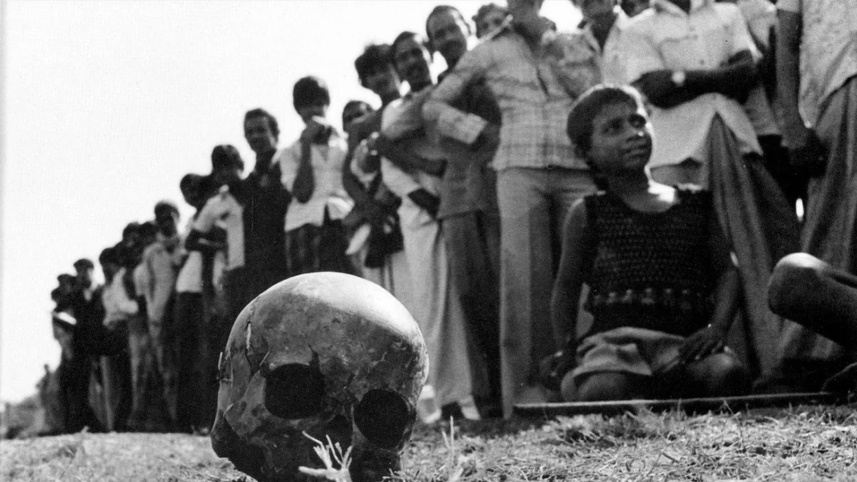
In the post-1971 period, a significant amount of information about Pakistan-sponsored murders, assaults, rapes, and other atrocities has come to light. Much of it came from interviews, personal narratives, confessions, and individual experiences, rather than systematic professional or scientific research. We know that around 30 lakh people were martyred in the Liberation War. While the precise figures may be debated, the scale of mass killings is beyond dispute.
Estimates suggest there are around 5,000 small and large killing grounds across the country, many of which remain unaccounted for. Among these, approximately 1,200 killing sites and mass graves have been identified. The evidence gathered from these sites points clearly to the perpetrators responsible for the killing of lakhs of Bangalee people. After independence, the government of Bangladesh announced that around two lakh women had been assaulted by Pakistani forces during the war. This figure is widely regarded as an understatement, as it was based on broad assumptions rather than systematic calculation.
 For all latest news, follow The Daily Star's Google News channel.
 Research conducted at Sweden’s Uppsala University suggested figures ranging from two to four lakh and concluded that most of the assaulted women were Muslims. Dr Geoffrey Davis, an Australian physician who worked in Bangladesh as part of an international humanitarian programme assisting women who had been raped during the Liberation War, estimated the number of rape victims at 450,000. Later, research by a professional team in Bangladesh placed the figure at more than 467,000, noting that many Hindu as well as Muslim women had been excluded from earlier calculations.
The research, conducted between 1991 and 2002 across 42 districts and their police stations, drew on countless interviews. The findings, based on 629 documented cases, suggested that at least 467,000 women were assaulted in 1971. The team of doctors and experts, including forensic anthropologists, was able to identify 629 survivors who were alive at the time of the interviews and residing in the country. The study further showed that among the assaulted women, 56.50 percent were Muslims, 41.44 percent were Hindus, and 2.06 percent were Christians or from other minority communities.
According to the Bangladesh Documents published by India’s Ministry of External Affairs, between March and the end of May 1971, some 69.71 lakh Hindu refugees were registered in India. Many of those who fled during this period had been attacked during the brutal Operation Searchlight and were assaulted either by Pakistani forces or their collaborators in Bangladesh.
Statistics indicate that 871,000 Hindu families fled to India during that time, including around 2,625,000 female refugees over the age of ten. If even one in ten of them were subjected to sexual violence, the number of victims among refugees alone would be 262,500.
Even the most conservative estimates suggest that no fewer than two lakh Hindu women and girls never returned to Bangladesh. As rape was systematically used as a weapon of war, and as the intent of the campaign was to target and eliminate Hindus in particular, the state estimate of 30 lakh deaths must be understood in that broader context. In any case, it is important to recognise that in no historical genocide have there been exact headcounts or precise accounting of the dead.
In Bangladesh, immediately after liberation, as a war veteran and a member of a law enforcement authority, I, along with my colleagues, identified around 5,000 mass graves and learned from eyewitnesses of regular killings across innumerable locations, including 88 riversides and 68 bridges. Many godowns, guesthouses, rest houses, and educational institutions, as well as railway stations and jails, were used as killing sites and as venues for mass rape, gang rape, and rape in custody.
Only around 30 percent of the remains were found on land, while the remaining 70 percent were washed away, as bodies were dumped into wetlands and riversides. Even manholes, water wells, large drains, and sewage tanks were not spared. More than one crore people were registered as refugees in India during the war of 1971, and nearly two crore were internally displaced. It was one of the largest instances of enforced migration and displacement of innocent civilians within such a short span of time. Many displaced people, including refugees, either died of disease or were killed by the perpetrators and their collaborators during their perilous journeys or while in hiding.
The Pakistan Army committed some 39 counts of war crimes and crimes against humanity, including genocide by killing, genocide by causing serious bodily or mental harm, genocide by deliberately inflicting conditions of life calculated to bring about physical destruction, and genocidal rape.
The nation failed to indict the perpetrators in a proper court of law due to the unlawful clemency declared by Sheikh Mujibur Rahman. No single individual, not even a dictator or a king, can take such a decision without constitutional and parliamentary backing, particularly when the crimes were committed against humanity as a whole. There were discussions of truth and reconciliation, but where there is a denial of truth and no regret, remorse, or sincere confession, such a process cannot take root. Behind the scenes, efforts were made towards such a solution, but they did not succeed, as the state did not approach the UN security council for a mandate.
We must understand that justice and righteousness are realised through accountability, through the vindication of rights and the redress of wrongs. The most serious crimes of concern to the international community, notably genocide, war crimes, and crimes against humanity, as occurred in Bangladesh in 1971, must not go unpunished. Effective prosecution must be ensured, even in the absence of the accused.
Dr MA Hasan is war veteran, physician, human rights defender, and forensic anthropologist.
Views expressed in this article are the author's own.
Follow The Daily Star Opinion on Facebook for the latest opinions, commentaries, and analyses by experts and professionals. To contribute your article or letter to The Daily Star Opinion, see our guidelines for submission.
Comments