


The new budget's test for disability inclusion
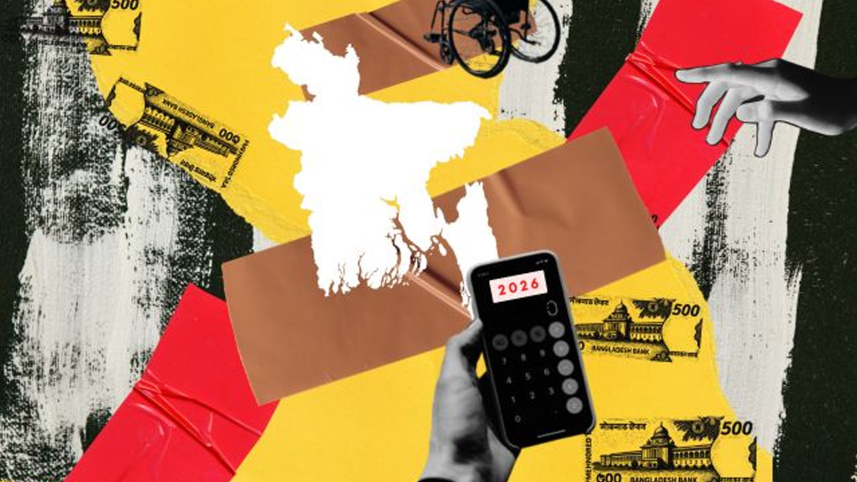
The national budget for FY2026-27 sets an important tone for the BNP government’s policy priorities. While the record outlay, amounting to Tk 9.38 lakh crore, spotlights a strong emphasis on social protection, economic inclusion and tax reforms, its significance extends beyond macroeconomic narratives. It indicates how far the government is willing to go to uphold the rights and protection of marginalised communities, including persons with disabilities. With expansion in social safety nets and targeted tax benefits, the budget acknowledges disability as a policy concern. However, whether these steps are transformative or merely incremental remains an open question.
In Bangladesh, persons with disabilities remain among the most vulnerable and marginalised groups. Despite progressive legislation such as the Rights and Protection of Persons with Disabilities Act, 2013 and Bangladesh’s ratification of the UN Convention on the Rights of Persons with Disabilities (CRPD) in 2007, the lived reality is still defined by limited access to education, healthcare, employment, movement and public services.

The BNP’s 2026 election manifesto raised hopes by promising a twin-track approach: mainstreaming inclusion alongside targeted interventions. It strongly emphasised disability-friendly citizen services, inclusive employment, improved measures for advancing inclusive education, and universal primary healthcare. Hence, it is critical to assess whether these commitments can do well against the BNP’s first budget of this term.
The most obvious disability-related intervention in the budget lies in social security allocations. The government has proposed increasing the number of disability allowance beneficiaries from 34.5 lakh to 38 lakh and raising the allowance from Tk 900 per month to Tk 1,000 per month. Likewise, the stipend coverage for students with disabilities has been expanded from 81,000 to 100,000 beneficiaries. The stipend amounts have also been revised across education levels, ranging from Tk 1,000 at the primary level to Tk 1,400 at the higher education level. These increases reflect a positive intent: expanding coverage and recognising the importance of education for students and learners with disabilities. However, the increases seem very small when measured against the rising cost of living and the additional expenses associated with disability, such as caregiving, assistive devices, and transportation.
What is interesting is that Bangladesh’s disability allowance remains the lowest in South Asia. Nepal provides Tk 1,717 to Tk 3,221 based on the severity of disability via a colour-coded card system; Pakistan offers about Tk 1,551; Sri Lanka provides around Tk 4,308 as per its 2025 national budget; and India’s assistance ranges from Tk 387 to Tk 4,524 depending on states and federal schemes. The Maldives offers the highest disability allowance in South Asia, which is as high as approximately Tk 16,000 per month. Such disparity highlights the urgency for Bangladesh to reassess the social safety net schemes for persons with disabilities, especially aligning with BNP’s election manifesto. A more equitable and efficient approach could involve categorising beneficiaries based on disability severity—mild, moderate and severe—and allocating differentiated benefits, as practised in the neighbouring countries. This could ensure that those with greater needs receive proportionately higher assistance.
This year’s budget introduces several progressive taxation measures. The tax-free income threshold for persons with disabilities has been set at Tk 5 lakh, much higher than the general limit. Parents or caregivers of children with disabilities will also receive an additional Tk 50,000 exemption per child. Furthermore, the budget has proposed a turnover-based tax exemption limit of Tk 70 lakh for entrepreneurs with disabilities, while it is Tk 50 lakh for general SME entrepreneurs. Also, disability services and autism have been included on the list of tax-deductible public welfare sectors, which can encourage philanthropy in these areas. While these measures are promising, their efficacy will depend on several things, such as awareness, accessibility, and enforcement. Most individuals with disabilities remain outside the formal economic fence, so tax incentives alone may not significantly expand economic inclusion without necessary efforts such as skills training, inclusive and accessible financing, and employer incentives.
The budget also outlines a “special action plan” for children with speech, hearing and visual impairments as well as autism. However, the absence of specific allocations, targets or timelines may make implementation difficult. Moreover, several critical areas are notably absent from the budget speech. There is no mention of accessibility in public infrastructure and transportation, dedicated budgets for implementing the CRPD or national disability laws, assistive technology and device production, and employment quotas or incentives for hiring persons with disabilities. These gaps are significant as disability inclusion is not limited to social protection; it requires systemic change across all sectors—health, education, infrastructure, labour markets, etc.
As mentioned above, BNP’s election manifesto acknowledged the broader vision by promising disability-friendly public transport, better educational opportunities, and inclusive employment policies. Translating these commitments into reality will require coordinated, cross-ministerial action. One of the most effective steps forward would be the introduction of a thematic, ministry-wise disability budget, similar to the country’s existing gender and climate budgets. The introduction of the disability budget would necessitate ministries to allocate and track funds for persons with disabilities, ensure that disability considerations are integrated into all development initiatives, enhance policy coordination and accountability, and enable evidence-based planning and monitoring. Disability-related initiatives risk remaining fragmented and underfunded if such a framework is overlooked.
The FY2026-27 budget marks a small step forward in recognising the needs of Bangladeshis with disabilities. However, if the country aspires to become truly equal and accessible for persons with disabilities, as envisioned in BNP’s manifesto, it must go beyond incremental adjustments. It must invest in accessibility, enforce legal frameworks, incentivise inclusive employment, and ensure that every ministry shares responsibility for promoting disability inclusion. The next steps must be consulted with persons with disabilities first, and then coordinated actions need to follow. Because a nation’s progress is ultimately measured not by how it treats its upper class, but by how it includes and empowers its most vulnerable.
Ayon Debnath is campaign adviser at Royal Commonwealth Society for the Blind-Sightsavers.
Views expressed in this article are the author's own.
Follow The Daily Star Opinion on Facebook for the latest opinions, commentaries, and analyses by experts and professionals. To contribute your article or letter to The Daily Star Opinion, see our guidelines for submission.
 For all latest news, follow The Daily Star's Google News channel.
Comments