


From slums to stability: How social housing can transform urban life in Bangladesh

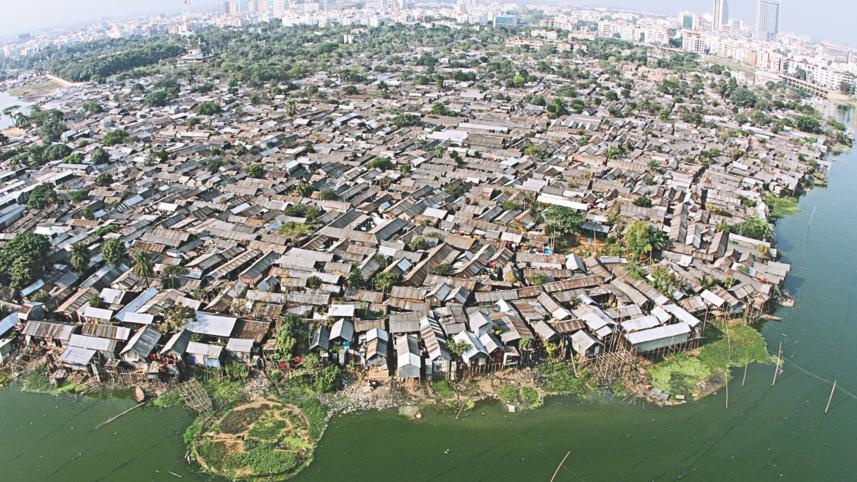
Bangladesh is facing a severe housing crisis due to rapid urbanisation and excessive population density. The country is home to nearly 18 crore people, of whom almost 40 percent—more than seven crore—live in urban centres. Almost half of the dwellers live in slums, equating to over three crore people. Furthermore, nearly five crore people in Bangladesh are homeless. These individuals often live in makeshift shacks on public land near major roads, river embankments, or railway lines. Of particular concern is the fact that some 34 lakh of the homeless population consists of street children, who often suffer various forms of abuse.
According to Article 15 of the Constitution of Bangladesh, it is the state's responsibility to ensure citizens' right to adequate housing. Additionally, Article 25.1 of the Universal Declaration of Human Rights recognises adequate housing as a fundamental human right. Therefore, it is clear that the people of Bangladesh are facing a fundamental human rights crisis.

Most housing companies in the country build flats for the upper and middle classes, leaving a significant gap in providing housing for the lower income population, and a few government projects that were introduced have not seen much progress in this area. So, a potential solution to this crisis is could be “social housing,” modelled after Europe's social housing system or North America's public housing system.
Social housing is designed to address the housing problems of the lower income groups. In this process, the government subsidises housing for marginalised communities. It builds homes at its own cost, and rent is heavily subsidised to ensure affordability. Such housing facilities provide the basic need for shelter and contribute to social stability and economic growth. It can allow for the low-income families to engage in income-generating activities, resulting in improved quality of life, including higher school attendance among children, better access to health services, and increased involvement in the workforce. It also enables vulnerable groups, such as those with physical disabilities, to integrate into society.
In countries like England, France, Germany, and Austria, the idea of social housing was established to address the housing needs of factory workers after the industrial revolution. The concept of social housing was introduced in the United States as public housing in the 1930s. In Asia, Singapore has provided affordable housing for 80 percent of its population since 1960 through the Housing Development Board (HBD), Singapore's public housing authority, which is entirely managed by the government. Other countries like Austria, the Netherlands, South Korea, China, and Finland have set solid examples when it comes to social housing as well.
In Bangladesh, too, social housing can ensure affordable and equitable housing for the poorest of the society, promote social equality, and improve overall living standards. It can replace slums with better quality homes. By developing housing on non-agricultural lands, it can prevent the encroachment of farmland, forests, and wetlands. Government investment and public-private partnerships can generate investment in the construction and real estate sectors, creating jobs, and stimulating the economy. Social housing can also stimulate private investment in housing sector and promote sustainable development through innovation in architecture and engineering.
However, there are several challenges when it comes to implementing social housing in Bangladesh.
First, there is scarcity of land, and what’s available are high-priced. This can be addressed by acquiring unused government land, khas land, and fallow land. Optimal land use should be ensured by constructing high-rise buildings that can accommodate more people within limited spaces. While doing so, disaster-resilient housing designs should be prioritised. Designs should also be tailored to local climatic conditions and nature of disasters, and the quality of construction must be ensured accordingly. The government should also engage with international and national experts and incorporate input from local stakeholders into the design process.
Second, securing sufficient investment in this sector may not be easy; therefore, support from various development partners and private sector stakeholders will be essential. Public-private partnerships can also help reduce the financial burden on the government while fostering the development of innovative technologies. If necessary, private partners should be provided with various incentives.
Third, bureaucratic complexities, corruption, and lack of coordination can also hinder the progress of social housing projects. To overcome these issues, intensive supervision and accountability must be ensured.
Finally, a transparent and actionable policy must be formulated, along with effective measures for its implementation.
Khandkar Md. Wahid Sadique Shuvo is superintending engineer at Rajdhani Unnayan Kartripakkha (Rajuk).
Views expressed in this article are the author's own.
Follow The Daily Star Opinion on Facebook for the latest opinions, commentaries, and analyses by experts and professionals. To contribute your article or letter to The Daily Star Opinion, see our guidelines for submission.
 For all latest news, follow The Daily Star's Google News channel.
Comments