


Rethinking how the logistics sector absorbs diesel price hikes

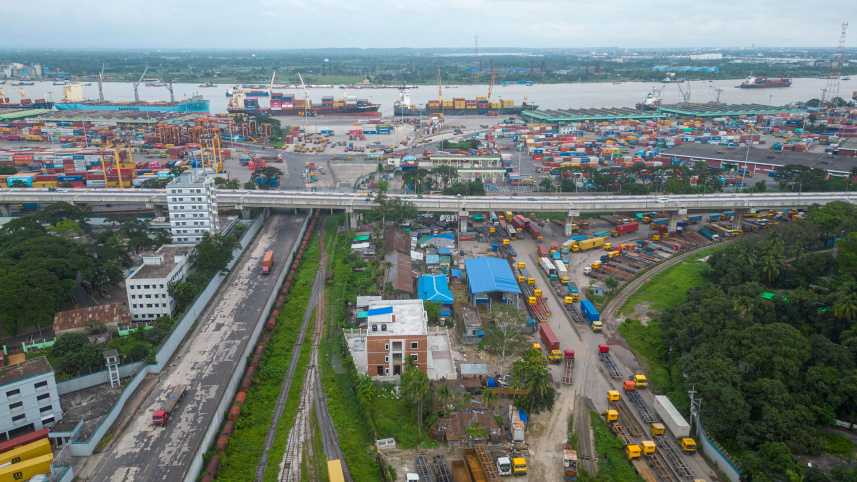
The latest hike in fuel prices has already begun rippling through the logistics chain. Soon after the government raised the prices of all four major petroleum products, including diesel, by Tk 20 a litre on September 20, owners of 21 private inland container depots (ICDs) responded by raising six container-handling charges by 9.85 percent. Berth operators have sought revisions to contract rates, while lighter-vessel owners and road transport operators are mulling or already executing similar adjustments. Exporters are rightly worried that rising logistics costs could weaken their competitiveness.
Diesel is a major input for trucks, prime movers, container-handling equipment, and inland vessels, so operators cannot be expected to absorb higher fuel costs indefinitely. But should every increase in fuel prices automatically trigger a fresh round of percentage-based tariff increases across the logistics chain? Shouldn’t we instead adopt a transparent, proportionate cost adjustment formula linking each tariff change to the actual fuel component of the service being provided?

The debate over the fuel price hike has been intense and even polarising. Some argue for price stability through government subsidies; others say Bangladesh cannot indefinitely shield consumers from rising international energy costs. Governments have choices, but none is cost-free. Subsidies can cushion consumers from sudden price shocks, but they also put pressure on the budget and foreign-exchange reserves. Passing higher costs on to consumers reduces those burdens, but it can, in turn, raise transport and production costs and add to inflation.
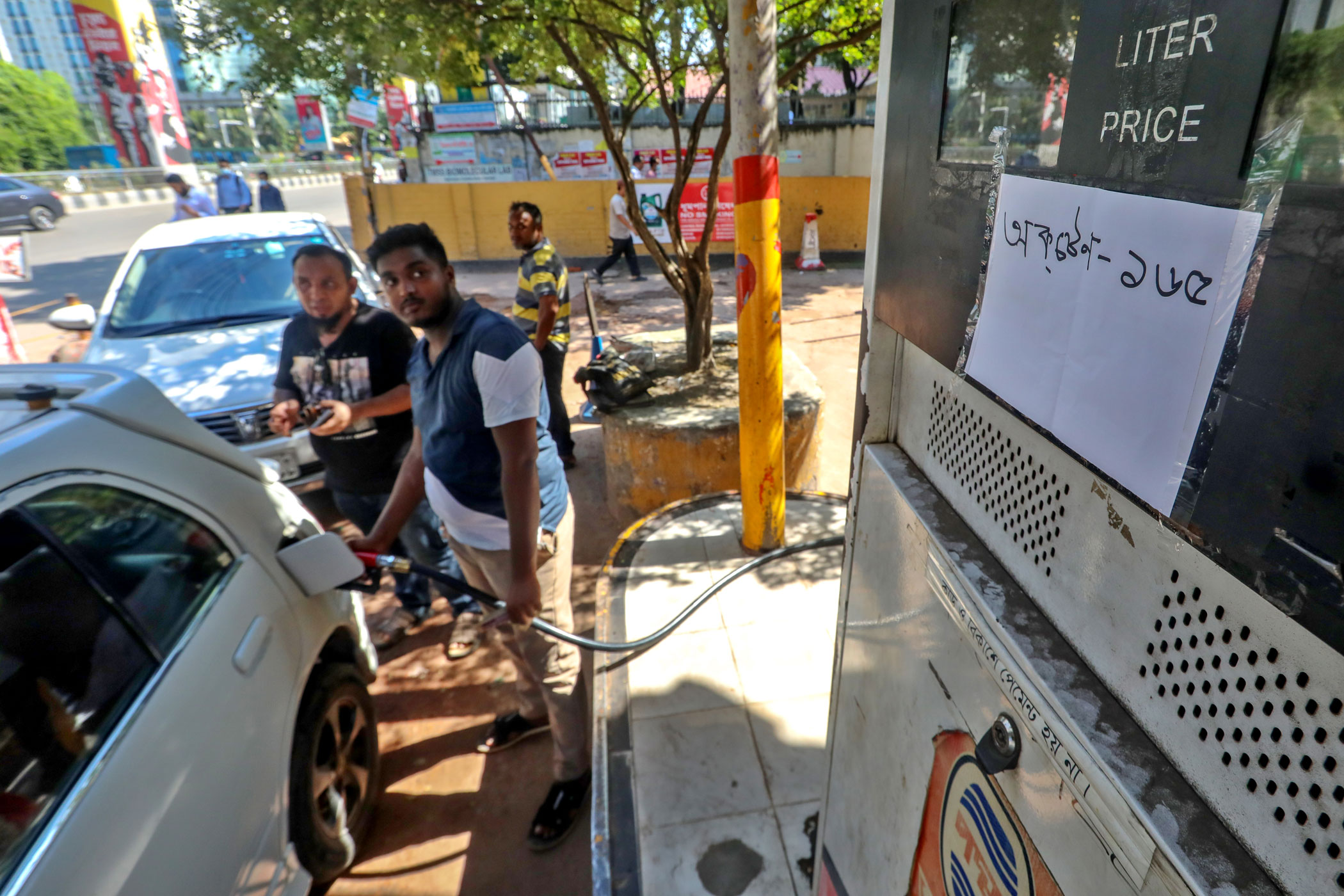
This article, however, is not about the fuel price increase itself. Suffice it to say that countries use different combinations of taxation, subsidies, smoothing, and market-linked pricing when making such decisions. India, for example, reduced excise duty on petrol and diesel by Rs 10 a litre amid the latest international price surge. Bangladesh has taken a different approach and raised diesel price to Tk 135, just five months after the last increase. But whatever policy is adopted, a question more relevant to the logistics sector is: how should a Tk 20-a-litre diesel price increase translate into a container-handling charge, trucking rate, or lighter-vessel freight rate? That relationship should not be arbitrary.
Recent domestic fare decisions illustrate the point. After September 20, official bus fares rose by roughly 7 percent per kilometre, while passenger water-transport fares rose by 7.54 percent. Different services have different cost structures and different levels of fuel exposure; any change in fuel prices does not have to translate one-for-one into the full-service tariff. The same principle should apply to the logistics sector. The latest 17.4 percent hike in diesel prices has been followed by a 9.85 percent increase in six ICD charges covering empty-container transportation, lift-on/lift-off, export goods stuffing and handling, VGM (Verified Gross Mass), and import goods delivery. Some activities are highly fuel-intensive. Others combine fuel with labour, land, equipment depreciation, maintenance, finance, electricity and administrative overhead.
This is where the formula needs to be clear. If fuel represents 30 percent of the total cost of a service, a 17.4 percent increase in diesel prices would, all else being equal, raise the total service cost by about 5.2 percent. If fuel represents 55 percent, the effect would be about 9.6 percent. The exact coefficient will differ by service, but the principle is the same: only the fuel-sensitive portion should move with the fuel price.
There is also an interesting consistency in the ICD cost adjustments. In April, a 15 percent diesel price increase was followed by an 8.5 percent increase in the same six categories of charges. This time, a 17.4 percent diesel price increase has been followed by a 9.85 percent adjustment in charges. That does not establish what coefficient is being used by the Bangladesh Inland Container Depots Association (BICDA) to determine these adjustments, but if a methodology exists, publishing it would strengthen confidence.
International logistics markets have long faced this problem. In the United States, freight carriers commonly use fuel surcharges linked to published diesel-price benchmarks. The US Energy Information Administration publishes weekly retail diesel prices that are used in many fuel-pricing formulas. The government does not prescribe one surcharge; the important point is that the fuel component can be linked to an observable benchmark. Or take France. Its transport law provides for road-freight prices to be revised according to changes in propulsion-energy costs. Where a contract does not identify the energy component, the calculation can refer to published fuel prices and cost shares. The relevant energy charge must also appear on the invoice.
The same logic appears in international contracting. World Bank standard bidding documents provide price-adjustment formulas that separate a fixed portion from variable cost elements, with coefficients representing the estimated share of each element.
The lesson is simple: a volatile input does not require the whole tariff to be reopened. Bangladesh does not need one identical formula for trucks, ICDs, lighter vessels, and port contractors. It needs common principles: a base fuel price, a service-specific fuel share, a recognised benchmark, defined review intervals, and automatic adjustment in both directions. When the diesel price rises, the fuel-sensitive component should rise. When the diesel price falls, it should fall. The symmetry is needed, particularly when global diesel markets may remain volatile for some time yet.
Long-term port contracts need similar safeguards. Berth operators have pointed out that diesel was Tk 80 when some contracts were bid in 2022 and is now Tk 135. Expecting contractors to absorb such a change indefinitely may be unrealistic, but repeated renegotiation is also undesirable. Future port and logistics tenders should, therefore, include predetermined escalation and de-escalation clauses for major volatile inputs.
We should also be concerned about the risk of accumulation. The same container can encounter a trucker, an ICD, a terminal operator, a lighter vessel, a warehouse, and perhaps another road journey. If each participant applies a broad percentage increase to its entire tariff, rather than adjusting only the fuel-sensitive component, the original energy shock can be amplified as it moves through the supply chain. The objective here is not to prevent logistics operators from recovering genuine additional costs. Sustainable logistics does require financially viable providers. The objective should be to ensure those costs are recovered transparently, proportionately, and predictably.
We cannot control the Strait of Hormuz or geopolitical conflicts, but we can control how an external energy shock is transmitted through our domestic logistics system. The latest fuel price increase should become an opportunity to replace case-by-case negotiations with a predetermined, rules-based mechanism. When diesel prices rise, logistics charges may have to rise, too. But they should rise by formula, not by reaction.
Ahamedul Karim Chowdhury, a maritime, logistics and supply chain policy analyst, is former head of Kamalapur Inland Container Depot and Pangaon Inland Container Terminal.
Views expressed in this article are the author's own.
Follow The Daily Star Opinion on Facebook for the latest opinions, commentaries, and analyses by experts and professionals. To contribute your article or letter to The Daily Star Opinion, see our guidelines for submission.
 For all latest news, follow The Daily Star's Google News channel.
Comments