


Restoring faith in the justice system is key to ending mob violence

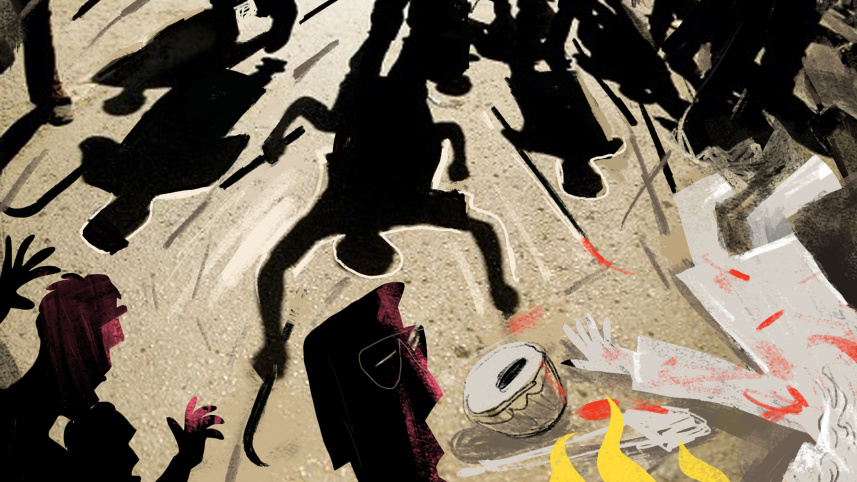
It goes without saying that erosion of public trust in Bangladesh’s justice system is one of the causes of the surge in the dangerous vigilante culture known as “mob justice,” which threatens the very core of social norms. Recently, a disturbing video went viral on social media, showing an alleged drug dealer being beaten by a local crowd of hundreds of people. To the passive scroller, it might look like a perfect punishment for the crime of drug business. But deep down, it is a classic, terrifying symptom of a much broader institutional disease: the breakdown of public faith in the criminal justice system.
When ordinary citizens repeatedly see marked criminals roam around freely, a dangerous consensus forms. People stop believing that the courts will protect them when needed, so they take the law into their own hands. What we are witnessing across the country today is the terrifying rise of this culture of bypassing the due process of law to get “justice” in a shortcut way.

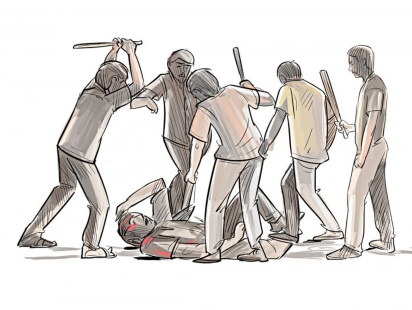
The spike in mob violence did not start out of nowhere. It emerged more prominently during the tenure of the interim government, when public institutions were weaker and law enforcement agencies were struggling to regain their footing due to their activities during the mass uprising. Amid this fragile transformation, citizens held onto the hope that a democratically elected government would restore law and order, rebuild the police force, and fix the judicial system. However, more than three months into the tenure of the BNP government, that hope is slowly turning into frustration day by day. Despite early promises from the cabinet to prioritise law and order, the administration has largely failed to curtail mob violence effectively.
Manabadhikar Shongskriti Foundation’s media-based monitoring confirms that at least 111 people were killed in mob violence between January and May 2026, with the monthly death toll rising from 21 in January to 32 in May. According to a report by the Human Rights Support Society (HRSS), over 60 distinct incidents of mob violence were recorded in May 2026 alone, resulting in dozens of deaths and serious injuries. By failing to send a swift, powerful message that mob violence will not be tolerated, the state has inadvertently allowed these crowds to feel empowered.
The crowd’s tendency to rationalise “instant justice” or punishment outside the formal justice system ultimately creates a dangerous culture of parallel justice. Afghanistan’s experience, for example, shows us how the Taliban exploited the weakness, corruption, and inefficiency of state courts to establish their own Sharia-based courts at the local level, presenting them as mechanisms for resolving public disputes. Such alternative systems of justice may initially showcase speed or fairness, but in the long run they pose a serious threat to the government’s legitimacy, the rule of law, and human rights.
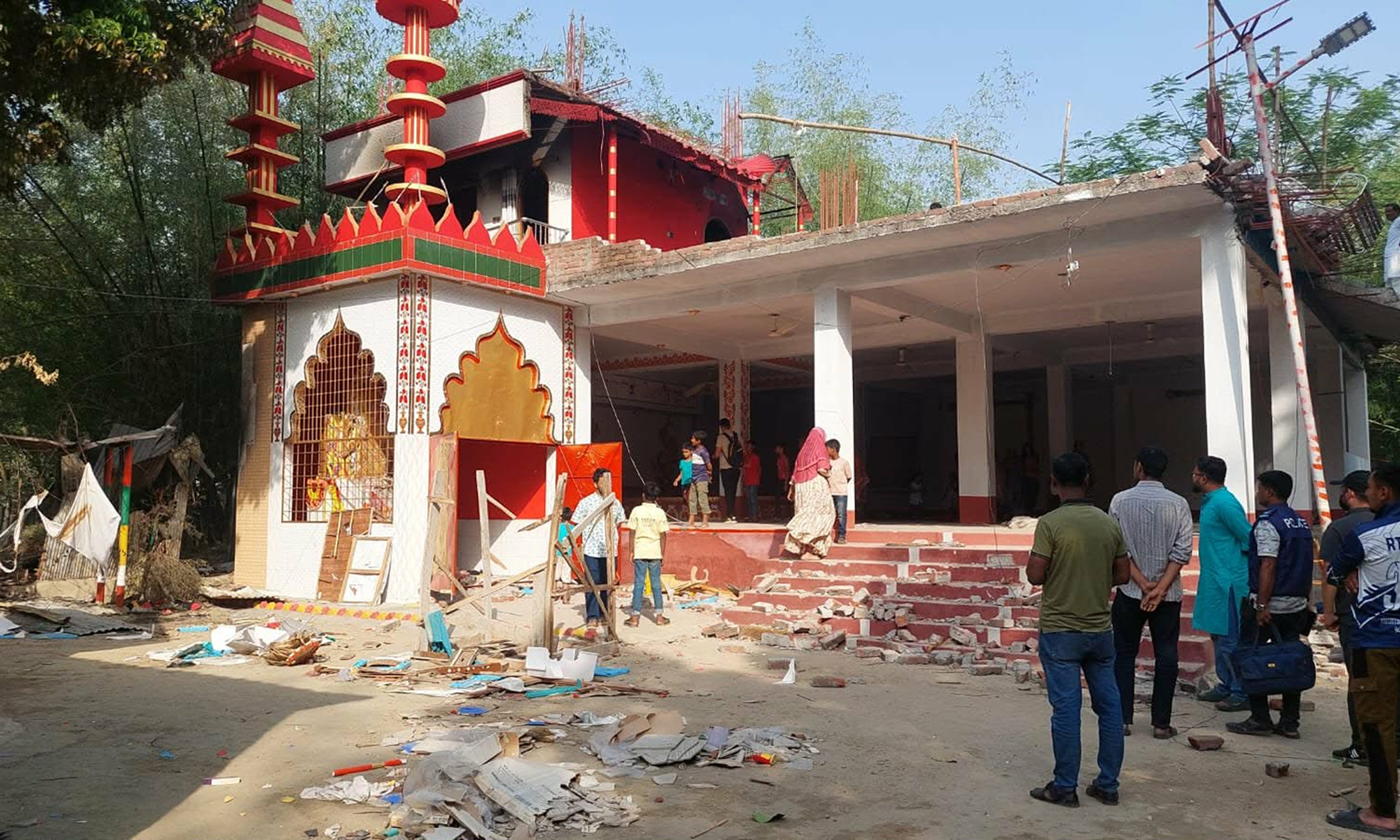
The true danger of mob mentality is that it never stops at local petty crimes. Once a crowd realises it holds the “power” to judge, jury, and execute, the goalpost invariably shifts towards policing people’s personal choices, morals, and cultural freedoms. We saw an example of this recently in Brahmanbaria when a local film society organised the screening of “Banolata Express,” a widely successful film certified by the government’s Film Certification Board. Yet, under the false allegation that the film promoted “un-Islamic” content, a local right-wing student organisation launched a campaign that forced the venue to cancel the event while the local authorities remained unresponsive. The local MP Rumeen Farhana’s stance on this issue is commendable; she protested to uphold the cultural freedom and questioned the intention of this pressure group. She was heavily criticised by the group for her statement later, which is also alarming.
If the government and other sociopolitical institutions with sway over society do not act immediately, this localised vigilantism may spread like a contagion across the country. The trend of unruly groups using the banner of “mob justice” to dominate others, take personal revenge, or silence cultural expressions may become further normalised. To prevent this slide into anarchy, the government must adopt a clear “zero tolerance for mob” policy. Law enforcement agencies must treat everyone involved in a mob attack as an individual criminal.
Bangladesh already has enough legal provisions to prosecute such incidents of violence. Under the Penal Code, 1860, a violent crowd may be treated as an unlawful assembly or a riot, and Section 149 allows every member of the mob to be held liable for offences committed in pursuit of the group’s common object. If a person is beaten to death by the mob, the case may amount to murder under Section 302. Mob justice is clearly a crime against the rule of law, and there is no such thing as “justified” in such violence.
Aparajita Debnath is an advocate at the Dhaka Judge Court.
Views expressed in this article are the author's own.
Follow The Daily Star Opinion on Facebook for the latest opinions, commentaries, and analyses by experts and professionals. To contribute your article or letter to The Daily Star Opinion, see our guidelines for submission.
 For all latest news, follow The Daily Star's Google News channel.
Comments