


Measles outbreak: Did Bangladesh ignore the warning signs?

Despite the availability of a safe and cost-effective vaccine, there were an estimated 95,000 measles deaths around the world in 2024, primarily among children under the age of five who were either not vaccinated or under-vaccinated. Measles outbreaks have been on a sharp rise: 59 countries experienced large or disruptive outbreaks in 2024, triple the number of countries affected in 2021. A quarter of these countries had previously eliminated measles. The top 10 countries with measles outbreaks last year were India, Angola, Indonesia, Yemen, Pakistan, Cameroon, Mexico, Sudan, Kazakhstan, and the Lao People’s Democratic Republic.
Per the The World Health Organization’s (WHO) Immunization Agenda 2030 (IA2030) targets, countries must strengthen surveillance, respond more quickly, and reaffirm their political commitment. At least 1.24 crore children in low- and middle-income countries still lack access to basic, routine vaccinations every year. Nearly 50 percent of zero-dose children live in three key geographic contexts: urban areas, remote communities, and in conflict settings.

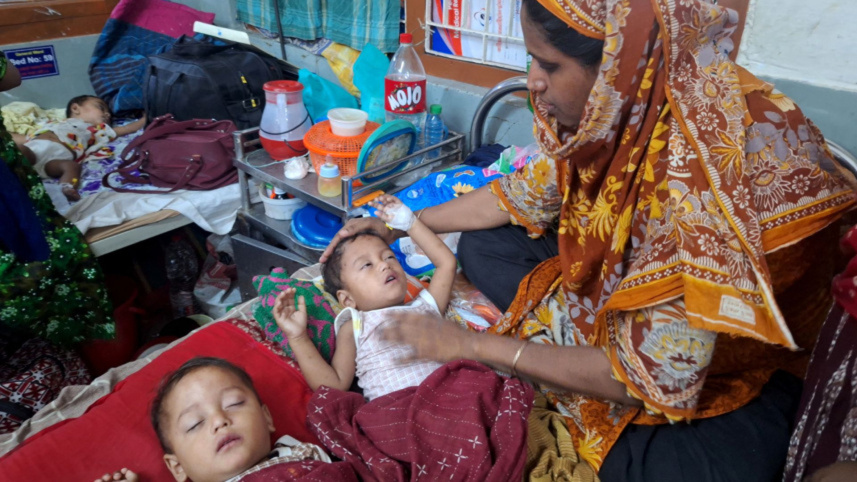
The ongoing measles outbreak in Bangladesh continues to raise public health concerns. Many factors contributed to this outbreak, including a shortage of vaccines, inadequate human resources, invalid doses, dropouts, and weak monitoring. The coverage of childhood vaccination dropped in 2023 from 2019. According to the Coverage Evaluation Survey (CES) 2023 (the latest nationally published data on immunisation coverage), valid full vaccination coverage (FVC) by 12 months reduced from 83.9 percent in 2019 to 81.6 percent in 2023. This is well below the country’s vaccination coverage target of over 95 percent.
There is also geographical inequity and dropout rates. According to CES 2023, valid FVC by 12 months was the highest in Barishal division (89 percent), and the lowest in Dhaka division (76.5 percent), while urban area coverage was lower than rural area (79.0 percent and 84.6 percent, respectively). The first dose of the pentavalent vaccine (Penta 1) invalid dose was 3.6 percent, Penta 2 invalid dose was 1.4 percent, Penta 3 invalid dose was 0.7 percent, and MR1 invalid dose was 9.8 percent in 2023. Therefore, the highest percentage of invalid doses was for MR1. It was also higher in urban areas (12.9 percent) than in rural areas (8.1 percent).
Migration is one of the major reasons for dropouts from childhood vaccination in slum areas, which is contributing to lower coverage in urban areas. FVC with MR2 was only 76.8 percent in 2023, with 75 percent in urban areas and 79 percent in rural areas. Even globally, the proportion of children receiving a first dose of measles vaccine was 84 percent in 2024, slightly below the 2019 level of 86 percent.
The existing inequity in the coverage of childhood vaccination in Bangladesh was reiterated in the National Equity Strategy for Expanded Programme of Immunisation 2023. It recommended ensuring adequate and timely supply of vaccines and other logistics, and establishing an electronic vaccine logistics management information system. Despite the warning signs and recommendations, we faced a shortage of vaccines and syringes, leading to the outbreak. There is also no real-time tracking mechanism in place at the district and upazila levels. As a result, some upazilas may have more vaccines than they need, while others may have very little, and some may have stockouts.
Ensuring that vaccines and syringes are supplied together at all immunisation sessions is crucial for meeting the targets of the Expanded Programme on Immunization (EPI). Adequate interpersonal communication (IPC) the day before the EPI session with the parents or guardians could reduce drop-outs and invalid doses. Exiguous human resources, lack of motivation, and inadequate budget for visiting the outreach centres are causing weak monitoring and supervision, especially in low-performing areas.
Bangladesh has taken steps to procure measles vaccines to cover the children who have not yet received the shots. However, long-term planning is needed to avoid a shortage of all vaccines, not just measles. Reducing the number of zero-dose and under-vaccinated children through collaboration with a wide range of stakeholders is at the core of IA2030. It is essential for a sustainable childhood vaccination programme amid growing urbanisation and population residing in slum areas, and to prevent crises like the present one.
In Bangladesh, the shortage of human resources for EPI should be addressed urgently, and a long-term HR plan must be prepared. Training on the maintenance of cold chain, appropriate vaccination, reducing wastage, and increasing IPC with parents and/or guardians must be provided regularly. Expanding nationwide vaccination campaign, ensuring full coverage, and creating community awareness are crucial. The Ministry of Health and Family Welfare should ensure the use of digital tools for real-time disease tracking and target slums, hard-to-reach areas, and Rohingya refugee camps.
Bangladesh could have taken prior measures based on the experiences of measles outbreak in other countries and avoided the current outbreak. It must be the top priority now to reverse the declining trend of childhood vaccination coverage in the country.
Nahid Akhter Jahan is professor at the Institute of Health Economics in the University of Dhaka.
Views expressed in this article are the author's own.
Follow The Daily Star Opinion on Facebook for the latest opinions, commentaries, and analyses by experts and professionals. To contribute your article or letter to The Daily Star Opinion, see our guidelines for submission.
 For all latest news, follow The Daily Star's Google News channel.
Comments