


From degrees to jobs: Rethinking higher education in Bangladesh

Over the past decade, I have closely observed how leading universities around the world design their programmes to contribute to their national economies. My experiences have led me to one clear conclusion: Bangladesh urgently needs a paradigm shift in higher education.
Across the globe, education and work are increasingly converging. Education can no longer remain limited to the traditional idea of knowledge acquisition alone. Instead, it must embrace work-oriented learning that prepares graduates for real-world employment. In today’s global knowledge economy, education is not merely a public service but also a strategic sector that drives national development. Bangladesh must therefore rethink how universities operate and how they contribute to employment and economic growth.

One possible solution is the “unitec” model, which proposes closer collaboration between universities, polytechnics, and industries. The aim of this model is not to commercialise education, but to make universities sustainable institutions that produce job-ready graduates. Once the system matures, it may also attract international students and generate significant revenue.
At the same time, we must recognise an important reality. Out of every 100 students completing higher secondary education, only about 10-20 become engineers, doctors or high-ranking officers. What happens to the remaining students? Often, employment outcomes are not directly linked to academic results. Many cite India as an example of success in sending skilled professionals abroad. However, a closer look shows that for every highly skilled migrant, several others migrate as general workers. This suggests that Bangladesh must plan not only for the top-performing students but also for the majority who require practical and marketable skills. Its economy still relies heavily on RMG export and remittances. In this context, skilled workers are just as important as officers. Therefore, this is the right time to rethink higher education and align it with systems such as the National Intelligence for Skills, Education, Employment, and Entrepreneurship (NISE3) to measure its impact nationally and internationally.
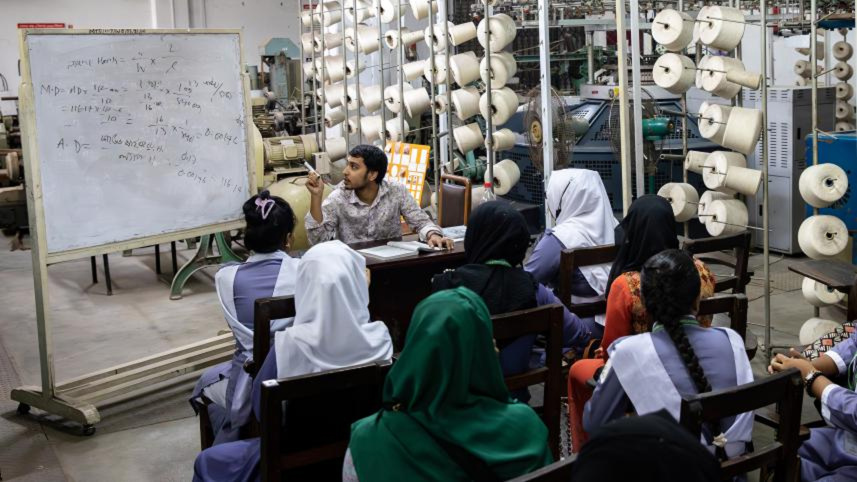
Under the “unitec” model, students would complete two accredited skill or certification programmes alongside their academic degree. In the first year, students would achieve an internationally recognised proficiency level in English instead of taking traditional general English courses. During the second and third years, students would complete two practical certification programmes. For example, a mechanical engineering student might learn automobile maintenance or driving skills; an electrical engineering student might complete training in electrical wiring or plumbing. Similarly, a social science student could learn graphic design, animation, or video editing alongside carpentry or other practical skills. In the final year, students could undertake internships, or learn additional languages if they aim to work in international markets.
Such a model requires strong collaboration between universities, polytechnics, and industries. In Australia, universities such as Victoria University, RMIT University, Swinburne University, and Federation University operate alongside affiliated Technical and Further Education (TAFE) institutes, which function similarly to polytechnics in Bangladesh. In the US, many universities maintain partnerships with community colleges that offer vocational and technical programmes. These institutions provide flexible certification programmes that anyone, even PhD graduates or senior professionals, can take to upgrade their skills. While one may not pursue multiple PhD degrees, professional certification and skill development can continue throughout a career. Our universities should therefore consider establishing affiliated polytechnics and stronger industry partnerships to produce graduates aligned with national and international labour market demands.
University curricula should be flexible, demand-driven, and time-efficient. One option is to introduce block-mode learning, in which students take one course intensively over a short period rather than multiple courses simultaneously. Such systems already exist in many developed countries and allow students to work part-time while studying full-time, gaining valuable experience before graduation. Similarly, many universities now emphasise master’s by coursework rather than master’s by research, reserving intensive research training primarily for PhD programmes. These coursework-based programmes attract millions of international students and produce graduates ready for the workforce. Certification programmes could also be recognised under an “academic bank of credits” system. For example, a student holding a Cisco Certified Network Associate credential could receive credit for introductory networking courses.
Higher education financing must also become more sustainable. In countries such as Australia, the UK, Canada, and the US, the total cost of a bachelor’s degree can range from Tk 1-3 crore, depending on the discipline. Bangladesh could introduce a tiered system where universities are classified by a framework and tuition fees vary accordingly. Students would continue paying their standard tuition fees, while the remaining portion would be recorded in their student records. Once graduates begin earning above a certain income threshold, they would gradually contribute back to their universities. Importantly, this would not necessarily be a loan but a contribution towards strengthening higher education. The funds could support career counselling, research projects, technical skill development, internships, job fairs, and international study opportunities.
If implemented effectively, such a higher education model could significantly improve graduate employment outcomes. Even a modest increase in employment rates could transform the national economy through higher productivity and increased remittances. Within a decade, Bangladesh could also attract international students by offering quality education and practical training through online and blended learning systems. This could eventually help build a global brand.
As the Fourth Industrial Revolution advances, some jobs will change or disappear. Yet many essential technical skills will remain indispensable. Artificial Intelligence may automate many tasks, but it will not come to our homes to repair electrical lines, gas systems, or water supply networks. The demand for skilled technical workers will continue to grow worldwide. For universities with limited resources or impact, consolidation or stronger vocational orientation may be necessary to ensure sustainability.
Bangladesh aims to become a developed country by 2050. Achieving that goal will require strong educational institutions capable of producing skilled graduates who can compete globally. If policymakers adopt innovative approaches such as the “unitec” model, we can realistically expect that at least 50 Bangladeshi universities could position themselves competitively on the global stage by 2050. The time has come to connect education, employment, and the economy to ensure prosperity for the country and meaningful opportunities for its young people.
Dr Md Aktaruzzaman is a technical education, digital learning, and cybersecurity expert based in Melbourne, Australia.
Views expressed in this article are the author's own.
Follow The Daily Star Opinion on Facebook for the latest opinions, commentaries, and analyses by experts and professionals. To contribute your article or letter to The Daily Star Opinion, see our guidelines for submission.
 For all latest news, follow The Daily Star's Google News channel.
Comments