


Bangladesh’s digital transformation still needs human intermediaries

Bangladesh’s digital transformation is often evident in its online portals, mobile applications, digital identity systems, and expanding portfolio of e-services. But one crucial component of this transformation remains largely unrecognised in public policy discussions.
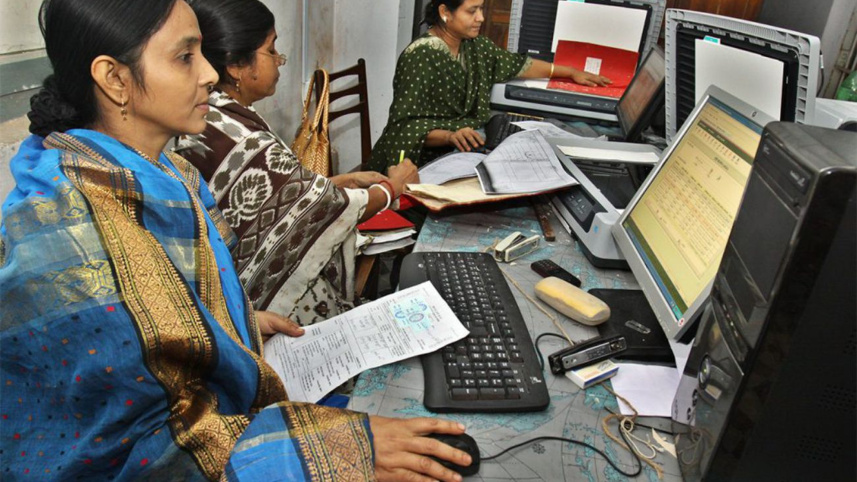
Every day, a number of Union Digital Centre (UDC) and Pouro (Municipal) Digital Centre entrepreneurs and neighbourhood computer shops help citizens avail digital public services. They are not formally recognised as a single workforce. But collectively, they have become indispensable to the country’s digital service ecosystem.

From a policy perspective, applying for a passport, correcting a NID details, paying land taxes, obtaining a birth certificate, or applying for a government programme may appear as independent digital tasks under different agencies. But when citizens need help to complete these, without stopping to wonder which ministry owns the platform or which department manages the database, they simply turn to their local UDC or the familiar computer services shop around the corner. These digital intermediaries have become the country’s unofficial centres for digital government services.
Their work extends far beyond typing up applications or printing out documents. They explain government procedures, identify missing documents, troubleshoot technical problems, upload digital records, interpret official instructions, and reassure applicants who fear making costly mistakes. Digital public services are built upon administrative rules, legal terminology, and technical systems. Citizens approach these with practical questions, uncertainty, and varying levels of literacy. Digital intermediaries help bridge this gap by converting complicated procedures into understandable steps, making government more accessible without changing the rules themselves.
Older adults, people with limited formal education, individuals unfamiliar with online forms, and those who rarely use digital applications often prefer assisted services, even when online options are available. Submitting an incorrect application for a public service can result in delays, additional costs, or repeated visits to government offices. Seeking assistance from someone with experience is often the safest and most efficient choice. Digital intermediaries therefore provide not only technical assistance, but also confidence.
This is perhaps the most overlooked element of Bangladesh’s digital transformation. The intermediary reduces the risk of failure, explains what to expect, and provides reassurance throughout the process. These interactions also reveal an important characteristic of Bangladesh’s digital ecosystem: assisted digital service delivery.
Digital transformation does not necessarily eliminate the need for human support. Rather, successful digital systems often combine self-service platforms with assisted access for citizens who require additional guidance. This model of digital transformation in Bangladesh has evolved organically rather than through explicit policy design.
Union Digital Centres were established to improve citizens’ access to government services, and have now become an essential part of digital public service delivery. The local entrepreneurs not only facilitate transactions but also build bridge between citizens and government institutions.
Alongside them, neighbourhood computer shops have emerged as an equally important, though largely unrecognised, part of the ecosystem. They operate outside the formal structure of public administration, but routinely facilitate access to government services. In practice, they complement rather than compete with official service delivery channels by expanding access, especially where citizens seek convenience, familiarity, or immediate assistance.
Despite their contribution, though, digital intermediaries remain largely absent from policy discussions. Strategies often emphasise infrastructure, interoperability, cybersecurity, and platform development, all of which are essential. But far less attention is given to the people who ensure that these systems are actually usable for ordinary citizens.
Recognising digital intermediaries would mean acknowledging that inclusive digital transformation requires multiple pathways to access public services. Some citizens will always prefer independent online transactions. Others will continue to rely on trusted assistance. Both experiences should be considered legitimate outcomes of an inclusive digital ecosystem.
As Bangladesh moves towards the next generation of digital public services, policymakers should begin viewing digital intermediaries not simply as service providers but as strategic partners in digital inclusion. Investing in their skills, providing timely information on procedural changes, strengthening their capacity to support citizens, and integrating them more systematically into service design could significantly improve citizens’ overall experience. Digital transformation is often described as a journey from paper to platform. Perhaps it is better understood as a journey from institutions to people.
GM Saiful Islam is a development consultant specialising in governance and results-based management. He can be reached at saiful.learner@gmail.com.
Views expressed in this article are the author's own.
Follow The Daily Star Opinion on Facebook for the latest opinions, commentaries, and analyses by experts and professionals. To contribute your article or letter to The Daily Star Opinion, see our guidelines for submission.
 For all latest news, follow The Daily Star's Google News channel.
Comments