


After two tumultuous years, what should the local government polls look like?

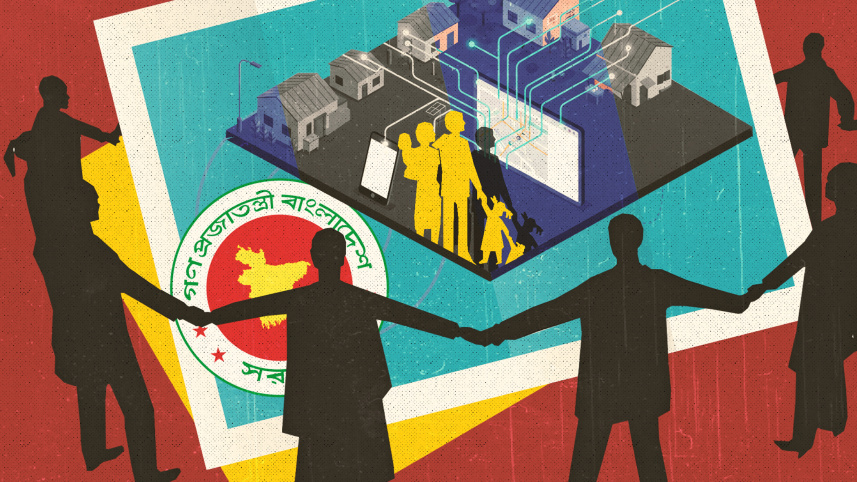
The next local government polls are set to take place in October, on a non-partisan basis. Most of the local councils were dismantled by the interim government and restructured in August 2024, following the ouster of the Awami League regime. At the time, the interim government promulgated several ordinances, authorising the mass dismissal of local government representatives. This included all city corporation mayors and councillors, 323 municipality mayors and councillors, 61 zila parishad chairpersons, all upazila parishad chairpersons and vice-chairpersons, and most of the union parishad chairpersons and councillors. Administrators were appointed in the positions of deputy commissioners, upazila nirbahi officers (UNO), and other offices to run local bodies. They have been in charge of local bodies as an additional responsibility for about two years now, which is unprecedented in the history of Bangladesh. Against this background, the announcement of local government elections is a welcome decision.

In order to hold free and fair local polls, the Bangladesh Election Commission (EC) published draft codes of conduct for all five tiers of local government on June 10 on its website and received feedback from the public till June 30. The codes propose stricter regulations on the use of campaign materials and sound systems, and suggests shorter campaign hours. Any candidate or agent violating the codes will face immediate disqualification. The EC plans to kick off local polls starting with union parishad elections in the first half of October, with the schedule likely to be announced in the first half of August.
Local government bodies are strong pillars of democratic governance, and local elections enable the people to express their choice of candidates who are expected to provide leadership in public service delivery, infrastructure building, development work, and poverty alleviation. At the local level, these elections are significant as they enable citizens to hold leaders accountable for not meeting their expectations. However, local government bodies should be allowed to work independently and be empowered to shoulder their responsibilities effectively.
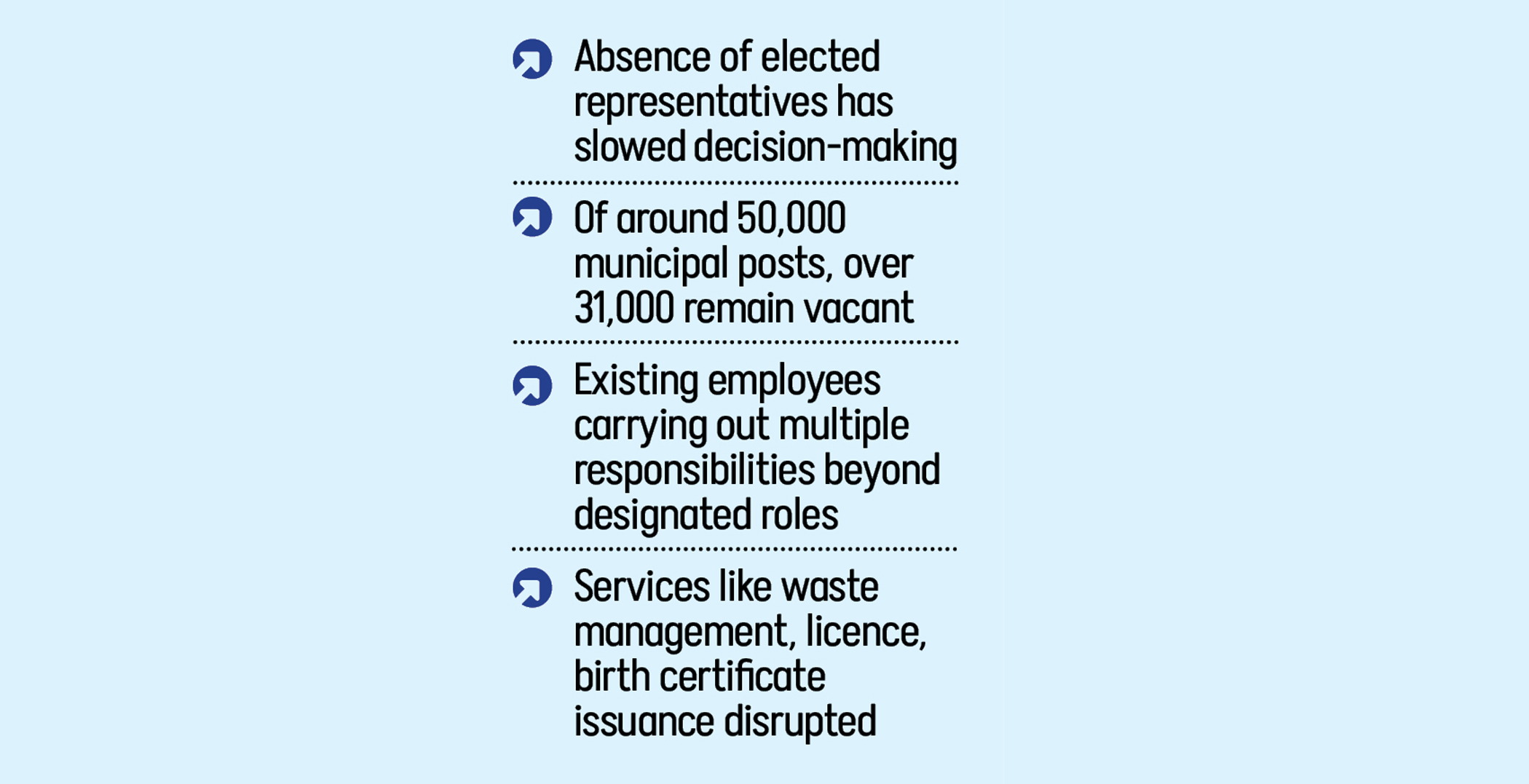
As per a report published in The Daily Star recently, municipal services have deteriorated over the last two years due to the absence of elected mayors and councillors. Public services such as waste management and road maintenance have become irregular, and the issuance of birth certificates and trade licences is taking longer than usual. As many as 31,142 out of 50,000 regular posts in the municipalities remain vacant. This author, in his involvement with local government activities, also noticed a significant drop in the revenue income of municipalities over the last two years due to inefficient collection of holding taxes and weak local governance. In April 2025, about 200 municipalities were unable to pay salaries to their staff, as the Local Government Reform Commission had observed.
The first challenge in terms of local elections is that the Election Commission (EC) will have to conduct polls within a short period of time in more than 5,000 local government bodies, including 4,580 unions, 503 upazila parishads, 61 zila parishads, 13 city corporations, and 330 municipalities. The non-partisan basis of the upcoming local polls is expected to reduce the influence of money and muscle power in the electoral process and usher in a new era of genuine competition among candidates. The EC should, however, be prepared to contain violence that might still occur due to the underlying currents of political influence and the use of money in local elections. Therefore, maintaining law and order before and during the election will be an important challenge facing the government.
The traditionally low participation of women in local government elections is another challenge that may continue, although women are free to participate in the elections under the non-party system. The importance of the political inclusion of women has long been recognised at the national and local levels, and reserved seats for women in local government are mandated across all tiers. However, women’s representation in regular non-reserved seats is still abysmally low.
For a variety of reasons, the local government is considered immensely important in Bangladesh. First and foremost, people’s meaningful and effective participation at the local level builds the foundation for a functioning local governance system. But given the historical gaps in ensuring such participation, questions have always remained about the efficacy of the local government system.
If the centralised governance mechanism continues to try to provide and maintain most infrastructure and services, then health, education, water supply and sanitation, environmental protection, law and order, power and energy, and all other services will continue to remain largely ineffective. The persistently poor implementation of the Annual Development Programme (ADP) and unsatisfactory service delivery from different government sectors lend justification to the argument for changing the centralised development strategy and initiate an effective decentralised government system in Bangladesh.
Therefore, the upcoming local government elections should be held as peacefully as possible to boost the empowerment of local leaders and rapidly transfer most of the development and service delivery functions to the local level. With over 75,000 elected representatives in the local government bodies and several lakh employees, a huge reservoir of human resources is waiting to shoulder these crucial responsibilities across the country.
One of the issues local government discussions emphasise is the level of autonomy they enjoy. More specifically, in Bangladesh, this relates to the powers and facilities of the MPs that may influence the decision-making of local bodies. An editorial published in The Daily Star last month pointed to the creation of a reserve fund that the Local Government Engineering Department (LGED) will utilise to execute development projects recommended by MPs. The government has also allocated MPs their own rooms at upazila parishad offices. Although no conclusion can be drawn yet, experience shows the need for specific guidelines to limit the influence of MPs over local government’s decision-making.

Historically, local government elections have drawn larger voter turnouts in Bangladesh compared to national elections. However, the atmosphere during the election period, level of political influence (especially by the party in power), whether or not money is being used to buy votes, and the public image of candidates are likely to determine the scale of voter participation in October.
Given that the local elections will be conducted on a non-partisan basis, the EC should ensure that political parties do not explicitly or implicitly support specific candidates. Political parties should instead encourage the best candidates to run for elections so that the people can choose those who will serve them with the most dedication. Candidates who are honest, educated, and have a record of being involved in social welfare activities should be promoted, while more women and enterprising youths should also be encouraged to participate in local elections.
The EC, local administration, and law enforcement authorities should work together so that the electoral code of conduct is followed. They should also involve local associations and civil society organisations to undertake the task of informing people about the voting process. These steps can help to ensure fairness, transparency, and credibility in the upcoming local elections.
Dr Nawshad Ahmed a retired UN official, is an economist and urban planner. He can be reached at nawnahid@gmail.com.
Views expressed in this article are the author's own.
Follow The Daily Star Opinion on Facebook for the latest opinions, commentaries, and analyses by experts and professionals. To contribute your article or letter to The Daily Star Opinion, see our guidelines for submission.
 For all latest news, follow The Daily Star's Google News channel.
Comments