


What else must women do?

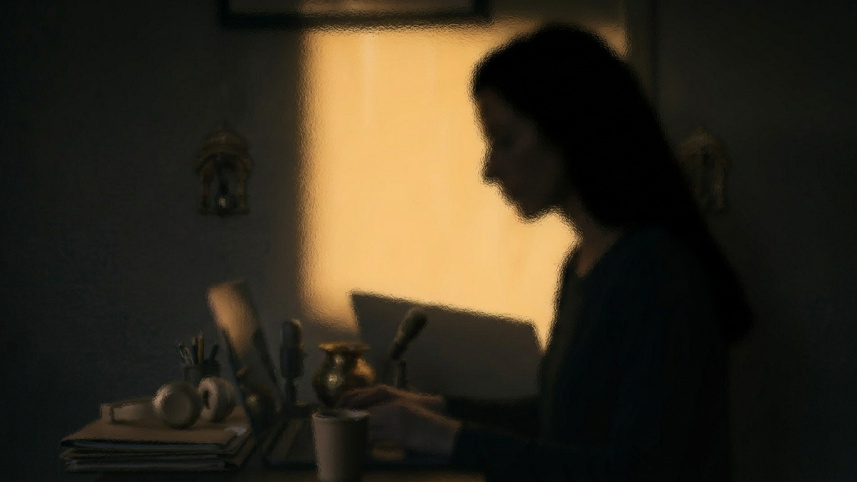
When a woman journalist attends a political party’s event, the only qualification she should need is that she is a journalist there to do her job. She should not have to satisfy a political leader’s religious expectations before asking him a question.
Recent remarks from Islami Andolan Bangladesh Senior Nayeb-e-Ameer Mufti Syed Muhammad Faizul Karim suggest otherwise.

At an IAB press conference in Purana Paltan on September 10, a woman journalist was allegedly moved from the front row and asked to sit at the back. When another journalist asked whether women reporters should sit in the front or at the back at IAB programmes, Faizul Karim did not give a direct answer. Instead, he said women journalists should attend while “observing purdah”, according to reports by Prothom Alo and bdnews24.com.
When a journalist pointed out that IAB leaders had appeared on television talk shows with women, Faizul Karim initially disputed this. He later acknowledged that one such appearance had taken place and said the party had stopped it.
He then said women were not being prevented from working as journalists, but should do so in accordance with Shariah.
The exchange raises a question that goes beyond where a journalist sits at a press conference: does a political party have the right to impose its religious expectations on women as a condition of doing their jobs?
Women do not practise journalism because political leaders allow them to. They attend press conferences to ask questions and inform the public. Their presence is professional, not religious or an endorsement of the people they cover.
Personal faith deserves respect regardless of who holds it. What is at issue here is different: whether one person's religious convictions should shape the professional conditions placed on someone else.
Press access can depend on security, accreditation and professional rules. It should not depend on a political party’s religious expectations.
And where does such a condition end?
Can a woman stand among male reporters? Can she interview an IAB leader face-to-face? Can she sit wherever male reporters sit? Can she host him on television? If any of these depends on whether she is a woman or meets a political leader’s religious expectations, she is not being offered equal professional access.
This is not merely a theoretical concern.
Faizul Karim said he was unaware of the incident. The allegation alone does not establish an official party policy, but his latest remarks make it harder to dismiss it as an isolated misunderstanding.
The concern also extends to decisions inside newsrooms.
If an IAB leader refuses to appear on a television programme with a woman presenter, an editor may simply assign a man. If women face additional conditions at IAB events, newsrooms may find it easier to send male reporters. A woman could then lose assignments not because she is less capable, but because accommodating a political party’s preferences is seen as more convenient.
Politicians should not decide who covers them based on gender. Editorial assignments should be decided by editors, not by the people they cover.
Article 28(2) of the Constitution says women have equal rights with men in all spheres of the state and public life. Article 39 guarantees freedom of thought and speech and freedom of the press, while Article 40 protects the right to enter a lawful profession or occupation.
Not every objectionable act automatically becomes a constitutional violation. But a political party seeking public office should still be judged against the principles it would be expected to uphold if entrusted with power.
That is particularly important in a country where press freedom remains under pressure. Bangladesh ranks 152nd out of 180 countries in Reporters Without Borders’ 2026 World Press Freedom Index. The media already operates in a difficult environment. It hardly needs another barrier to journalism based on gender.
 For all latest news, follow The Daily Star's Google News channel.
 IAB’s political record makes the question even more relevant.
The party has sought to expand its outreach among women voters and has been organising women and female students. There is nothing contradictory about organising women or seeking their votes. The concern arises when women are welcomed as voters and organisers but face additional conditions when they seek political representation or work independently.
IAB initially submitted nominations in 268 constituencies for the 2026 parliamentary election, although the final number was later reduced to 259 after scrutiny and withdrawals. Reports on the nomination process showed that the party had no women among its candidates.
There is a difference between welcoming women as voters and supporters and treating them as equals. That commitment is tested when women seek office, question leaders, disagree with them or simply do their jobs. That is why “we are not stopping them” is such a poor standard.
The question is not whether a political leader has decided not to prevent women from working. It is whether a woman can do the same job, enter the same room and ask the same questions on the same professional terms as the man beside her.
Arafat Rahaman is a journalist at The Daily Star. He covers education and writes on governance, rights and public accountability. He can be reached at arafat.mcj@yahoo.com.
Comments