


Why does Biman keep fixing problems the hard way?
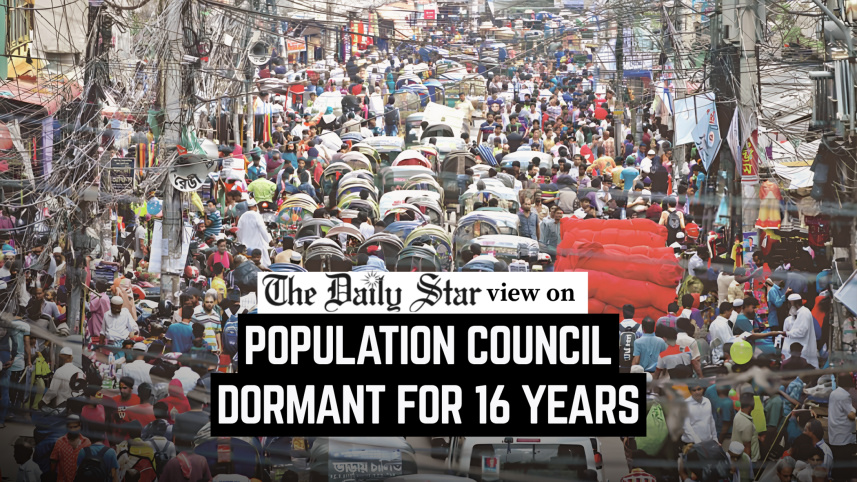
The fact that a vital institution like the National Population Council (NPC) has been inactive for 16 years is shocking and frustrating. According to a report published by this daily, the council last met in September 2010. Since then, Bangladesh has adopted two national population policies in 2012 and 2025, respectively. But the council, which is supposed to guide the country’s population policy, did not convene even once on either occasion. This is an extraordinary institutional failure, especially for a country like Bangladesh, which has long sought to maximise the potential of its demographic dividend.
The NPC is supposed to function as the central authority on population control and management in Bangladesh, providing strategic direction and insights for national policymaking and development planning. In its absence, such policies have been handled in a fragmented manner, through regular ministerial work. From what we can gather, the negligence towards keeping the population council up and running was mostly on the part of the Awami League government. Even during the interim government’s term, which reconstituted the council in April last year, no meeting was held.

The consequences of such long-standing neglect are now visible, the most significant one being the weakening of the country’s globally lauded family planning programme. A recent survey found that the country’s total fertility rate saw a rise for the first time in five decades: from 2.3 in 2012-2019 to 2.4 per woman in 2025. Meanwhile, the contraceptive prevalence rate dropped from 64 percent in 2022 to 58 percent in 2025—equivalent to the 2004 coverage levels. Furthermore, the country saw an estimated 15.8 lakh unintended pregnancies, nine lakh abortions, and 3,300 maternal deaths in 2025. These are the human costs of faltering family planning.
Then there are the country’s demographic challenges. Adolescent pregnancy, child marriage, changing family preferences, migration, urbanisation, employment, and the need to turn a large working-age population into productive human capital all require coordinated policy attention. An active population council could have flagged the gaps earlier and pushed for corrective action.
The BNP government must not repeat the mistakes its predecessors made. It must urgently revive the National Population Council and equip it with the necessary resources. The council must meet regularly and review population trends, family planning, reproductive health, education, employment, and demographic dividend policies. Its recommendations must feed directly into national planning and policymaking. Such an important institution cannot be allowed to remain in a coma.
 For all latest news, follow The Daily Star's Google News channel.
Comments