


We cannot continue to fail young learners
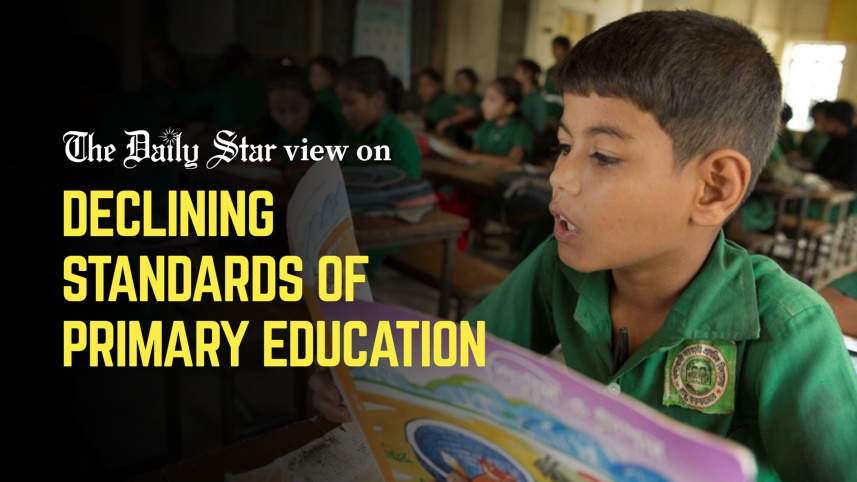
We are deeply concerned about a recent report indicating that a significant number of students in government primary schools lack knowledge of how to pronounce several basic letters of the Bangla alphabet and that their comprehension of basic Maths and the English language is poor. The Compulsory Primary Education Implementation and Monitoring Unit, under the Ministry of Primary and Mass Education, surveyed around 2,099 schools in June in the Dhaka Metropolitan area, Dhaka district, Narayanganj, and Munshiganj. The report rated only 254 schools as excellent, while nearly half were rated as average. Most alarmingly, the number of schools rated as substandard accounts for almost 35 percent of the surveyed institutions. This is disappointing, especially given the net enrolment rate reaching nearly 98 percent in 2015. It should be emphasised that these young learners are the unfortunate victims of an education system that continues to fail them.
Primary school students have long struggled with weak foundational literacy and numeracy, with only 25 to 44 percent of students in grades five through eight having mastery over Bangla, English, and Maths in 2016. Given that the level of reading, writing, and numeracy skills at the primary level shapes students’ future educational and professional prospects, the continued failure of successive governments to address these deficiencies is unacceptable. The current government’s increased allocation for compulsory primary education and its apparent willingness to address conditions on the ground give us reason to be cautiously optimistic. But, the government must learn from the shortcomings of its predecessors.

Issues such as a persistent shortage of teaching staff, overcrowded classrooms, a dismal teacher-student ratio, inadequate teaching methods, resource constraints, and poor sanitation facilities continue to adversely affect the sector. We saw how extreme heat has reportedly started to contribute to widening learning gaps. Recently, we witnessed how thousands of HSC examinees had to wade through waterlogged paths to reach exam centres and sit for one of the most crucial examinations of their lives. Any meaningful reform must account for these realities rather than treat them as isolated incidents.
The government’s immediate priority should be strengthening the foundations of primary education. Relevant authorities must remain cautious not to overload children by introducing multiple new subjects before ensuring the core curriculum itself is taught well. Additionally, changes in assessment should not be prioritised over investments in teacher training, classroom support, and evidence-based learning. The BNP’s election manifesto promised a move to value-based foundational education, alongside sector-wide reform. It is time for the government to keep its pledges.
 For all latest news, follow The Daily Star's Google News channel.


Comments