


A war in which all sides lose
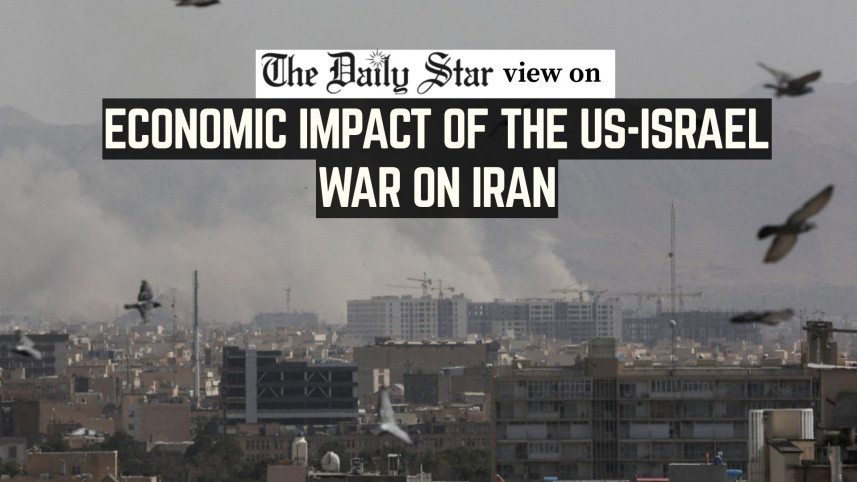
The war initiated by the US and Israel against Iran continues to escalate in the Middle East, leaving us deeply concerned as casualties pile up and the global economy faces dire threats. An all-out, protracted war in the Middle East, the world’s primary energy hub and one of the main routes for international air and sea transport, would undoubtedly disrupt global trade and push oil prices up. However, for an energy-dependent country like Bangladesh, the impact will go beyond a potential increase in crude and liquefied natural gas (LNG) prices.
Bangladesh imports approximately 110 LNG cargoes and over 75 lakh tonnes of crude and refined petroleum annually, mainly from the Middle East. Besides, 65 percent of the country’s total power supply depends on imports. Although experts and officials are not expecting immediate disruptions in the supplies of crude oil, LNG, and coal, there are reasonable concerns among consumers. Global oil prices jumped to $82 a barrel on Monday after three ships were attacked near the Strait of Hormuz. Although prices somewhat eased later on, some experts predict that a prolonged conflict could push them up to around $100 a barrel.

However, it is not just oil prices and supply that Bangladesh has to worry about. The Middle East is our major labour market, with around 75 lakh migrants working in Saudi Arabia, the UAE, Qatar, Kuwait, and Oman. Already, at least two Bangladeshis have been killed and seven have been injured. The fate of thousands more who were expecting to migrate to the region has become uncertain as hundreds of incoming and outgoing Middle Eastern flights have been cancelled. Therefore, the war will directly affect Bangladesh’s remittance inflow, which has so far kept our foreign exchange reserves healthy and cushioned the country against rising debt repayments and import bills. In the event of a prolonged war, we could face higher energy prices, increased import bills, declining reserves, and a depreciating currency, which could push an already high inflation even higher.
The concerns do not end there. Many ships carrying Bangladeshi RMG products to the US and European markets pass through the Suez Canal, the Strait of Hormuz, or the Bab al-Mandeb Strait. Conflict in or near these crucial gateways may force the use of alternative routes, increasing costs for exporters. This, too, will have a ripple effect on the economy. A Bangladeshi ship is already stranded at a Middle Eastern port with 31 crew members.
Thankfully, the government says it is monitoring the situation, taking precautions to ensure the safety of migrant workers, and preparing for possible economic fallout. But this war should serve as a lesson to reduce Bangladesh’s dependence on imported fossil fuels, remittances, and a narrow range of export markets. Ultimately, we hope that major powers realise that a prolonged war, regardless of who prevails, will end up hurting every country.
 For all latest news, follow The Daily Star's Google News channel.
Comments