


Voters need assurance of safety, not denial of facts
With only a week left for the election, the collection and analysis of intelligence reports to identify vulnerable constituencies and polling centres have not only become crucial but urgent. Thirteen constituencies have already been identified as highly risky, and media reports suggest law enforcers are conducting similar exercises to identify high-risk polling centres across districts. As the police continue these drills and assess the broader security landscape, we must emphasise that deploying extra forces around polling centres solely on election day is insufficient.
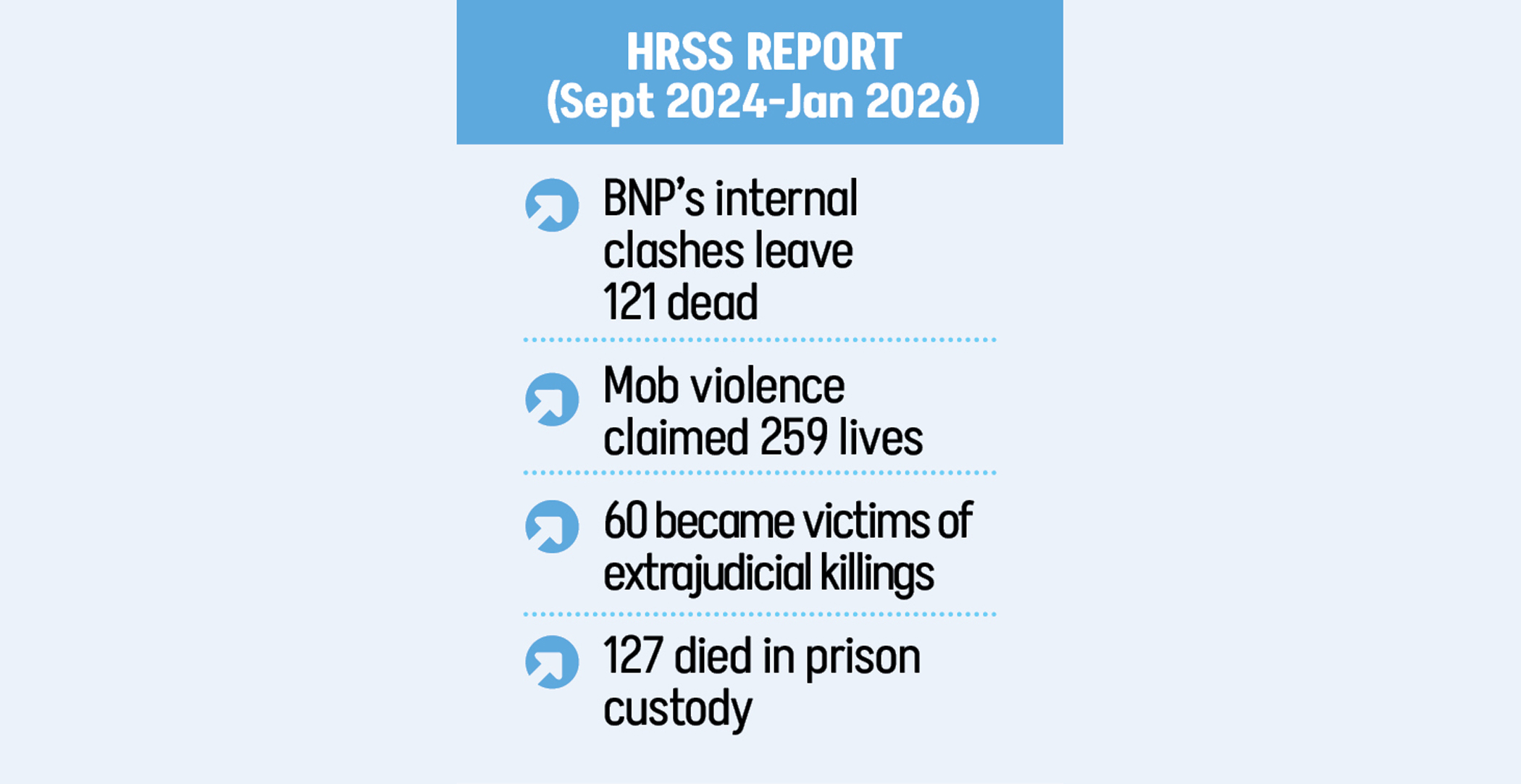
Several incidents of political violence, which turned fatal, have occurred recently. Last week, a Jamaat activist from Sherpur succumbed to his injuries after clashes with BNP activists over as ordinary an issue as seating arrangement at a programme organised by the local administration. According to Human Rights Support Society (HRSS), between September 2024 and January 2026, at least 195 people were killed and 11,229 were injured due to political violence. Of these deaths, at least five occurred in election-related violence since the date of the 13th parliamentary election was announced on December 11, 2025. The report also documented 970 injuries from 162 election-violence-related incidents, including clashes, attacks, vandalism, and arson involving rival candidates and their supporters. A report published in this daily earlier this week quoted police headquarters reports about 57 clashes in 50 constituencies since the announcement of the polls schedule. Of these clashes, 25 occurred between the BNP and Jamaat-e-Islami, eight within the BNP, another eight between the BNP and independent candidates, and three between the BNP and the National Citizen Party.

Besides, recent campaign rhetoric among the major political parties has taken on an increasingly hostile tone. Allegations of printing false seals, planning to “hijack people’s votes” are also rife. Thus, the possibility of pre-election and election-day clashes cannot be ruled out. Furthermore, law enforcement agencies must also be prepared to manage post-election clashes. In the past, communities that voted for a particular party/candidate would often come under attack. This issue must be taken into special consideration this year so that the promise of a new pluralistic and democratic Bangladesh is not stained in the aftermath of this much-awaited national election.
In this context, the home adviser’s claim that “there is no mob violence” and that “violence is impossible during the election” will do little to ease voters’ apprehension about the February 12 polls. What is needed is visible action, not just by law enforcers, but also by the Election Commission. Monitoring and punitive action must be enforced uniformly against all parties for any violation, major or minor, to set a clear example. Political parties must also show restraint and rein in disruptive elements to ensure voters can exercise their choice freely and without fear. If this election is to be historic, the process and its aftermath both must be violence-free.
 For all latest news, follow The Daily Star's Google News channel.
Comments