


Streamlining hawker markets is a must
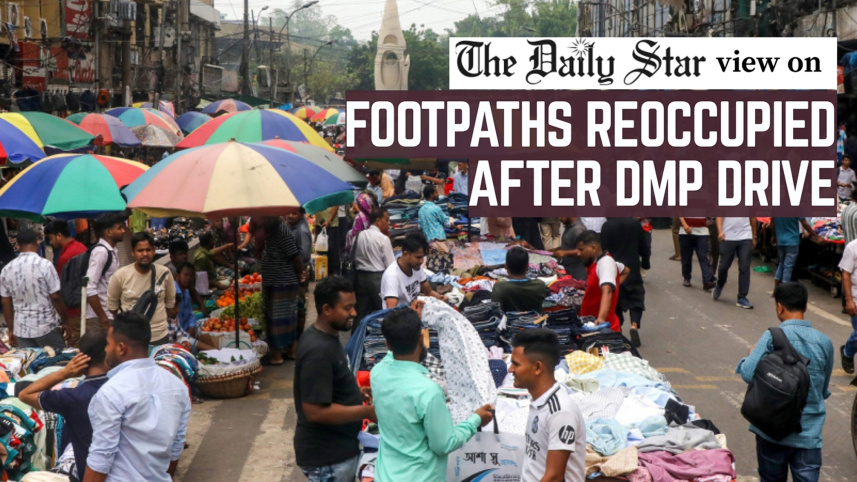
Despite a massive drive by the Dhaka Metropolitan Police (DMP) to clear Dhaka’s footpaths of hawkers not long ago, a recent report by The Daily Star has found many areas reoccupied already. This suggests that the DMP’s promise to conduct follow-up operations to prevent reoccupation is not being fulfilled. Worse, the informal mechanism keeping hawkers on the streets is still in full swing, as they are reportedly paying tolls to so-called linemen in order to occupy spots in some areas of the capital. We must ask, what is the point of such drives if the authorities won’t try to sustain their effect?
Dhaka is infamously unwalkable, and the presence of hawkers and roadside shops, along with construction materials, contributes largely to this reality. It is no doubt commendable that the government has taken notice of the issue and moved to action. Still more admirable is the Dhaka South City Corporation’s plan to regularise such businesses by providing licences, designating operations schedules, and introducing “holiday markets” and “night markets.” Already, the DSCC has issued a public notice banning the placement of goods on footpaths in front of markets—warning of strict legal action—including cancellation of trade licences. The Dhaka North City Corporation, too, has plans to make alternative arrangements for small-scale traders and introduce a token system to eliminate extortion.

However, we agree with experts that only a comprehensive plan can make changes sustainable and humane at the same time. While creating alternative employment and reducing poverty can be the long-term measures that reduce the overall number of hawking businesses, it is equally important to go for measures that are grounded in our current reality, such as creating alternative spaces for hawkers instead of providing them licences to operate on sidewalks. True, the prevalence of small informal ventures signals a lack of formal employment opportunities, but it is ultimately a symptom of a system that has been able to thrive partly because it serves local politicians by allowing them to extort the small business owners.
Shooing hawkers off footpaths without holding extortionists accountable and without first arranging an alternative space or employment for hawkers defeats the purpose of such drives. So we urge the authorities to not only clear footpaths but also keep at it by increasing oversight and developing rehabilitation plans for hawkers. It must also be ensured that larger businesses and private residences are not allowed to use pedestrian walkways as an extension of their warehouse or driveway.
 For all latest news, follow The Daily Star's Google News channel.
Comments