


Keep soldiers and politics apart
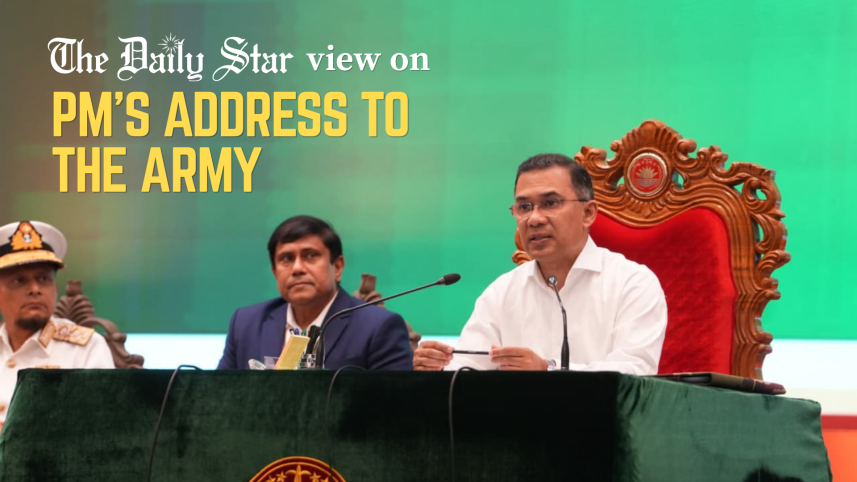
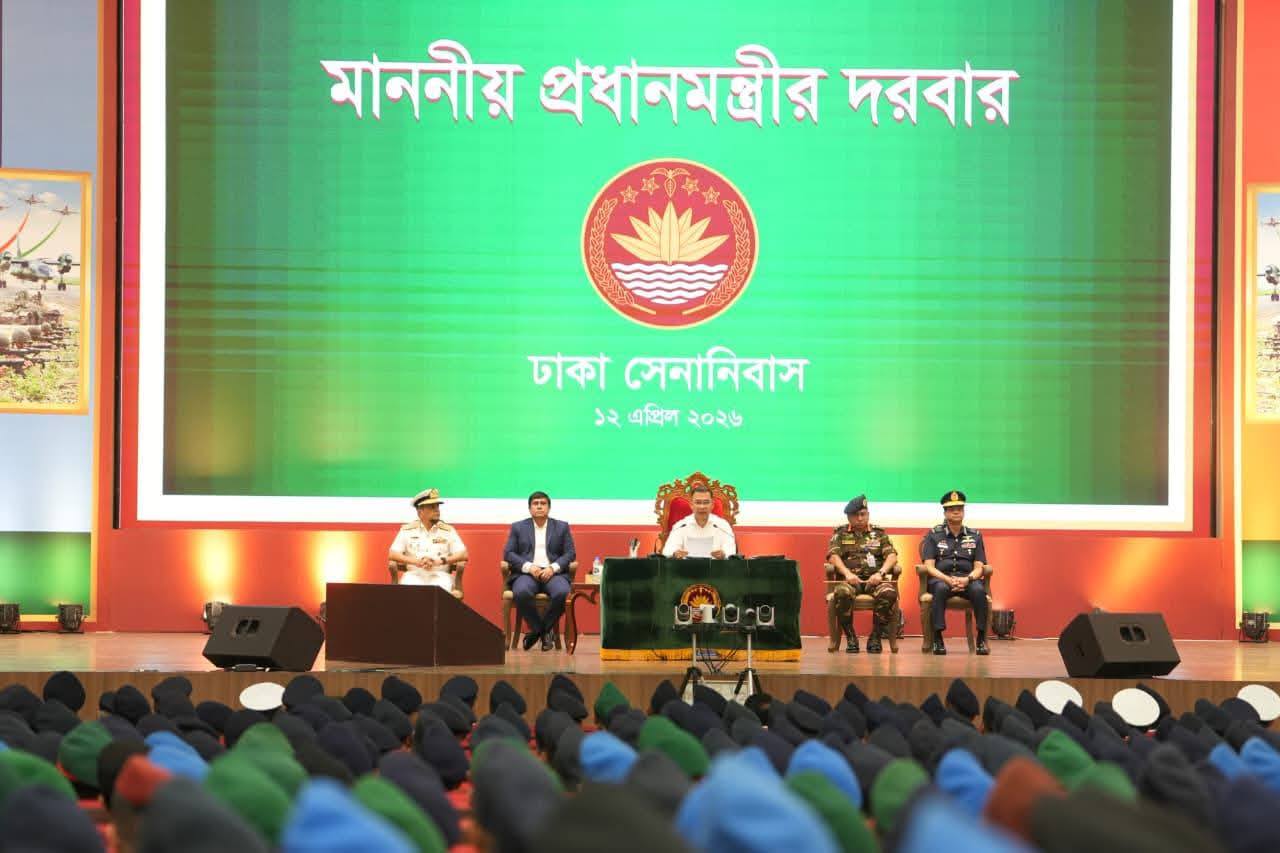
Prime Minister Tarique Rahman has said what needed saying. While addressing the armed forces at Dhaka Cantonment on Sunday, he made it clear that the military belongs to no individual, no family, no party. Its loyalty is to the Constitution and the people. This is a powerful statement, and that the PM felt it necessary to say so before an audience of uniformed officers is itself a measure of how far a section of the armed forces had strayed from that norm in the past, especially under Sheikh Hasina’s rule.
Under 15 years of Awami League rule, individual officers deputed to different security agencies were drawn into the machinery of political control, and their professional culture was eroded. That erosion often took scandalous forms—enforced disappearances, unlawful detention, and the brazen takeover of Islami Bank by serving officers. Credit, however, must be given where it is due. In moments of crisis, the armed forces have often filled the vacuum. When law and order faltered, or when natural disasters overwhelmed civilian agencies, they stepped in. They did so again after the 2024 mass uprising to make up for the administrative paralysis that followed it. That deserves recognition.

The army’s role in elections, too, has become hard to avoid. In the past, votes were stolen, suppressed, or stage-managed. But the February 12 election, by most accounts, marked a departure. Soldiers were deployed across constituencies, and polling proceeded without the organised thuggery that marred previous elections, resulting in a proper democratic transition. The PM has acknowledged this, and rightly so. But this is where the distinction must be held. There is a difference between soldiers who hold a country steady during a crisis and soldiers who stray beyond their constitutional role. This is why the PM’s address warrants careful scrutiny.
Bangladesh faces a gap it has not yet honestly confronted: what legal protection does an officer have for refusing an illegal order—one that violates the Constitution or basic human decency? At present, the answer is not reassuring. Refusing an illegal order from superior officers requires courage but lacks clear legal protection. It is time to confront this if Bangladesh is serious about having armed forces that remain within constitutional bounds. Officers who decline to become instruments of state crime deserve not just moral recognition but also institutional protection.
Bangladesh’s armed forces have earned a reputation that extends well beyond our borders. The country is among the largest contributors to UN peacekeeping missions in the world, deploying troops to conflict zones. Our soldiers have served in some of the most demanding areas, often in conditions that test not just military competence but moral judgement. That record remains a source of national pride.
At home, a military that safeguards elections while remaining neutral is an institution a democracy must accommodate. But a military that begins to see itself as the final arbiter of political order is one a democracy cannot sustain. So, we wholeheartedly support Tarique Rahman’s remark that the armed forces must serve the nation through the Constitution. What remains is the harder part: making it stick. Democratic consolidation is earned slowly, through consistent practice.
 For all latest news, follow The Daily Star's Google News channel.
Comments