


End cronyism in the banking sector

The finance minister’s submission to parliament of the list of top loan defaulters is another stark reminder of how political cronyism has, over the years, enabled a select few to manipulate the system, pushing the banking sector to the brink of collapse. The facts presented reveal both the scale and the depth of the problem. They also underscore how formidable the challenge will be for the BNP government in recovering these vast sums and holding those responsible for this debacle to account.
Among the most striking revelations is the dominance of the S Alam Group, already implicated in some of the most serious financial crimes imaginable. The group exercises direct and indirect control over 11 companies listed among the top 20 defaulters. These companies alone account for at least Tk 22,881 crore in defaulted loans—approximately 65 percent of the total owed by the top 20 defaulters. For context, this figure exceeds half of the current fiscal year’s health sector allocation of Tk 41,908 crore. The Anti-Corruption Commission (ACC) has already filed multiple cases against the group, alleging embezzlement and money laundering worth billions of dollars. The fate of these cases may now hinge on international arbitration, as the group has reportedly moved to the World Bank’s International Centre for Settlement of Investment Disputes.

Beyond S Alam Group, the list of top defaulters also includes two entities of the Beximco Group, owned by Salman F Rahman, a powerful adviser to the deposed prime minister Sheikh Hasina. He is reportedly facing multiple allegations, including financial crimes and other serious charges linked to his political role under the previous regime. The list further reflects the extent of political patronage in banking decisions, with several top-defaulter companies linked to former members of parliament.
Expanding beyond the top 20, the finance minister also disclosed that loans involving current members of parliament and their associated entities amount to Tk 11,117 crore, although the exact number of such individuals was not specified. Notably, this figure excludes individuals who obtained stay orders from the High Court, suggesting that the true scale may be even larger. While borrowing is not inherently problematic, these revelations offer little assurance that the entrenched nexus between political power and banking will dissipate any time soon. They also highlight a troubling reality: recent electoral reforms have not gone far enough to prevent defaulters from contesting for public offices.
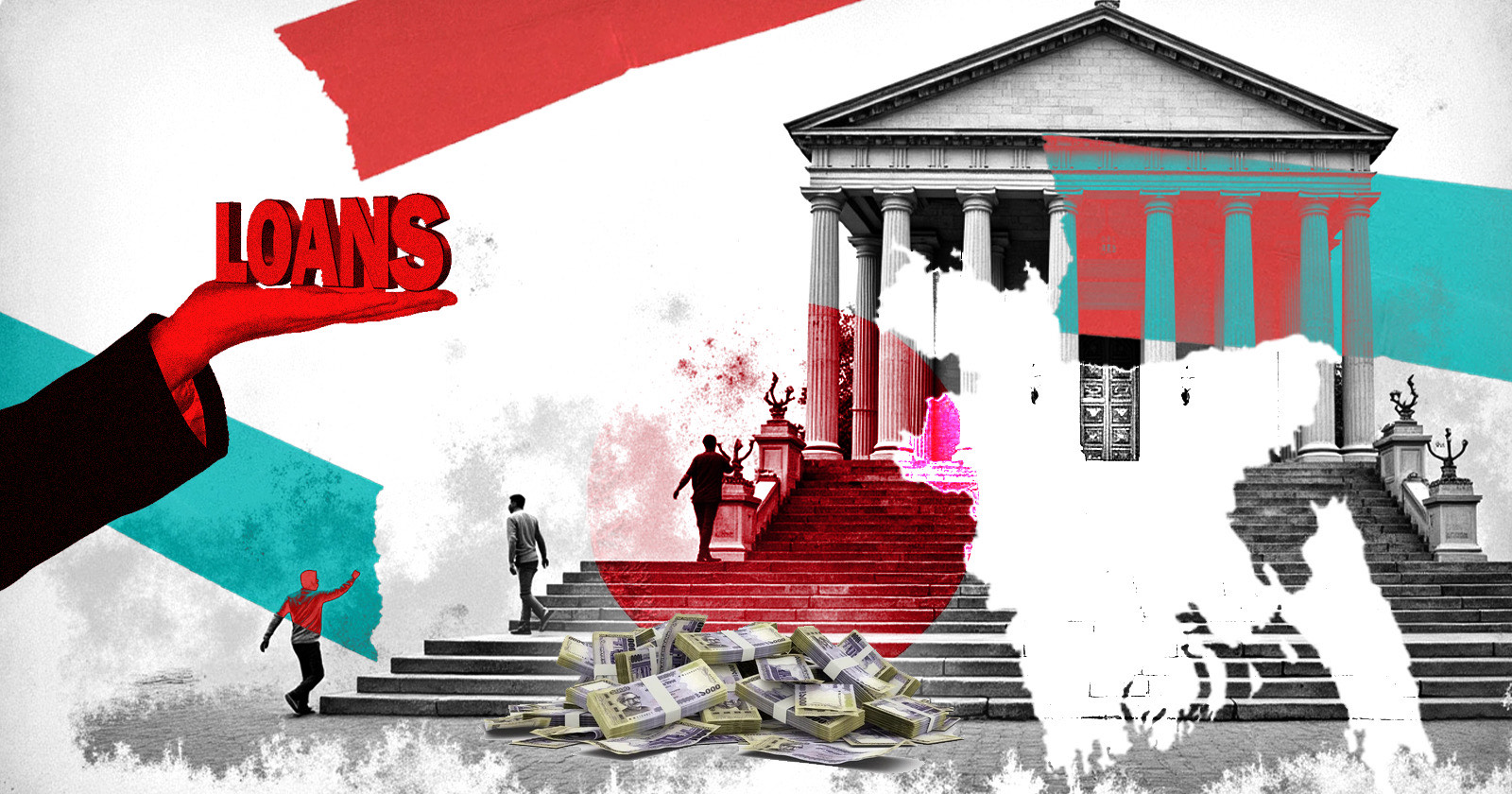
Finally, the staggering volume of non-performing loans reached at the end of last year—amounting to Tk 5.45 lakh crore—underscores the severity of the crisis in banking governance. As noted in a report in this paper, this sum could have financed up to four nuclear power plants comparable to Rooppur, despite concerns that the Rooppur project itself is among the most expensive of its kind globally. Bangladesh can ill afford the persistence of such systemic failures. The new government must urgently initiate a robust recovery drive to safeguard depositors’ savings. Habitual defaulters, along with their enablers, must no longer be afforded leniency.
 For all latest news, follow The Daily Star's Google News channel.
Comments