


Early action is a must to curb mosquito spread
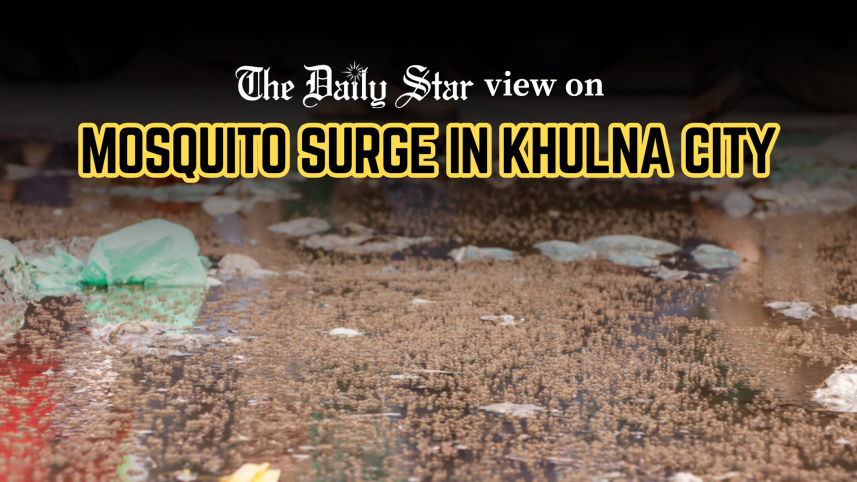
It is deeply concerning that the mosquito problem, once seasonal, is becoming a year-round challenge across the country, largely thanks to inadequate and scattered efforts from the authorities concerned. A recent report published by this daily highlighted the dismal situation in Khulna city, where the mosquito population is seeing an increase as temperatures climb. According to Khulna City Corporation (KCC), 56 people are currently engaged in spraying and other anti-mosquito activities, while over 300 cleaners are working to clean up common breeding grounds such as drains and bushes. A Tk 823 crore project on drainage system development is also nearing completion and is expected to reduce the impact of mosquitoes. However, the fact that residents continue to struggle with shopping, studying, cooking, or simply being anywhere without being bitten by mosquitoes underscores the inadequacy of these measures.
The situation is no better in other major cities, as people grapple with mosquito-borne diseases. According to the Directorate General of Health Services’ (DGHS) dengue dashboard, hospitals across the country have reported 1,741 cases since the beginning of the year, with 45 cases recorded in the past week alone. Given the potent combination of already high temperatures, intermittent rains, and vacated homes during Eid holiday, entomologists are right to fear a surge in numbers. They also recommend proactive measures such as using insect growth regulators and environmentally friendly microbial insecticides to curb mosquito breeding. But will the authorities act accordingly?

On Saturday, the Dhaka North City Corporation (DNCC) launched a special three-day campaign across 536 educational institutions under its jurisdiction. Under the campaign, potential sources of stagnant water will be removed or destroyed, larviciding and adulticiding activities will be carried out on school premises and in surrounding areas, and students will be educated on dengue prevention. While this is a commendable initiative on paper, we hope it will not be a one-off event and that the measures introduced during this campaign will continue not only in schools under the DNCC but also be expanded nationwide, especially in more vulnerable areas.
The authorities must remember the lessons from 2025, which not only saw the second-highest number of dengue cases in 25 years but was also the third-deadliest year, with 413 deaths recorded. This year, under a new government that vows to set itself apart, we hope to see proactive steps to curb the spread of mosquito-borne diseases. The authorities must tackle this issue with the seriousness it deserves and ensure that the recommendations of experts are properly incorporated into their action plans.
 For all latest news, follow The Daily Star's Google News channel.
Comments