


An alarming report on children’s exposure to climate risks
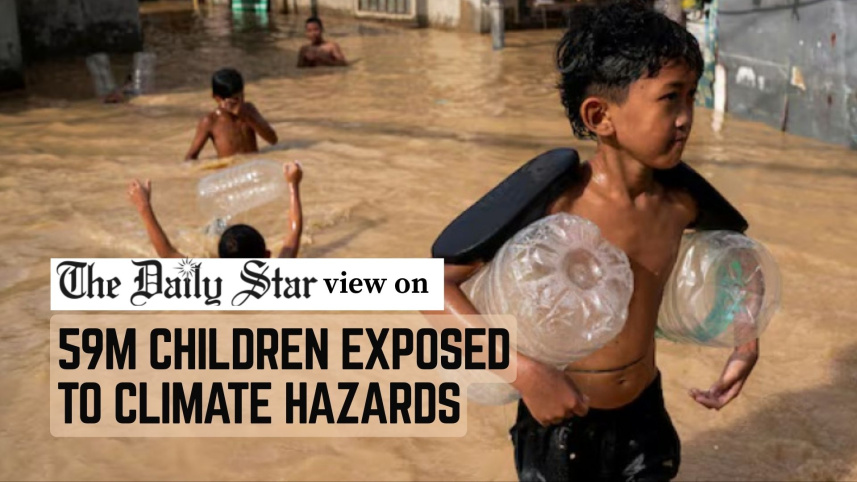
In a country where children are regularly exposed to various physical, psychological and socioeconomic vulnerabilities, Unicef’s latest disclosure of their level of exposure to climate hazards is perhaps not instantly jarring. But it should be, not just because of the severity of the individual hazards, but also because of the way they are converging to produce a near-permanent state of risk for nearly every child growing up in the country. As reported by this daily, according to Unicef’s Children’s Climate Risk Report 2026, Bangladesh’s 59 million children are living through overlapping and compounding vulnerabilities, with nearly nine in ten, or around 53 million, facing three or more climate hazards simultaneously.

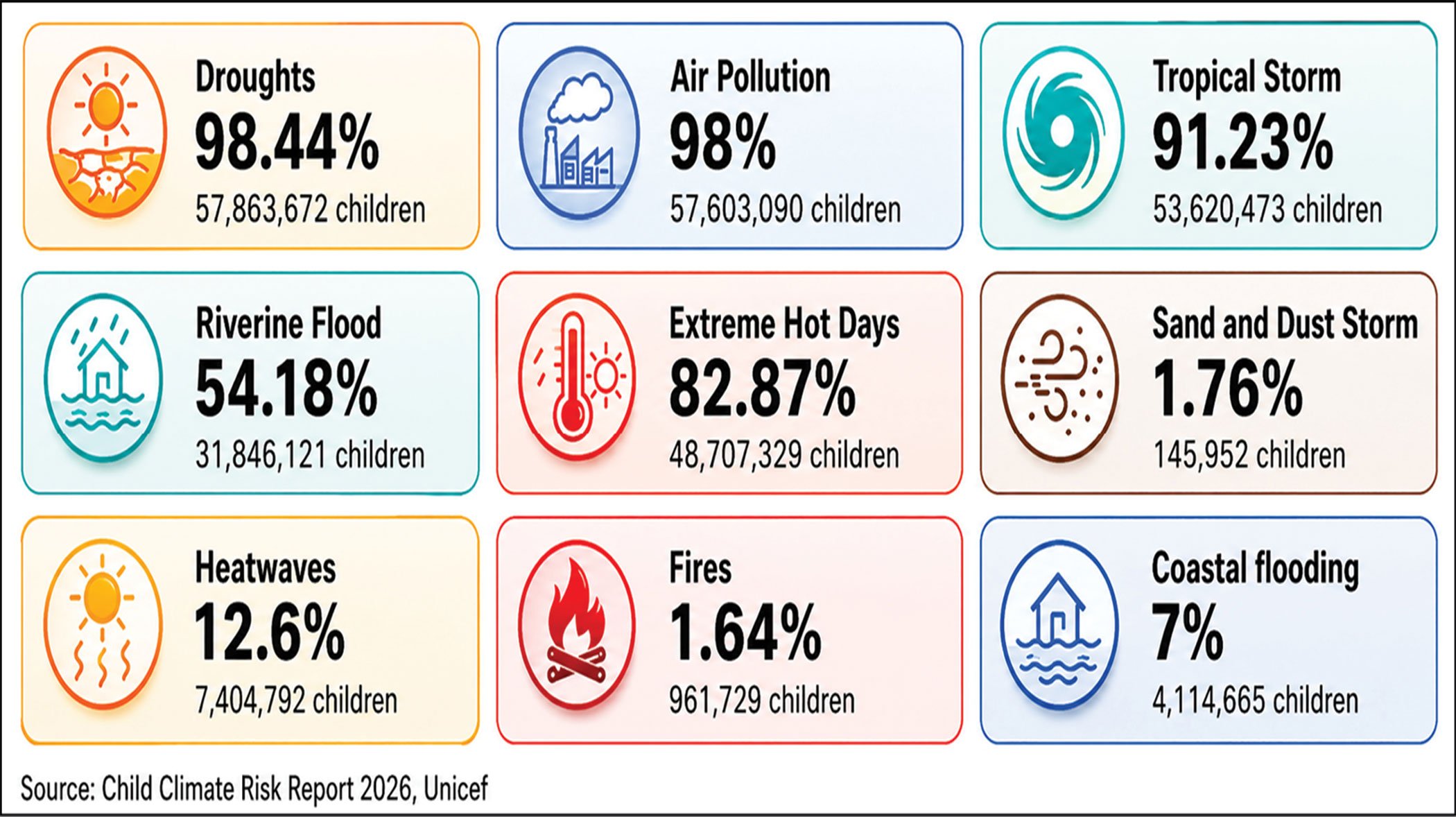
It goes without saying that this convergence has disproportionate effects for children, whose developing bodies are less equipped to cope with the hazards. The Unicef report, its most detailed assessment to date, examined children’s exposure to eight climate hazards: riverine flooding, coastal flooding, droughts, extreme heat, heatwaves, tropical storms, fires, and sand and dust storms. It also measured exposure to air pollution and vector-borne diseases, both of which are intensifying due to climate change. Thus, in the final analysis, Bangladesh ranked among the four worst countries out of 186 globally, alongside Myanmar, Pakistan and Vietnam. Let that sink in.
If we delve into the individual hazards, Bangladesh ranked among the worst countries for children’s exposure to riverine flooding and droughts, both agricultural and meteorological. It is also the third worst-ranked country for coastal flooding, air pollution, and tropical storms. The frequent occurrence of heat stress, air pollution, and waterborne diseases, as well as their health effects, are already well-known to the layperson. Displacement or disruptions caused by floods, droughts and/or storms further increase children’s vulnerabilities by hindering education, limiting access to nutrition, and compounding psychological stress. Their combined effects follow them throughout their lives.
The question is, what are we doing to prevent them? The absence of an instantly debilitating effect can sometimes lull policymakers into complacency, which seems to be the case at present. For instance, the recently proposed climate budget, while reflecting a continued commitment to adaptation measures with a notable increase in allocations, has again underscored the persistent gap between the scale of climate risks and the institutional readiness necessary to address them. It has also exposed how our climate resilience continues to be “subsidised” by the unpaid care work of women and girls, especially in coastal and other highly vulnerable areas. This response pattern does not reflect the sense of urgency needed to protect the most vulnerable among us, especially children, from the escalating hazards.
We, therefore, urge the government to take the Unicef report with the seriousness it deserves. While continuing to work with our global partners on the broader challenges of emissions reduction and adaptation finance, it must also adopt targeted and inclusive measures to ensure that children are not left to bear the costs of domestic structural weaknesses and policy failures.
 For all latest news, follow The Daily Star's Google News channel.
Comments