


Scientists grow chickpeas in ‘moon dirt’
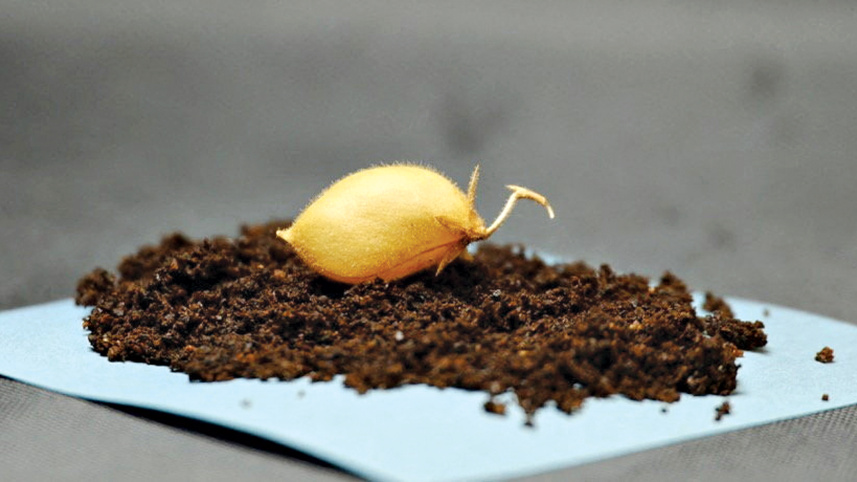
Scientists working to cultivate the field of extraterrestrial agriculture have grown chickpeas in dirt made mostly of simulated lunar soil, a step toward enabling astronauts on long-term moon missions to produce their own food.
Researchers said harvestable chickpeas were grown in soil mixtures composed primarily of “moon dirt” modeled after lunar samples retrieved during Nasa’s Apollo missions more than half a century ago.

Chickpeas of a variety called “Myles” were raised in a climate-controlled growth chamber at Texas A&M University. Seeds were coated with beneficial fungi and planted in a mix of the simulated lunar soil, made by Florida-based company Space Resource Technologies, and a nutrient-rich substance called vermicompost produced when earthworms break down organic waste.
Harvestable chickpeas grew in soil mixtures of up to 75 percent lunar simulant. As the percentage of simulated moon soil - known as regolith - increased, the number of harvestable chickpeas decreased, though the size of the chickpeas remained stable. Seeds planted in 100 percent lunar simulant failed to produce flowers and seeds, experiencing early death.
The United States and China have plans to send astronauts back to the lunar surface in the coming years, with an eye toward long-term bases on the moon.
“Chickpeas are high in protein and other essential nutrients, making them a strong candidate for space crop production,” said Jessica Atkin, a doctoral candidate and Nasa fellow at Texas A&M’s Department of Soil and Crop Sciences, lead author of the research published on Thursday in the journal Scientific Reports.
 For all latest news, follow The Daily Star's Google News channel.
Comments