


Why the youth must rethink how they use AI
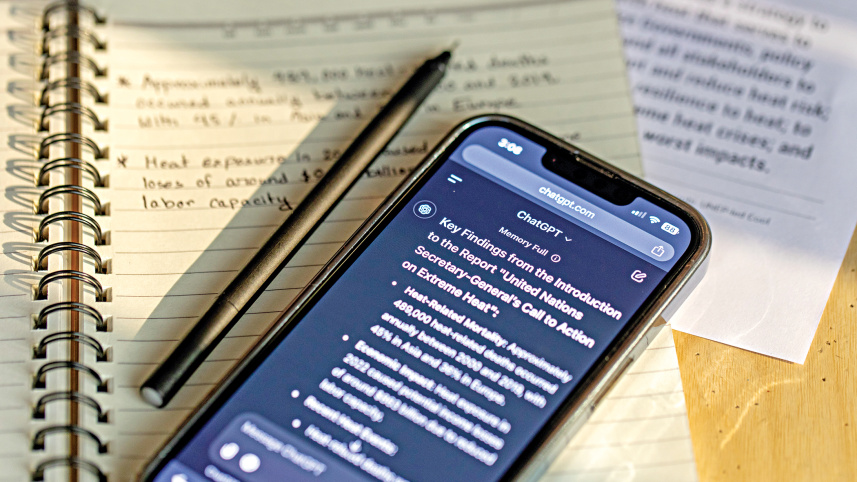
I distinctly remember attending a class lecture in November 2022, when ChatGPT was first released to the public, where my instructor expressed his unease about the artificial intelligence (AI) tool and what it meant for learning and teaching. It was a justifiable worry, as within the brief period for which AI has been accessible to the masses, it has made a significant impact across all sectors, giving way to both uses and misuses of the powerful tool.
In fact, AI has been integrated into our lives not only on an individual level, but it has also singlehandedly reshaped the nature of many jobs, permeated across many industries, and significantly impacted education. In a more contentious turn of events, AI has even found its way into art, literature, and in more intimate capacities as a friend or conversation partner for people.

This phenomenon has brought on a whole assortment of apprehensions, specifically for the younger generations. One rather hyperbolic statement we often hear is that artificial intelligence will soon replace people in the workforce and may soon be the driving force behind our world. With so many employable young people who haven’t cemented their foothold in the workforce and a great number of students preparing to battle similar situations, this is a major concern. These concerns affect the younger generations exponentially more than any other demographic, which is why the extent of AI usage among the youth may need reconsideration.
Be that as it may, it’s evident that AI has integrated itself deeply within the framework of our personal, educational, and professional lives and that it’s here to stay for the foreseeable future. And just like any other innovation, it has a place in technological development, although a more regulated approach is necessary.
Photo: Orchid Chakma
While it may be tempting to ask AI to write your lab report for you or code you something fundamental that you obviously can do but don’t want to bother with, or even create a cute animated photograph of you and your friends, it may be best to step back and think about the broader implications of AI usage. You may also find it exhausting to talk about a situation with a friend that might receive mixed reactions, and the sweet reassurances of your AI chatbot might appear to be a more welcome social interaction, but think about whether your interpersonal communication skills are worse off for it.
Tasneem Huq Azad, a student currently pursuing medicine at Saba University School of Medicine, opines regarding the tendency people have of using AI for personal advice: “AI often helps people who use it like a personal therapist in what we call collusion, which just coddles them instead of confronting them with behaviour that needs change, which adds to the ‘self’ population mindset that people have because of the internet as is.”
But Azad believes AI has a place in healthcare most of all. “Aside from early detection, it can be used as a teaching tool in radiology, histology, and pathology, she says. “Even in therapy, it can be used for notetaking and generating patient notes, which may relieve loads on doctors. As medical students, AI can help us study databases with cross-checked, verified label images so we can practise it and tell if we’re right, give us tips for pattern recognition, generate questions, etc.”
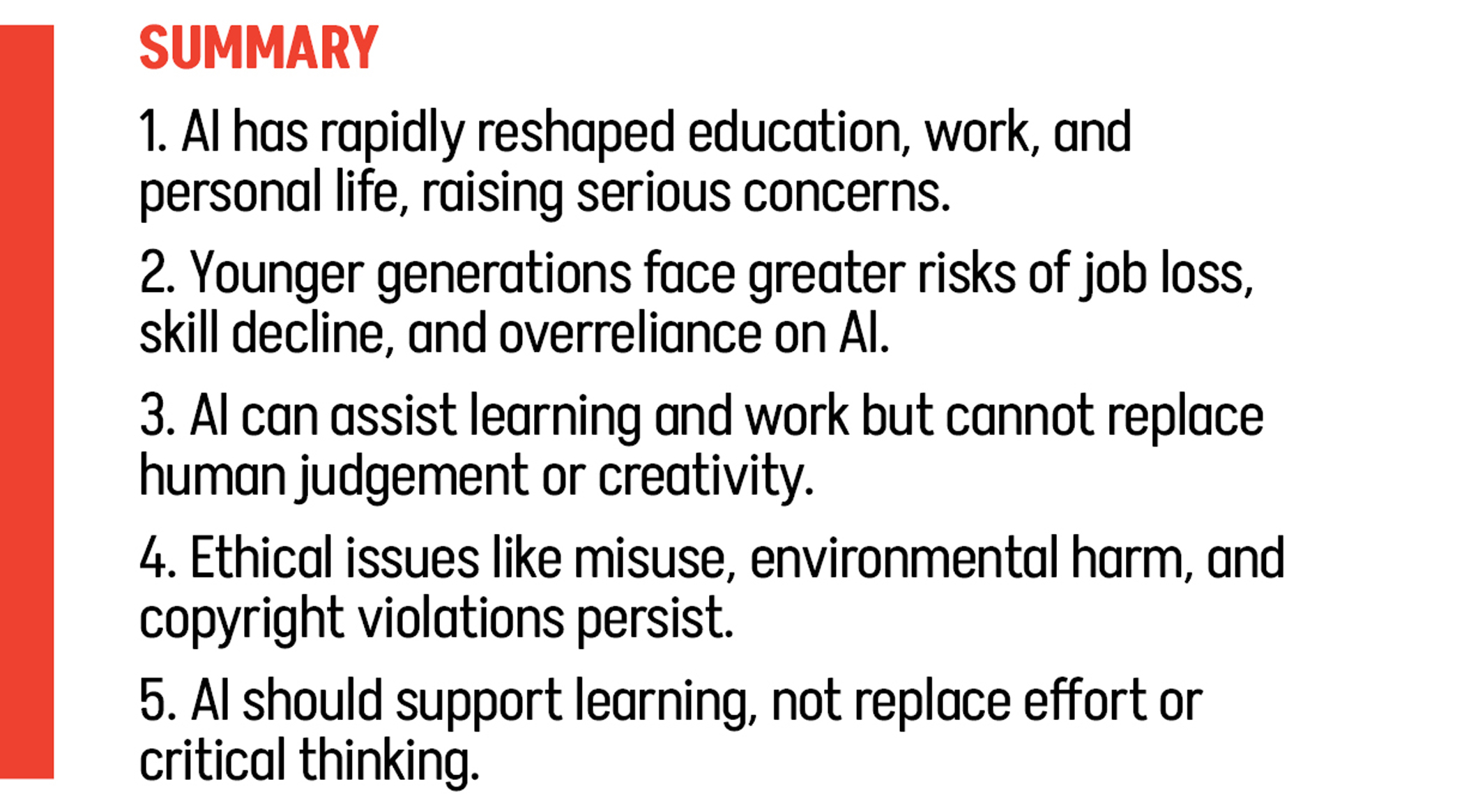
Then comes the ethical consideration. AI, while making lives easier, has created windows of misuse while significantly affecting the environment negatively. Not to mention, AI is also on its way to creating over-reliance, which not only hinders learning abilities but also dulls existing capabilities.
This isn’t to say you shouldn’t use AI at all; it’s a powerful tool that we should be making proper use of for our own betterment. A very simple example would be that instead of asking AI to generate a 1000-word essay due tomorrow, you may ask it to offer a study plan tailored to your learning style that may help you absorb your topic before you get to work, preferably a while before the deadline. Not only does this save you from losing your critical thinking skills over time, but it also saves you the embarrassment of turning in terrible work, because artificial intelligence is far from flawless. AI might be able to generate a 3000-word essay on Macbeth, but there’s a solid chance your chatbot assistant might label it the greatest love story ever written.
Illustration: Abir Hossain
Raonak Binte Khalil Arpa, a student of literature in the Department of English and Modern Languages, North South University, expresses her thoughts on AI in her field: “I don’t really think AI has much of a place in research work, or even teaching and learning in literature, because this is a subject that requires human touch. Hence, I can’t fully trust AI to help me in my work, and although I have used it for certain purposes, I have never seen it generate deep analyses.”
Arpa explains in what facets she finds AI useful and maybe beneficial, but also warns against the repercussions: “Sometimes, AI can help me come up with ideas, but it can’t give me full lists of things to do. That’s how I command it to get benefits. Suppose I won’t ask AI to write a whole poem for me, but if I get stuck on a stanza, I might ask for opinions on how to connect and rhyme one line with another. It will give me words or ideas, but not the poem. It’s basically like how I would ask a friend about this. However, I believe that if I don’t use AI to polish everything I write, it will be more beneficial for me in the long run.”
Souvik Ahmed, currently working as an AI intern at Datasoft Ltd., explains his outlook on how AI has affected the job market and how it’s best implemented for the general population: “When I think about computer-leaning professions, I think the panic that AI will replace humans is unjustified. It may replace repetitive debugging or rule-based work, but not actual programmers. I don’t like delegating everything to AI, as it can’t replace human thinking, although it can cause skills to atrophy, since many computer science graduates are using AI code these days. It’s trained on human data and lacks a true understanding of things, can confidently be very wrong, and can be misused for propaganda, deepfakes, and art generation. However, AI can be used to augment and hasten processes; think about an assistant helping a programmer debug their code. That being said, ethical use of AI requires more transparency on what is AI-generated content and what is not, and the data required for AI should be obtained through permission.”
When asked about his perspective on AI, Ahmed elaborates, “I have mixed feelings about whether it should be accessible to the masses or not. It’s a grey area, as on one hand, I don’t like the idea of tech being gatekept by authorities and corporations. On the other hand, letting everyone use it without regulations will obviously result in misuse. There definitely needs to be regulations and safeguards on what sort of AI is being open-sourced and how they should be used and customised based on the license they’re under.”
In the end, the common consensus surrounding the use of AI seems to be that instead of getting rid of it entirely, it’s up to individuals and corporations to not misuse the tool. In cases like AI art and literature, generative AI is often trained on copyrighted data and simply generates based on merging samples, which may be defined as stealing. Companies often feel inclined to cut costs by utilising AI and not hiring employees, and in our personal lives, we may feel inclined to let AI take care of boring work.
However, considering the repercussions, we need to take it upon ourselves to ensure that we don’t develop a reliance. There’s no shortcut to the learning process, and there’s no alternative to practice if you want to keep on constantly honing your skills. AI can help enhance your learning and working experience, and you know best of all exactly in what areas it can be of the most help. That being said, if you feel like reaching for an AI chatbot at the slightest inconvenience, it might be time for you to step back and re-evaluate the role you’re letting artificial intelligence play in your life.
Zabin Tazrin Nashita is a sub-editor at Campus, Rising Stars, and Star Youth.
 For all latest news, follow The Daily Star's Google News channel.
Comments