


TIME calls Tarique Rahman ‘clear front runner’ in upcoming polls
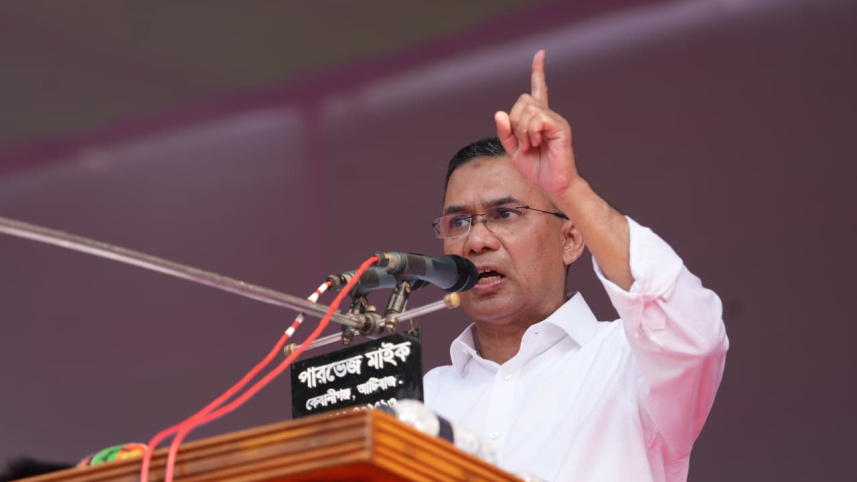
US-based TIME magazine, in its latest issue published yesterday, has called BNP Chairman Tarique Rahman the “clear front runner” in the upcoming February 12 elections, carrying an analysis ahead of the polls.
“Tarique Rahman is the clear front runner in Feb 12 elections, which were called after Hasina’s ouster in a student-led popular uprising 18 months ago,” read the article, which was partly based on an interview with him.
 For all latest news, follow The Daily Star's Google News channel.
 It said Tarique was positioning himself as a “bridge between a political aristocracy that dates back to Bangladesh’s liberation struggle and the aspirations of its young revolutionaries”.
TIME wrote that the situation was tinged with irony as, despite being Bangladesh’s de facto opposition leader, Tarique’s speeches had been banned from local media for a decade by the autocratic, now-ousted prime minister Sheikh Hasina.
The TIME interviewer spoke to Tarique in the garden of his family home, “resplendent with bougainvillea and marigolds”, where the BNP chairman gave his first interview since returning home after 17 years in exile.
“The thing is that I’m not very good at talking anyway . . . but if you ask me to do something, I try my best,” Tarique told the magazine.
According to TIME, to his supporters Tarique was a “persecuted redeemer returning to save his beleaguered homeland”, while he “insists he’s the right person to heal his riven nation”.
“It’s not because I’m the son of my father and mother (rather) my party supporters are the reason why I’m here today,” he said.
The magazine said it had been a whirlwind few weeks for Tarique, who arrived in Bangladesh on December 25 last year and was greeted by hundreds of thousands of rapturous supporters who had waited throughout the night at Dhaka’s Hazrat Shahjalal International Airport.
The analysis noted that just five days later, his mother, Bangladesh’s first female prime minister Begum Khaleda Zia, passed away following a long illness, drawing even larger numbers to throng the sprawling capital to pay their respects.
Tarique described the situation, with welling eyes, saying it was “very heavy in my heart”.
“But the lesson I learned from her is that when you have a responsibility, you must perform it,” he said.
TIME, however, observed that responsibility might be nothing less than following in her footsteps, commenting that “Bangladeshis appear willing to take him at his word”.
TIME wrote that Tarique appeared “soft-spoken and introverted, preferring to listen rather than hold court”, while his favourite pastime in London was strolling around leafy Richmond Park, “lost in his thoughts, or reading history books”.
“His favourite film is Air Force One. ‘I’ve probably seen it eight times!’,” he revealed to the magazine.
According to TIME, Tarique came across as a “policy wonk” who can summon facts and figures on any issue.
He wants to dig 12,000 miles of canals to help replenish a depleted water table, plant 50 million trees a year to combat land degradation, and create 50 new green spaces in Dhaka to help the smog-wreathed capital breathe.
Tarique Rahman told the magazine he planned to install trash-burning power generators, repurpose technical colleges to upskill migrant workers, and partner with private hospitals to alleviate an overwhelmed state healthcare system.
“If I can implement just 30 percent of what I have planned, I’m sure the people of Bangladesh will support me,” he said.
During Bangladesh’s 2007–2008 military-backed caretaker government, Tarique was imprisoned for 18 months.
He suffered torture in prison that caused spinal problems which still affect him today, and his departure to the UK was originally to seek medical treatment.
Comments