


Manifesto expectations: Political use of police must end


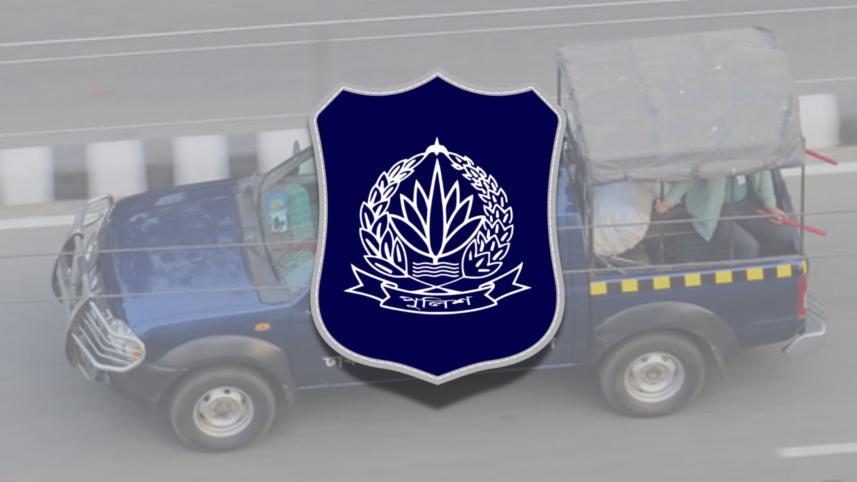
As major political parties prepare their election manifestos, law enforcement experts and rights activists urge them to make law and order a top priority, keep police free from political interference, and end the partisan use of the force.
They also called for an independent body to investigate allegations of rights violations by law enforcement personnel and submit regular reports to the government.

Experts recommended increasing police strength in line with the population, ensuring neutral and transparent recruitment, and establishing an independent police commission to oversee appointments, promotions, training, and benefits.
For years, political influence has plagued policing in Bangladesh, with almost all parties accused of using law enforcement for partisan ends.
During the 15-year Awami League rule, police were often described as acting like a “party force.” Law enforcement agencies were involved in enforced disappearances and so-called gunfights, according to a government commission and some rights groups. The 2024 mass uprising saw a brutal crackdown by law enforcement, with nearly 1,400 people killed, according to UN estimates.
The law-and-order situation remained unsatisfactory during the interim government’s one-and-a-half-year tenure, with frequent incidents of murder, robbery, mugging, abduction, and rising public safety concerns.
Mob violence remains a major concern.
In 2025, at least 197 people were killed in mob attacks, up from 128 in 2024, according to Ain o Salish Kendra. During the interim government’s tenure, the total reached 293 deaths.
Corruption within law enforcement agencies is also a longstanding issue; a Bangladesh Bureau of Statistics survey in June 2025 found that 61.94 percent of respondents reported bribery and corruption, making police the second most corrupt public service in 2024.
The interim government pledged police reform and issued a gazette in December 2025 to establish a police commission. Experts, however, criticised the ordinance as flawed, undermining the goal of an independent body.
Amid this situation, the major political parties are going to unveil their election pledges soon.
Dr Iftekharuzzaman, executive director of Transparency International Bangladesh, said, “If the influence of political parties over the police cannot be controlled, it will not be possible to establish a people-centric force. This cannot be achieved by just writing it on paper; there must be clear plans on how to implement it.”
He described the police commission ordinance as “completely unsuitable” and urged the next elected government to form an independent, neutral, and effective commission. Its main role, he said, should be to probe complaints against police personnel independently and impartially, both from the public and within the force.
He emphasised two key points -- keeping police free from political influence and ensuring professionalism through stronger institutional capacity.
Odhikar Director ASM Nasiruddin Elan said the public’s high expectations stem from serious rights violations over the past 15 years. “Political parties must clearly promise to stop using law enforcement agencies for political purposes. This is the first and most important commitment,” he said.
He added that the next government must also prevent enforced disappearances, extrajudicial killings, torture, and other abuses, ensuring prompt investigations and accountability.
Addressing existing law-and-order problems is also crucial to ensure public safety and a peaceful environment, he said.
Rights activist Nur Khan stressed that political parties must refrain from interfering in police work, recruitment, promotions, training, or operations. “In the past, police were often used for political interests and treated like a party force,” he said.
Former IGP Ashraful Huda highlighted the need to increase police manpower, noting that the police-population ratio is among the lowest worldwide.
“The idea of an independent police commission has been discussed but remains unresolved,” he said, adding that such a commission could oversee recruitment, training, promotions, and benefits.
 For all latest news, follow The Daily Star's Google News channel.
 Huda also called for better logistical support, stronger training, and improved pay and housing conditions to boost morale. “Many officers live away from their families for long periods, which affects their performances,” he said.
While not excusing wrongdoing, he added, police officers struggle to support their families with current salaries. “If they have a minimum standard of living, corruption might decrease.”
Comments