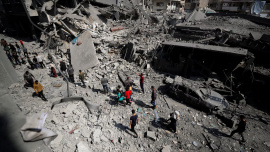
The Middle East is now in a struggle for a new regional order

It is no longer possible to treat what is happening in the Middle East as a passing round of escalation or simply another war added to the region’s long record of conflict. Today’s confrontation has crossed red lines that have existed for decades and has opened the door to the possibility of restructuring the entire region, not just adjusting the balance of power within it.
It is a rare moment in the region’s history, where not only the capabilities of armies are being tested, but the regional system itself: its foundations, alliances, borders and perhaps even its maps. While capitals are busy calculating the course of the battles, a deeper and more serious question is taking shape: are we witnessing a war that will end with new arrangements, or the beginning of a long period of chaos for which no one holds the keys to an end?
For four decades, the region has lived under what might be described as an unequal balance of deterrence: a sharp conflict between Iran and a US-led axis in which Israel stands as an advanced spearhead, yet this conflict has been governed by an undeclared ceiling that prevented a slide into full direct confrontation. Wars were fought through intermediaries, strikes were carried out with calculation and assassinations occurred in the shadows, because all sides understood that starting a major war meant entering an arena of unpredictable results. Today, with the reality of direct confrontation, that ceiling has collapsed and the deterrence equation that has governed the region since 1979 has come to an end. What we are witnessing is not an escalation within the old system but an exit from it. The conflict has moved from managing tension to attempting to resolve it.
There is an important difference between a war fought to improve the terms of negotiation and a war undertaken to redefine the rules of the international or regional order. The first can often be contained. The second tends to expand because it addresses existential questions: who sets the rules of the game? Who holds the authority to distribute power? Declaring the goal of regime change places the war in this second category. For Iran, this is not understood merely as a political threat but as a threat to the state itself as it has existed since the revolution. In such circumstances, war becomes a struggle for survival, where escalation shifts from an option to a necessity.
Lessons from Iraq to Libya suggest that overthrowing regimes through external force may be possible, yet it often leaves behind a strategic vacuum that is difficult to fill. Iran, however, is not a fragile state. It is an ancient civilisational state with a deeply rooted identity and a well-established institutional structure. Any attempt to remove it by force from the regional equation could produce wider chaos than the problem it seeks to solve.
Four decades ago, Iran became a central knot within the regional order. It could not be fully integrated into the Washington-led system and it could not be ignored or excluded without pushing the region toward instability. The US relationship has been complex and contained. Even strikes directed at the leadership of the regime, however harsh, do not fundamentally change this reality. The Iranian state is not built around a single individual but around a network of security, military, religious and bureaucratic institutions capable of reproducing leadership.
Iranian history also shows that external threats often strengthen nationalism and reduce internal divisions. Iran additionally relies on a dispersed model of power: long-range missiles, cyber warfare, the ability to threaten navigation and energy routes and the capacity to extend the battlefield beyond its own borders. Any war with it would not be a single battle but a series of interconnected battles across time and geography.
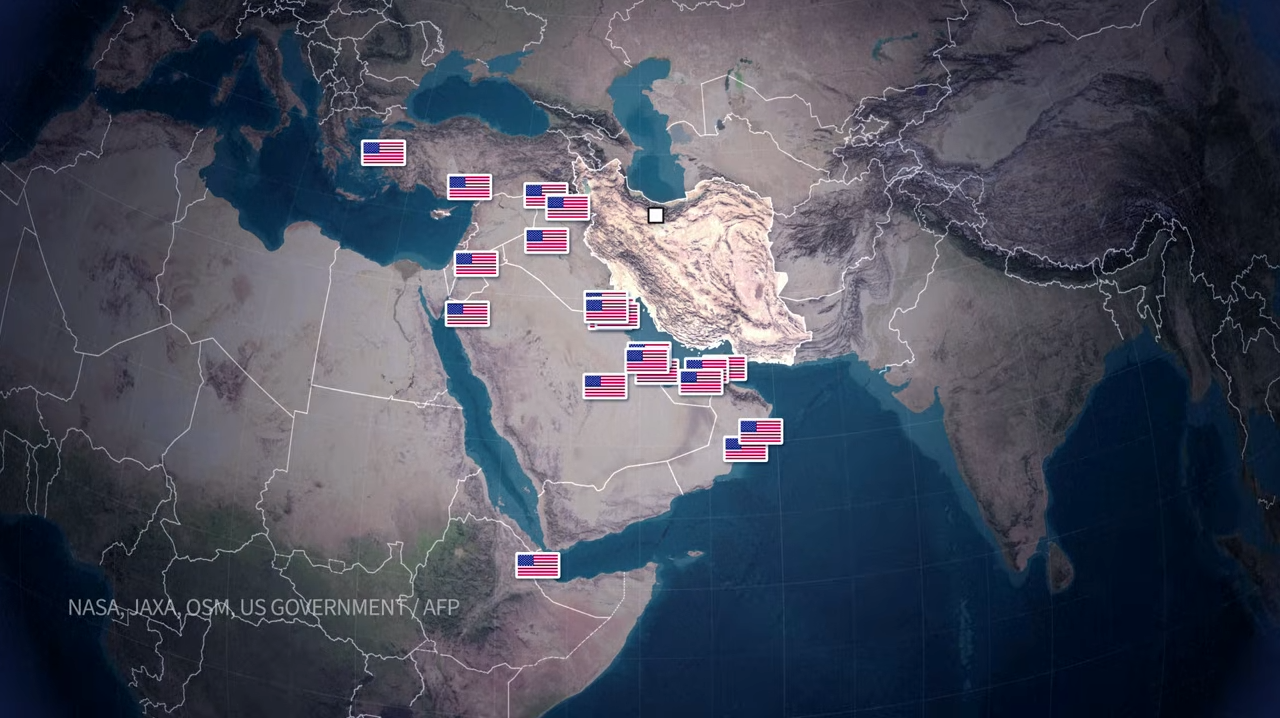
The traditional military superiority of the US-Israeli alliance is indisputable. Yet recent experience has shown that military superiority does not automatically produce political victory, particularly in wars aimed at reconfiguring entire states. The United States is facing strategic fatigue after two decades of war. It is facing a global economy highly sensitive to disruptions in energy supply and a range of competing international priorities. Israel, despite its qualitative military edge, remains a state with a small territory and population, which makes it vulnerable to prolonged wars of attrition. Tactical military success can turn into a strategic impasse if it is merely supported by Netanyahu’s broader vision of war with Iran with no end in sight.
Against this background, the region does not appear to be moving toward a single outcome but toward several possible paths that could shape the Middle East for decades. One path would be a Middle East with a stronger US grip, if Iran retreats sharply and loses its regional influence. This would also require internal stability in Iran and the construction of an alternative regional system, both of which would be extremely difficult. A second possibility is a multipolar Middle East, if Iran withstands the pressure and remains an influential force, producing a balance of power in which neither side can impose full dominance. A third scenario is extended strategic chaos, which aligns closely with many of the region’s past experiences: no actor is decisively defeated, conflicts persist at lower intensity, the authority of the nation state weakens in certain areas and instability becomes a permanent condition.
In a globalised world, major wars are decided not only on the battlefield but also in energy and financial markets. Disruption of oil supplies or sharp increases in prices could push many international powers to intervene in order to halt escalation, not out of moral motives but to protect vital economic interests.
The Middle East today stands at a historical crossroads that resembles a period in which the old order is dying while a new one has not yet been born. In such moments, wars and miscalculations tend to multiply because the system that once regulated interactions has collapsed, while an alternative structure has not yet emerged. If the war continues, the region will not return to what it was before. The old rules of engagement have fallen and new rules have not yet been written.
Will the Middle East become a region dominated by a single power, an arena of multiple balances, or a zone of open chaos? The answer is not yet clear and it may not become clear quickly. What is certain is that if this war continues, it will not only alter the map of influence but reshape the very concepts of security, alliance and power for decades ahead. The Middle East is witnessing more than a war. It is facing a historic test: either the birth of a new order from the heart of conflict or a slide into a prolonged era without a decisive end.
Yousef SY Ramadan is Palestine Ambassador to Bangladesh.
Send your articles for Slow Reads to slowreads@thedailystar.net. Check out our submission guidelines for details.
Shared rivers, shared responsibilities: The case for water treaties
Bihar wants Delhi to not renew Ganges treaty. What does it mean for Dhaka?
Bangladesh and the United States: Beyond the tariff bargain
From the Carter Doctrine to the Mecca Pact: A changing Gulf security order
More capability, less autonomy? Bangladesh’s emerging security dilemma
An anti-West network is emerging: How should Bangladesh respond?
The Mecca Pact: Deterrence, Israel, and the new Gulf security equation
What Nepal’s flood devastation means for Bangladesh, India and China
Five reasons why Bangladesh shouldn’t join the Mecca Pact