


Make long-term plan for those bringing in billions

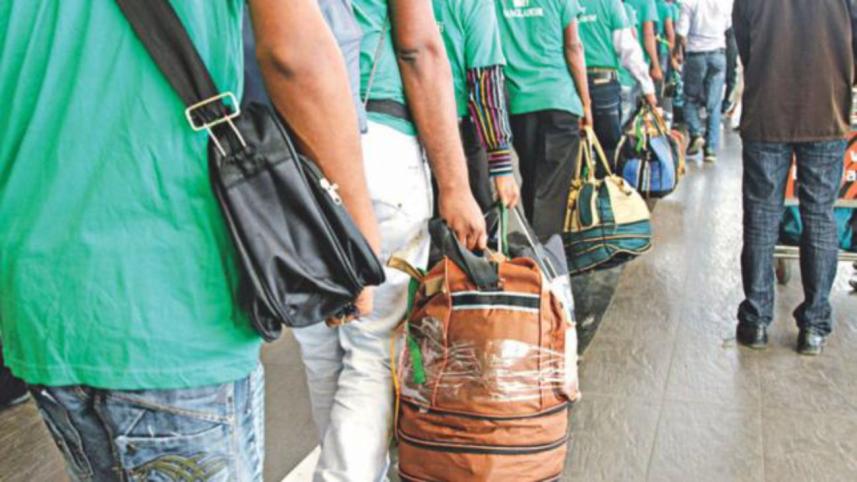
As political parties prepare to unveil their election manifestos, migration experts have urged them to include clear and strong commitments to reform Bangladesh’s labour migration sector.
They stressed that migration is a major economic driver, contributing billions of dollars to the country, yet it remains poorly governed and underfunded.

Experts called upon political parties to focus on long-term planning, skill development, good governance, and worker protection in their election pledges.
They outlined several key measures political parties should include in their manifestos.
These include increasing the budget for migrant worker welfare, creating a long-term national migration vision, reopening old labour markets while exploring new overseas destinations, ensuring proper skill training from school to university, reducing the role of middlemen in recruitment, promoting digital registration for migrants, and improving remittance channels.
The experts also emphasised strengthening services abroad and upon return.
Prof Tasneem Siddiqui, executive director (acting) of the Refugee and Migratory Movements Research Unit (RMMRU), told The Daily Star that the government spends only 0.08 percent of the national budget on migration, while the sector brings in nearly 30 billion dollars annually.
“We demand that at least 1 percent of the national budget be allocated for the protection and welfare of migrant workers,” she said, stressing the need for a 10-year national migration vision to address problems systematically.
“Without a long-term commitment, solving migration problems in a piecemeal way will not work.”
Prof Siddiqui also proposed forming a separate directorate with three wings for welfare, immigration, and skills, and upgrading the Bureau of Manpower Employment and Training (BMET) to a full directorate.
Migration expert Asif Munier highlighted governance and quality migration. Policymakers should not be involved in recruitment businesses to avoid conflicts of interest, he added.
“We always talk about how many people go abroad, but we do not ensure quality migration. Sending skilled workers could increase remittance and reduce migrant suffering.”
Munier also urged political parties to commit to implementing existing reform proposals, including better support for the returnees.
Talking to this correspondent, Shariful Hasan, associate director of BRAC Migration Programme and Youth Platform, stressed the need for good governance and a digital registration system to manage aspiring migrants.
“People from any part of Bangladesh should be able to register digitally at local centres,” he said.
Shariful also stressed the need for strengthening welfare services abroad, including proper staffing and budgets for embassies, and supporting migrants after they return home.
“Migrants should receive real services while staying abroad, not just promises. Returnees need reintegration support and investment opportunities without harassment.”
Contacted, Fakhrul Islam, former joint secretary of Bangladesh Association of International Recruiting Agencies (Baira), highlighted issues related to labour markets, middlemen, and remittances.
“Many traditional labour markets, such as Malaysia, Dubai, Oman, and Bahrain, are now closed or limited. Political parties must work to reopen these markets and explore new ones in Asia and Europe.”
Regarding the remittance, he stated that legal channels with proper incentives could increase annual earnings up to $40 billion.
 For all latest news, follow The Daily Star's Google News channel.
Comments