


‘Level playing field vital for credible polls’

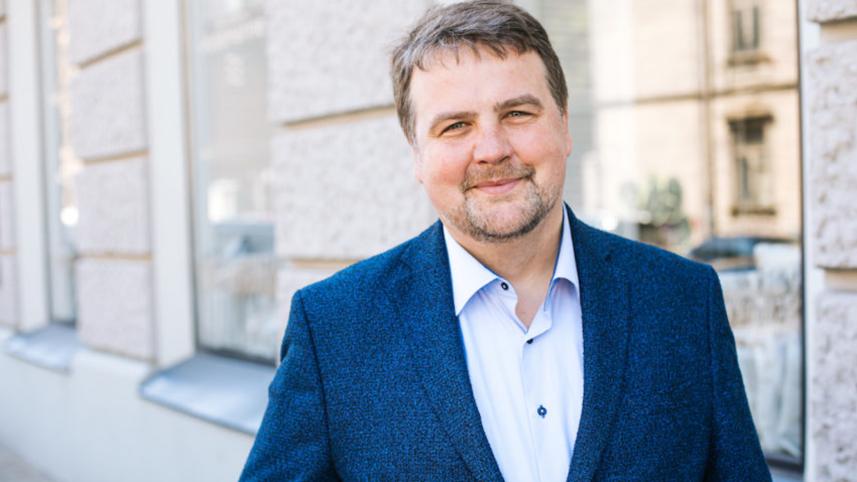
We will not be involved in the political game, but we will watch how a result is achieved and provide a report with recommendations afterwards, as we see this as a partnership with Bangladesh.
A level playing field for the election is essential, and institutions, including the Election Commission and law enforcement agencies, must not be politicised, European Union Election Observer Mission (EOM) chief Ivars Ijabs has said.

“A level-playing field is essential because democracy means each citizen is equal, implying that financial or gender inequalities should not play a role,” he said in an exclusive interview with The Daily Star on Friday.
An 11-member core team of the EU EOM is already in Bangladesh and is meeting various stakeholders, including the EC, civil society groups, women and minority organisations, and political parties, to assess the overall election environment.
Eventually, 200 independent observers from the EU will come to Bangladesh to observe the polls and referendum scheduled for February 12.
Asked why Bangladesh’s election is important to the EU, Ijabs said, “In a turbulent world, we need stable, predictable, and democratic partners for investment and cooperation, and Bangladesh has proven it can be such a partner. This is why your election is so important to us.”
Explaining the method of election observation, Ijabs compared the mission’s role to that of spectators in a cricket match.
“We will not be involved in the political game, but we will watch how a result is achieved and provide a report with recommendations afterwards, as we see this as a partnership with Bangladesh,” said Ijabs, a member of the European Parliament from Latvia and a political scientist.
Asked about the current election environment based on observations so far, Ijabs said most meetings had been positive, although the mission has only just begun its work and has not yet met political parties.
He said the election is particularly significant as it is taking place alongside a referendum for the first time after a mass uprising.
“We have met many active young people who stood behind the July uprising in 2024, and we will expand our daily contacts with local civil society,” he said.
On the importance of a level playing field, Ijabs said it is fundamental because all citizens are equal in a democracy. While the influence of administrative and financial resources is an issue in many democratic countries, he said it was too early to make preliminary assessments of the situation in Bangladesh.
He said the EC should not be politicised, adding that the mission has already met the EC and will observe processes such as voter registration and appeal procedures.
On the role of law enforcement agencies, Ijabs said electoral violence is a widespread concern in Bangladesh’s political culture. He said the mission’s legal analysts are examining the balance between maintaining law and order and political neutrality, an issue that will become increasingly relevant as election day approaches.
Asked about the EU EOM’s perspective on the banning of the Awami League and its inability to take part in the polls, Ijabs said issues of transitional justice are painful for many countries.
“We are here to look at how to make the current process participatory, credible, and trusted by citizens, rather than focusing on past legal proceedings,” he said.
On recent violent protests and killings that have created fear among the public, he said such violence is extremely worrying, as fear may discourage people from turning out to vote.
“We will pay attention to the opportunities for all groups -- including women and ethnic or regional minorities -- to participate in the polls,” he said.
He suggested that law enforcement agencies maintain law and order but refrain from involvement in the political process on behalf of any particular group.
“This is a crucial question we will pay a lot of attention to,” he added.
 For all latest news, follow The Daily Star's Google News channel.
 On addressing misinformation and disinformation surrounding the elections, Ijabs said the issue has been debated for years in the European Parliament.
“The problem is that policy regulations always lag behind technological progress,” he said, suggesting greater engagement with NGOs and fact-checking organisations to counter disinformation.
He also said governments should maintain direct communication with social media platforms to ensure regulation.
On the role of free media, Ijabs said the EU EOM is concerned that political unrest is endangering media freedom, particularly following the attack on The Daily Star and Prothom Alo office buildings.
Asked if he had any message for voters, he said, “Make an informed choice and do not be afraid to participate.”
“Democracy is a learning process. You must take previous decisions into account and learn from mistakes to grow and become fit for these turbulent times.”
Comments