


Govt eying new labour markets amid Middle East instability, PM tells Parliament
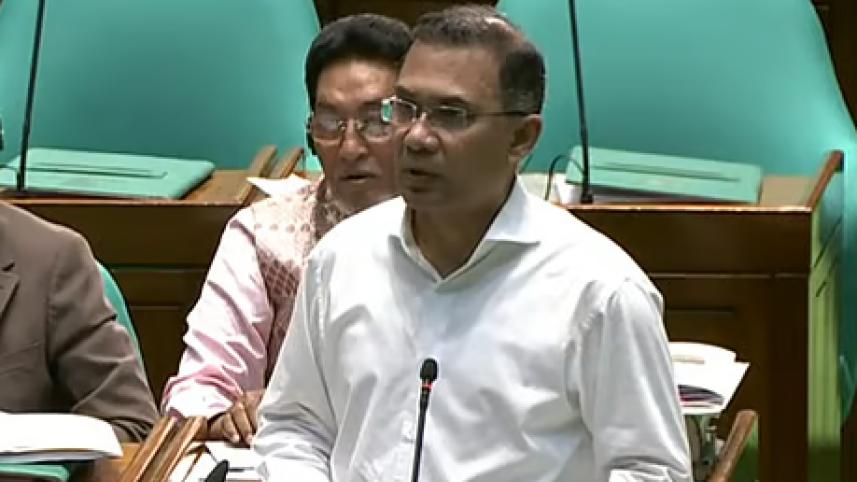
The government has drawn up a clear plan to explore alternative labour markets for Bangladeshi workers amid recent instability around the Persian Gulf, Prime Minister Tarique Rahman told the parliament today.
“Local lobbyist and expert firms will be appointed as needed, based on recommendations from Bangladeshi missions overseas,” he said while responding to a question from BNP MP Ashraf Uddin during the question-answer session.


The premier said initiatives were underway to sign bilateral agreements with Serbia, Greece, North Macedonia, Romania, Portugal, Brazil and Russia to expand overseas employment opportunities.
He added that efforts are actively progressing to reopen the Malaysian labour market. High-level visits have also been arranged to strengthen bilateral relations with countries outside the Middle East that recruit foreign labour.
“An initiative has been taken to sign a labour recruitment agreement with Thailand. Work is ongoing to open the Malaysian labour market,” he said.
Answering a related question from BNP MP Nayab Yusuf Ahmed, the prime minister said the government is continuing efforts to reopen the Malaysian market.
The minister and adviser in charge of the Ministry of Expatriates’ Welfare and Overseas Employment visited Malaysia from April 8–11, and bilateral discussions during the visit are expected to pave the way for sending Bangladeshi workers to the country, he added.
In response to a question from Nurul Islam, MP of Barguna-2, the prime minister said the government has already taken steps to plan for the maritime zone and assess potential national gains.
He noted that, to ensure sustainable and long-term development of the blue economy by balancing marine resources, fisheries, tourism and environmental conservation, the establishment of an institutional framework in 2027 fiscal year is under active consideration.
Replying to a question from Humam Quader Chowdhury, MP of Chattogram-7, the prime minister said there are currently 376,489 teachers in primary schools, of whom 130,000 have received training in English.
Under the upcoming Fifth Primary Education Development Programme, set to begin on July 1, plans are in place to provide English training to the remaining teachers, he added.
 For all latest news, follow The Daily Star's Google News channel.
Comments