


DSEX reshuffle lays bare market irrationality

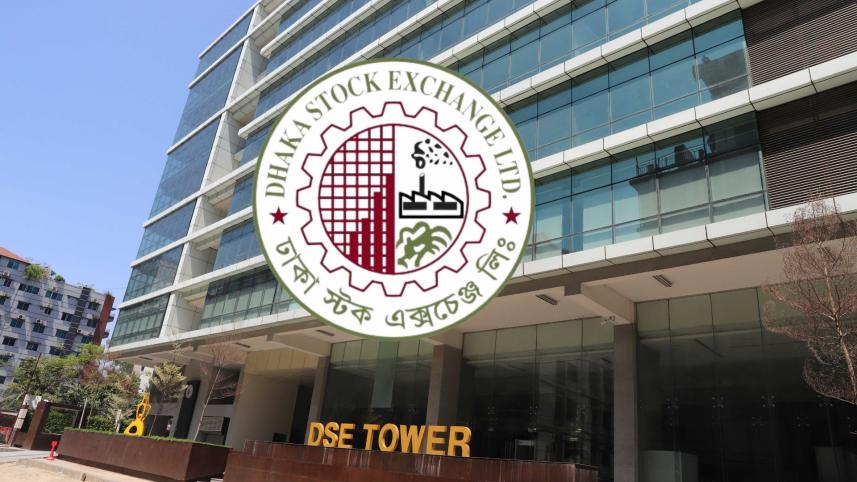
Unilever Consumer Care, a listed multinational company formerly known as GlaxoSmithKline, has been removed from the Dhaka Stock Exchange’s (DSE) main index, the DSEX, after failing to meet eligibility criteria.
It was excluded alongside 15 other companies during the latest periodic review. The removal means their share prices will no longer factor into the calculation of the market’s overall performance.

At the same time, nine companies were added to the index after meeting the same criteria. Six belong to the DSE’s Z category -- stocks considered non-performing due to weak fundamentals or governance issues. One is from the low-performing B category, and only two are A-category companies, generally regarded as financially sound.
The inclusion of such stocks in the benchmark index, alongside the exclusion of a stable multinational, sends a troubling signal to institutional and foreign investors, say experts.
The DSE said the reshuffle was based on objective indicators.
To qualify for the DSEX, a company must have a float-adjusted market capitalisation above Tk 10 crore and an average daily trading value of at least Tk 10 lakh over the previous six months. Unilever Consumer Care fell short on the latter, with its shares traded too infrequently to meet the liquidity threshold.
In contrast, several Z-category stocks comfortably exceeded the minimum trading requirement despite weak financial performance and minimal dividend payouts.
A MARKET DRIVEN BY SPECULATION
The review highlights a striking trend of investors showing greater interest in speculative, low-quality stocks than in a multinational company that paid a 520 percent cash dividend in 2024.
Six of the newly included Z-category firms -- BD Welding, DESCO, Dulamia Cotton, Safko Spinning, Standard Ceramics, and Zeel Bangla Sugar Mills -- returned little or nothing to shareholders in the last fiscal year.
Dulamia Cotton, for instance, paid a 3 percent dividend, its first in at least 15 years, according to DSE data.
Analysts say the rush into non-performing stocks is driven more by speculation than fundamentals.
Many of these Z-category stocks trade actively on persistent rumours of future gains, often without verifiable evidence. Their relatively small paid-up capital also makes them easier to manipulate, as modest trading volumes can sharply move prices.
Saiful Islam, president of the DSE Brokers Association (DBA), said the trend reflected “blatantly illogical” investor behaviour.
“It indicates our investors take decisions on their own without relying on professionals. The market also lacks educated, professional brokers. It’s been a dry market for a long time,” he said.
Saiful added that the removal of a company like Unilever sends a “ruinous message to foreign investors” and called for the DSEX inclusion criteria to be reconsidered.
The trading pattern has also been reinforced by the absence of foreign and institutional investors. “Foreign and institutional investors are not active in the market, which has allowed small investors to drive up the prices of certain companies,” said Iftekhar Alam, president of the Bangladesh Merchant Bankers Association.
BEXIMCO AND FLOOR PRICE DEBATE
Among those excluded from the index is Beximco Ltd, a large-cap stock that remains subject to a regulatory floor price -- a minimum level below which its shares cannot fall.
At present, only Islami Bank and Beximco continue to enjoy such protection. Market analysts say Beximco’s share price could decline sharply if the floor is lifted, particularly amid concerns over ownership and governance.
 For all latest news, follow The Daily Star's Google News channel.
 Regulators had previously hesitated to remove Beximco’s floor price because of the company’s heavy weight in the index, which could have dragged the market lower.
With Beximco now removed from the DSEX, that constraint has eased, increasing the likelihood that the floor price could be withdrawn.
Comments