


Dhaka’s enduring love affair with trade fair
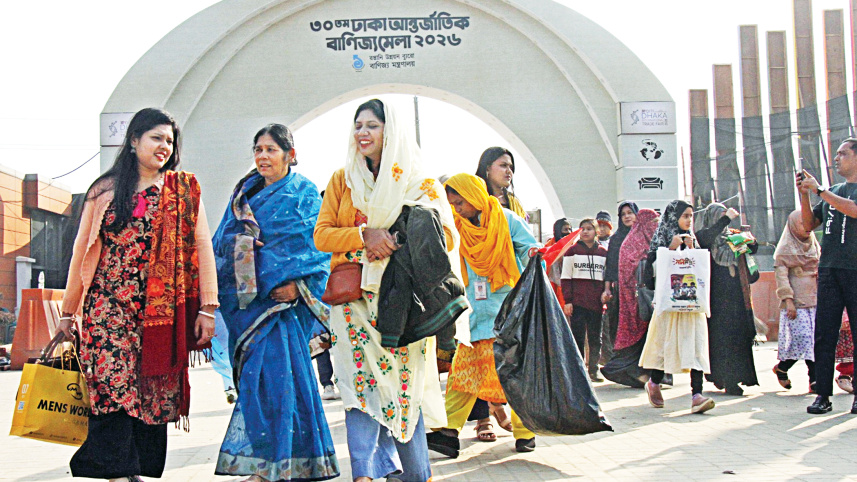
Why is Dhaka obsessed with trade fairs, export fairs or duty-free shopping? I am yet to find an answer to our everlasting euphoria for these fairs.
My family’s annual ritual was to go to the trade fair with a gang of aunts, uncles and cousins at the Sher-e-Bangla fairgrounds. We would stand in line, brave the January chill, risk a dust attack, and be in awe of the lights and the humongous entry gate. We never missed a trade fair.

I proudly own my mother’s blue porcelain tea set from People’s Ceramic, bought at one such fair. A nostalgic antique now, their dinnerware sets, one in blue and one in red, both in the same maple leaf design, were a big hit, and almost every family in Dhaka seemed to own them. I remember that in the 70s they even had circuses at the fairgrounds. Watching a motorbike spin round in a circular cage, and acrobats on a trapeze, was pure thrill.
If you go back to the mid-seventies, the Dacca Trade Fair marked the beginning of organised trade promotion in independent Bangladesh, preceding the formal Dhaka International Trade Fair (DITF) that began later in 1995.
Trade fairs are close to the heart of Dhaka people. Every year we go there ritualistically, to eat kebabs and buy things we need, or pretend to need.
As you enter the gate, the first stall you see is Kiam Metal Industries Ltd. It is my all-time favourite because its base is in Kushtia, my hometown, and because it is the largest kitchenware manufacturer in Bangladesh.
I will always go to Kiam. This time, I found my dream tea-brewing pot. I had always been on the lookout for a pot or kettle where I could brew the perfect cup of tea. I wanted it to look like a mug with a lid and a sturdy handle. I tried many versions of that idea but never found the right one, until I visited the Kiam stall this year.
For obvious reasons, there was a rush, as everyone went for the different sizes of non-stick pots and pans. This year, honeycomb non-stick fry pans in contemporary designs that reduce oil consumption and suit Asian-style cooking were much in demand. Along with induction cookers, kitchenware from Kiam was selling like hotcakes.
If you do not buy a tin of assorted biscuits from Nabisco Biscuit & Bread Factory Ltd, then your visit to the trade fair remains incomplete. It has been an annual tradition in my family to visit the Nabisco stall and buy a big tin of cookies and lozenges. The biscuit-baking scent of this local factory is the smell of Dhaka. I got some pineapple cream biscuits, and they tasted just as they used to, bringing back so many childhood memories. Their trademark glucose biscuits in the shocking pink wrapper were what school tiffin meant.
I was thrilled to see a grand stall of Savoy Ice Cream selling their bestsellers, Discone, cakes and mango sticks, with many special offers. Local snacks and drinks were also getting their share of limelight at the fair.
RFL Plastics, with its wide range of premium-quality products, kitchenware, cleaning items, food containers, baby ware and plastic furniture, had an excellent product line. When you enter their stall, you feel like yes, I think I need this, I think I need that, and you end up filling your basket with cute but unnecessary stuff.
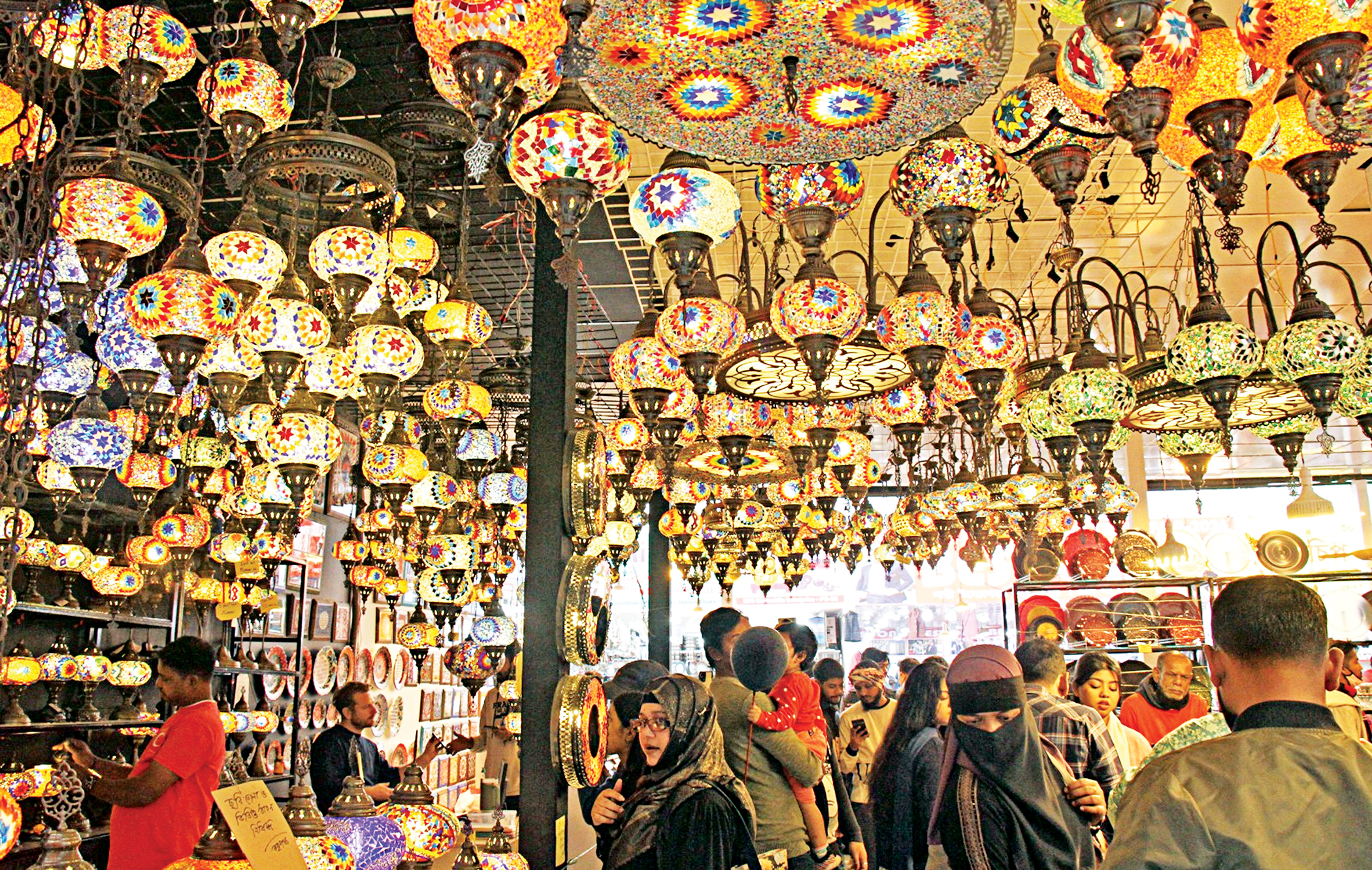
Pakistani, Indian, Turkish and Iranian stores drew large crowds, but if you look beyond that international meena bazar, you will see thriving local businesses and industries: Bangladeshi tea, handicrafts and food.
So yeah, that’s the 2026 trade fair in a nutshell. And I haven’t even written about the food court and play zones. The fair has donned a new look in its new venue at Purbachal. Some old-timers feel lost, some like the organised buzz, and die-hard fans just love it all, from 1974 till today.
 For all latest news, follow The Daily Star's Google News channel.
Comments