


Punishment alone can’t reduce crime
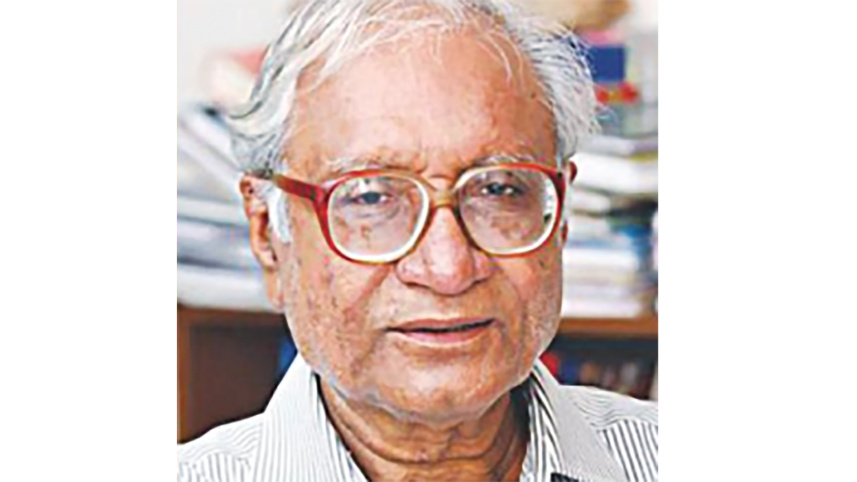
Dhaka University Professor Emeritus Serajul Islam Choudhury yesterday said crime cannot be eradicated through punishment alone; rather, society must address the social and economic conditions that drive people towards crime.
He also said Bangladesh’s prison system has changed little since the British colonial era, with corruption and oppression still deeply entrenched.

He made the remarks in a video message at the launch of the book “Karagare Anusandhan” at Batighar in the Bishwo Shahitto Kendro building at Bangla Motor.
The book, published by Poondraa Prokashan, was written by researcher Khoshbor Ali. He also worked as a prison guard.
Describing the book as an important contribution to understanding Bangladesh’s prison system and its colonial legacy, Prof Choudhury said the prison system still functions as “one of the strongest pillars of the colonial British state structure”.
“Although the country became independent, the state itself has not fundamentally changed. Evidence of that can be found everywhere, including in prisons,” he said.
He said prisons were originally envisioned as correctional centres, but in reality, anyone who enters as an inmate becomes even more marginalised and isolated from society.
“Within this hidden world, corruption dominates. Money circulates, privileges are bought and sold, opportunities are traded, and oppression thrives,” he said.
He said ordinary prisoners endure inhuman treatment, while women prisoners face an added burden because of gender-based discrimination.
“The prison system has not improved; it has deteriorated. Overcrowding is clear evidence of this, with far more inmates than the facilities were designed to hold,” he said.
Calling for fundamental reforms to the criminal justice system, Prof Choudhury said people are not born criminals but are shaped by circumstances -- poverty, deprivation, and oppression.
“If we want to save humanity, we must ensure people are not pushed towards crime. Punishment alone cannot eliminate crime. Crime can only be eliminated through social change. We must build a society without private ownership, where collective ownership prevails,” Prof Choudhury said.
He said prison remains an unfamiliar world that most people know very little about. Reading the book, he added, would offer readers at least a partial glimpse into that reality.
Among others, Bangladesh Energy Regulatory Commission Chairman Jalal Ahmed, Desh Rupantor Editor Mustafiz Shafi, Plan International Director Nishath Sultana, and Ehime University researcher Sheikh Mohammad Fazle Akbar spoke at the event.
 For all latest news, follow The Daily Star's Google News channel.
Comments