


Measles makes sharp comeback in Sept

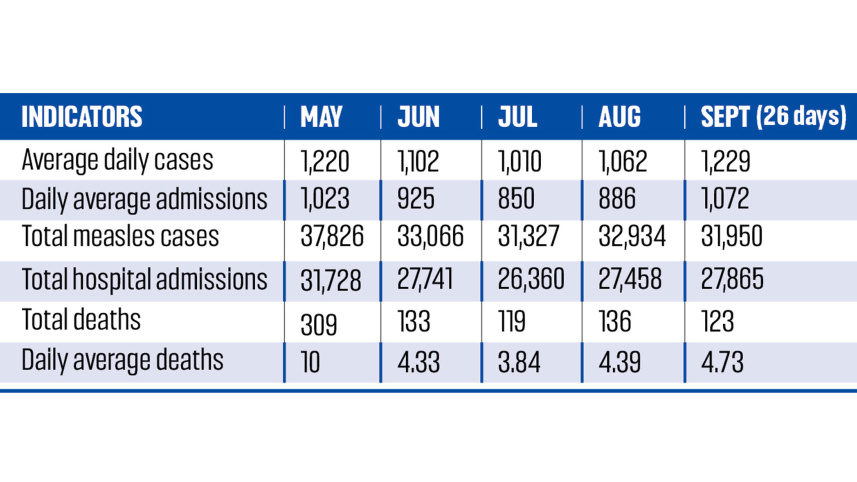
Bangladesh is witnessing its highest daily average of measles infections and hospital admissions since May, health data shows, as the government scrambles to close immunisation gaps with a fresh nationwide vaccination drive.
The average daily number of measles cases in the first 26 days of September stood at 1,229, surpassing May’s average of 1,220 and those of all months in between, according to figures from the Directorate General of Health Services.

Daily hospital admissions averaged 1,072 this month, surpassing May’s 1,023 and the averages for all months in between. September’s average daily death toll is also the highest since May.
The DGHS began issuing daily measles updates on April 2, compiling data on cases, hospitalisations and deaths retroactively from March 15.
Officials say April’s figures are not directly comparable with subsequent months as they cover a longer, irregular reporting period.
The development came as nine more people died with measles-like symptoms in the 24 hours to 8:00am yesterday, taking the death toll to 1,096, most of them children, amid the country’s unprecedented measles outbreak.
The country also recorded 1,341 measles and suspected measles cases during the same period, taking the total to 2.09 lakh, according to DGHS data.
The severity of the measles outbreak has been somewhat overshadowed by a sharp rise in dengue cases and deaths, with September emerging as the deadliest month of this year’s dengue outbreak.
According to the DGHS, 225 people have died of dengue so far this year, including 128 in September alone.
The renewed measles surge comes despite two rounds of government intervention earlier this year. An emergency measles vaccination campaign was carried out in April and May, followed by a mop-up campaign in late July to reach children missed in the first round.
Cases and deaths initially declined through July, suggesting the campaigns had some impact, though not to the expected extent. However, infections, hospitalisations and deaths rebounded sharply in August and continued to climb through September.
Public health experts attribute the resurgence to gaps in earlier vaccination coverage and poor management of hospitals and patients, including delays in identifying infected children and isolating them at home.
A nationwide Vitamin A Plus campaign on June 28 exposed a major discrepancy in the government’s data. The drive reached 22.3 million children in the same age group, indicating that nearly 3.88 million eligible children had been left outside the measles vaccination net.
Health authorities subsequently launched a mop-up campaign in late July to reach the missed children. While coverage had risen to 1.99 crore by yesterday, cases had already begun rising again. The daily average fell steadily from 1,220 in May to 1,010 in July, before rising to 1,062 in August and 1,229 in September.
Hospital admissions followed a similar pattern, falling from a daily average of 1,023 in May to 850 in July, before rising to 886 in August and 1,072 in September.
Deaths followed a similar trend. The daily average stood at 10 in May, by far the highest during the period, before dropping sharply to 3.84 in July. It rose again to 4.39 in August and 4.73 in September, making this month the second deadliest of the outbreak by daily average, after May.
In response, the government on Saturday launched an intensified catch-up measles campaign targeting around 34 lakh unvaccinated children aged six to 59 months who were missed in previous rounds.
Experts, however, cautioned that the latest campaign would not bring an immediate turnaround.
Speaking to The Daily Star yesterday, public health expert Mushtuq Husain said it typically takes three to four weeks after vaccination for a child to develop adequate immunity. “Therefore, the current wave of infections, hospitalisations and deaths may continue for at least another month.”
He said the vaccination programme should cover children up to 15 years of age, as a significant number of older children were also becoming infected. “This would help build herd immunity among the wider population.”
 For all latest news, follow The Daily Star's Google News channel.
 Mushtuq also suggested vaccinating mothers with children under six months so that the infants could receive immunity from their mothers.
“The situation cannot be controlled through hospital-based interventions alone. Initiatives must be taken at the community level, but such initiatives are currently absent.”
Comments