


Objections usually emerge after a well-held election, says CEC Nasir Uddin
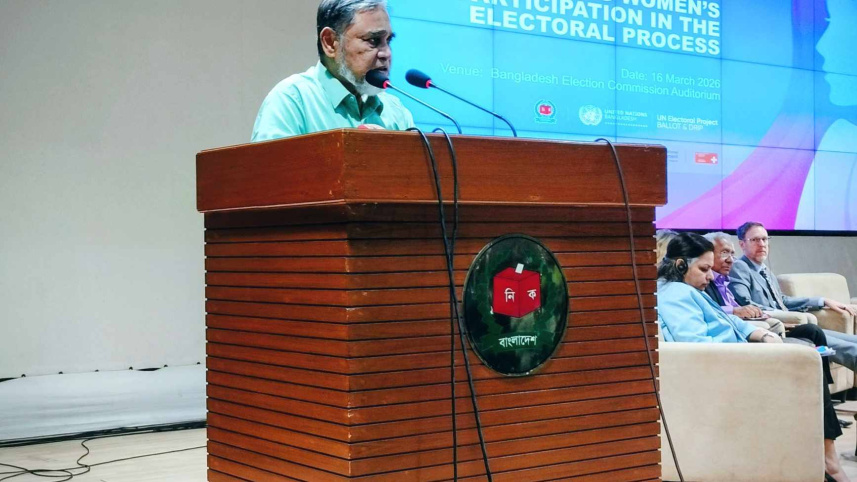
Chief Election Commissioner AMM Nasir Uddin today said objections usually surface after an election when it is conducted smoothly.
“Elections naturally invite objections. But history shows that when voting is held properly, complaints tend to surface afterwards. This is part of our culture,” he said.

The CEC made the remarks at the Election Commission auditorium in Dhaka this afternoon at a programme jointly organised by the Election Commission of Bangladesh and the United Nations Development Programme, marking International Women’s Day under the theme “Ensuring equality, building the future together.”
Reflecting on past polls, Nasir Uddin said, “We saw this in 1991 and in 1996, allegations of subtle manipulation and irregularities came up only after voting was over. Normally, when an election is good, objections do not persist.”
Thanking UNDP and the media, he added, “Through collective effort, we delivered on the promise we made to the nation. I congratulate everyone for helping us present a fair election.”
“I am happy because I fulfilled the pledge I made to the nation, and you too kept the promises you made to me. I want to share this feeling with you,” he said.
Pointing to the indelible ink still visible on his hand, the CEC said he had asked hundreds of people whether they had been denied the chance to vote.
“No one said they could not vote. I looked at their hands, everyone had ink marks, including mine,” he said.
He noted that women cast their votes without facing obstacles.
“During my visits to polling centres, I specifically asked women whether they faced any problems. Everyone said no.”
Members of minority communities also voted freely, he said.
“I asked many from minority groups, including women standing in queues, whether they faced obstruction or trouble entering centres. They all said no. I did not hear of anyone being prevented from voting or driven out of centres.”
The CEC said he did not yet have figures on how many women served as presiding or polling officers in the 13th parliamentary election.
“We need to compile this data. Interestingly, all post-election complaints I received about presiding officers involved men. No woman’s name came up,” he added.
 For all latest news, follow The Daily Star's Google News channel.
Comments