


Putting people first

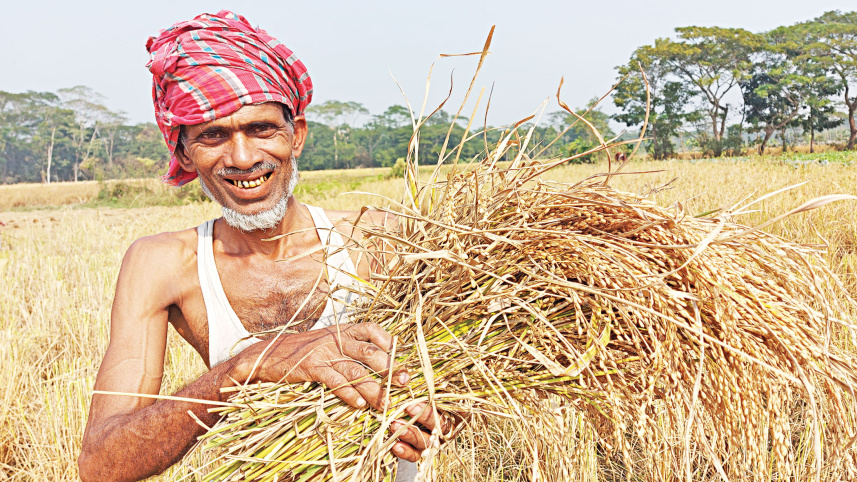
Prime Minister Tarique Rahman’s development strategy of putting people first is a breath of fresh air. His thinking on this appears to be evolving. He has outlined some concrete elements of the strategy through three core programmes: the family card, the farmer’s card, and the health card. These programmes aim to provide income transfers to vulnerable sections of the population that may have been left behind in earlier development strategies.
This is a welcome start. Yet a “Putting People First” strategy requires a comprehensive approach, backed by sustainable financing and sound implementation. This article seeks to offer some thoughts on what such a comprehensive approach might involve and the possible financing implications. An implementation plan will have to evolve once the development strategy and the associated financing framework are endorsed.

The new government has inherited a perilous economic situation. GDP growth fell to 3.5 percent in FY2025, while both private and public investment rates have declined substantially. Poverty is rising, the unemployment rate among educated youth is in double digits, and underemployment is widespread across economic sectors. Macroeconomic stability is fragile, with rising inflation, negative export growth in the first eight months of FY2026, increasing foreign debt and debt servicing costs, and a negative balance in the current account of the budget. Four major current expenditure items -- debt servicing, salaries and pensions of civil servants, operational costs of government, and subsidies -- now exceed total revenue.
This already constrained macroeconomic balance faces further pressure from the Iran war, which has disrupted the global energy chain through damage to energy infrastructure in the Middle East and disruption to global energy transport routes. Global energy prices have surged, energy transport options have narrowed, and freight and insurance costs have risen sharply. As an energy-import-dependent economy, Bangladesh faces a severe energy price and supply shock that could destabilise an already fragile macroeconomic situation.
Against this backdrop, what might constitute a comprehensive development strategy for putting people first? In my view, such a strategy must contain three interrelated components: recovery of GDP growth, investment in human capital, and a rethinking of social protection.
STRATEGY FOR INCLUSIVE GROWTH
Global experience shows that the only sustainable way to reduce poverty is through inclusive GDP growth. The most effective way to achieve this is to create sufficient decent jobs that generate employment and income for a growing workforce. The term “inclusive” is important because many countries, including Bangladesh, have experienced growth without adequate job creation.
One of the most important ways to reconcile job creation with growth acceleration is to promote labour intensive exports. The readymade garments revolution and the remittance boom illustrate this clearly. Both have supported growth and job creation and have been lifelines for the economy of Bangladesh. However, limited export diversification and heavy reliance on low skilled migrant labour have constrained employment and income potential.
Policies that reduce trade protection, maintain a competitive exchange rate, contain inflation and thereby lower nominal interest rates, strengthen the investment climate through deregulation, reduce trade logistics costs, and upgrade skills through education and training reform can unlock this potential.
Despite strong potential, progress in labour intensive service exports remains limited. Opportunities in aviation, shipping and ICT services could transform employment prospects for educated youth. Experiences of countries such as the Netherlands, Hong Kong, Singapore, Qatar, Turkey and the United Arab Emirates demonstrate the strong employment potential of aviation and shipping through forward and backward linkages. Deregulation to attract domestic and foreign investment, alongside skill development, will be essential.
Perhaps the greatest scope for expanding employment and income lies in the micro and small enterprise sector in both urban and rural areas. This sector is already the largest source of employment outside agriculture, accounting for 34 percent of the labour force. Yet it suffers from low productivity, limited investment, weak technology adoption and low incomes. Research shows that the biggest constraint is a lack of access to institutional credit. Addressing this challenge must be a priority. Other barriers include tax and regulatory constraints, inadequate skills, limited technology and weak institutional support. One important reform would be the creation of a one-stop support institution for micro and small enterprises, similar to the Small Business Administration in the United States.
STRATEGY FOR HUMAN CAPITAL
Strategies for inclusive growth and human capital must go hand in hand. Successive labour force surveys show weak education and training outcomes that have limited the benefits of the demographic dividend. Both quantity and quality remain challenges, driven by severe funding constraints and weaknesses in service delivery.
In FY2025, public spending on education and training was only 1.6 percent of GDP. No country can hope to develop human capital with such limited investment. This must rise to at least 3 percent of GDP over the next three years. At the same time, major improvements in service delivery will be necessary. A large body of research already exists on how this can be achieved, and many experienced experts could assist the government in improving access to education and training while raising quality standards.
Alongside improved education and training services, major improvements in healthcare are needed to strengthen human capital. Here, both financing and service delivery remain key challenges. Data suggest that limited public spending on healthcare, only 0.34 percent of GDP in FY2025, has made out-of-pocket expenses prohibitively high. Even this modest public spending is further undermined by corrupt practices and weak service delivery.
Along with policy reform to raise health spending to at least 1 percent of GDP over the next three years, a thorough overhaul of governance and service delivery in the health sector will be an essential component of a development strategy that puts people first. To reduce out-of-pocket expenses for poor and vulnerable groups, the prime minister’s idea of introducing a health card is an excellent step. This initiative should be viewed more broadly as part of a move towards a universal healthcare system in Bangladesh. Several good practice examples exist in the region, including Thailand, Malaysia and India. Bangladesh can learn from these experiences in developing a universal healthcare system.
REFORM OF THE SOCIAL PROTECTION SYSTEM
Initiatives by Tarique Rahman to introduce a family card, a farmer’s card and a health card are consistent with the need to overhaul the delivery of the social protection system in Bangladesh. A major reform effort began in 2014. I led an international technical team financed by the UNDP to develop a new social protection strategy for Bangladesh, drawing on the latest global thinking and international good practice. The strategy recommended consolidating the chaotic and often duplicative 145 schemes into five life cycle-based programmes, converting programmes into direct income transfers and eliminating corruption through a range of administrative reforms. The document was recognised by UNDP as high quality, and the government agreed to adopt it.
Twelve years have passed, yet very little has been implemented. Instead of increasing financing as recommended by the strategy, budget allocations have been reduced every year, reaching an all-time low of 0.74 percent of GDP in FY2025. With a poor and vulnerable population estimated at around 68 million, this allocation undermines the credibility of the social protection system. It is therefore hardly surprising that income inequality remains high in Bangladesh and poverty is rising.
The prime minister’s ideas on reforming the national social protection system fit well with the life cycle model of social security. He may wish to revisit the approach we had advocated to help move forward with reform of the national social security system.
 For all latest news, follow The Daily Star's Google News channel.
 FINANCING STRATEGY
Arguably, the greatest challenge is to develop a credible financing strategy. The weak macroeconomic situation, together with the emerging global energy crisis, presents a major constraint that will require careful navigation and management.
Recovery of GDP growth will require the investment rate to rise from the current 28 percent of GDP in FY2025 to at least 32 percent to 34 percent of GDP to support annual growth of 6 to 7 percent. This will require an increase in both private and public investment. Much of the increase will have to come from the private sector, which will need to grow from 22 percent of GDP in FY2025 to at least 27 percent over the next four to five years.
Domestic private investment alone will not be sufficient. A strong increase in foreign direct investment will be necessary, particularly in export-oriented enterprises. Significant improvements in the investment climate through large-scale deregulation and governance reform will be essential to boost private investment. Strengthening human capital through skill development will also be critical.
Higher investment and faster growth will increase demand for imports and therefore require additional foreign exchange. Successful implementation of a labour-intensive export strategy will be crucial to avoid a balance of payments crisis. The ability to attract sufficient foreign direct investment will also help mobilise the required foreign exchange.
Given the rapid accumulation of external debt, declining concessional financing and rising debt servicing costs, external borrowing will need to remain cautious and focused on high priority investments in primary energy, water and transport, as well as export-oriented agriculture and manufacturing. Multilateral development banks should remain the main source of such financing.
On the domestic front, a sound banking sector is essential to support private investment and finance working capital for production, trade and commerce. Urgent efforts are needed to repair the damaged banking system. Given the large gaps in non-performing loans, capital adequacy and provisioning, adequate new funding will be required to revive weak banks. Since the treasury is borrowing even to finance current operations, it cannot finance deficits in the banking sector. Liquidity support from Bangladesh Bank would further fuel the already high rate of inflation. The most feasible options are therefore long-term borrowing from multilateral development banks and strategic sales to domestic or foreign investors in a transparent manner.
The most urgent priority, however, is fiscal reform. The tax system must be overhauled to raise tax revenue from 6.5 percent of GDP in FY2025 to 10 percent by FY2029 and 12 percent by FY2031. This should be complemented by corporate governance and pricing reform in state owned enterprises, which could generate additional non tax revenue of around 1.5 percent of GDP.
At 2.4 percent of GDP, the subsidy level in FY2025 is not sustainable. This should be reduced to below 1 percent of GDP through reforms in the power and primary energy sectors, including renegotiation of independent power producer contracts, improvements in corporate governance and pricing reforms. Much of the additional resources generated through tax reform, state enterprise reform and subsidy rationalisation should be used to increase public spending on health, education and training, water, primary energy and social protection, as discussed earlier.
The writer is vice chairperson of the Policy Research Institute of Bangladesh (PRI). He can be reached at sadiqahmed1952@gmail.com
Comments