

The song of our people
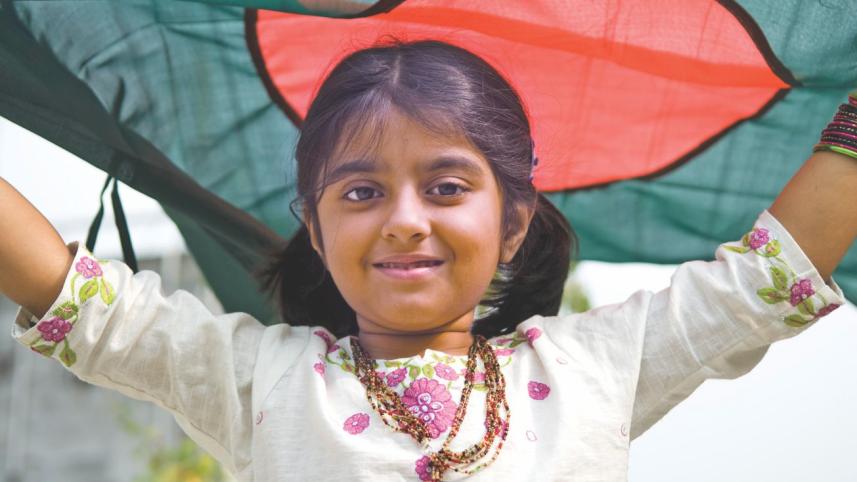
"Amar shonar Bangla, Ami tomay bhalobashi…" that is how our beloved national anthem begins. School children still add a cute extension of a separate "eeeee…" at the end. In any case, have we ever thought that it might be worth knowing a few details about the song that we would begin each of our schooldays with? It is true that most of us did not, and thus, let us not wait anymore.
If it is a song so beloved, the first question could be, who wrote it? Although supposed to be common knowledge to all of us, the writer of this emotional song is none other than the Nobel laureate Rabindranath Tagore. But, did you wonder why the national poet of India write the national anthem of Bangladesh?

Well, it is a story that needs telling. Rabindranath Tagore, being an activist in the movement of the people of Bengal against the decision of partitioning of Bengal by the British rule in India, composed this song during said movement (that is, before even the full formation of India and Pakistan). This used to be like any other patriotic song. However, later on, during our liberation war, this song was sung by the provisional government of Bangladesh in April as the national anthem of the then newly formed nation.
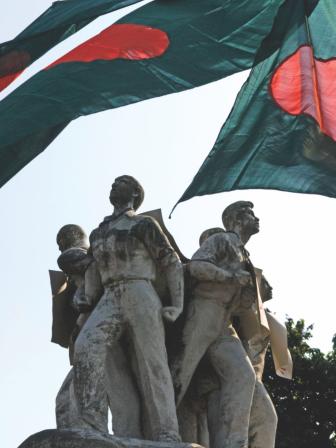
Finally, on 13 January, 1972, this song was officially declared as the National Anthem of the nation which had recently won its freedom from the Pakistanis.
Tagore was influenced by the songs of the bauls, a very indigenous element of Bengal, and the tune for the National Anthem was derived from the song of Harkara, "Ami kothay pabo tarey". This seems very significant to me, as I see the country reflected in the inherently folk tune, preserving the land's culture and its roots.
"Huff! That was an overdose of historical facts! Has it ended already?"- that's what you are probably thinking right now and I empathise with you. But now comes another important issue - the code of conduct while singing the anthem. Let's start with the ones that we most commonly know. Firstly, the anthem is only the first ten lines of the otherwise much lengthier song.
All school days must be initiated with by singing it and if it is to be officially sung at an event, then the whole ten lines must be finished (we probably do not always abide by this one). And indeed, standing up while the anthem is being played is a must in order to show respect (it's so obvious that I almost forgot to mention).
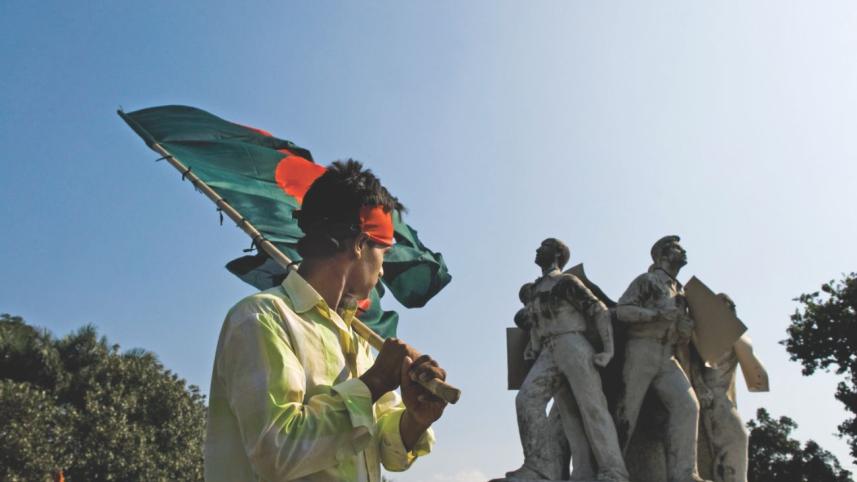
Speaking of which, another confusion should be addressed here, which is, putting the right hand on the left side of one's chest is, as a matter of fact, not at all included in our code and it is rather an American tradition, and possibly that of many other western countries.
This practice somehow slithered its way into our culture as a side-effect of globalisation (possibly because of its appealing nature - you know how this gesture symbolises that the words are contemplated and coming from deep inside the heart).
Now, this may not exactly be law-breaking or punishable, or it may not seem to be a necessary habit to change, but we have to keep in mind also that our culture, which we are the bearers of, may not need all those alterations and we are gratified and appreciative of its novelty more than anyone else.
The hands should be kept hanging straight on the sides.
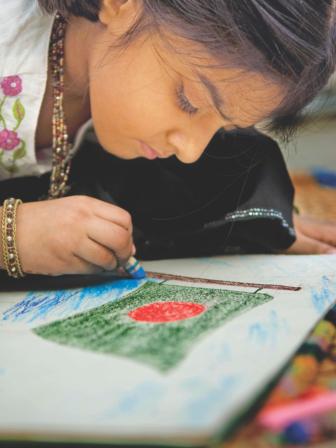
Guess that was a little off-topic, but nonetheless important. Some last few things that we, as the bearers of the Bangladeshi nationality, may find useful is that in order to follow the proper etiquette, our eyes should be set onto the national flag if it is present, and if not, we should be looking at the orchestra while the anthem is being played.
And last but not the least, any western headdress worn by any civilian should be lowered during that moment.
Before ending the list of rules, just FYI, this code of conduct is specific to civilians, except for people in uniform of the Defense Services of the country.
Yes, we have made a world record in gathering up the largest national anthem chorus any country ever could, but truthfully, how much do we, as the young generation of the country, love the anthem?
Let's be honest, the youth is not going to love it just because it is the National Anthem and we are supposed to love it. Undoubtedly, our forefathers loved it, but have we been given the reasons to love this land as a motherland should be loved, let alone its national anthem, with the elders, the ones we look forward to, not abiding by the words they utter with their own mouths?
It is a point to ponder, every time we sing the song of our own people.
 For all latest news, follow The Daily Star's Google News channel.
 By Nowshin Tabassum
Photo: LS Archive/Sazzad Ibne Sayed


Comments