


Your phone is not listening but it knows too much
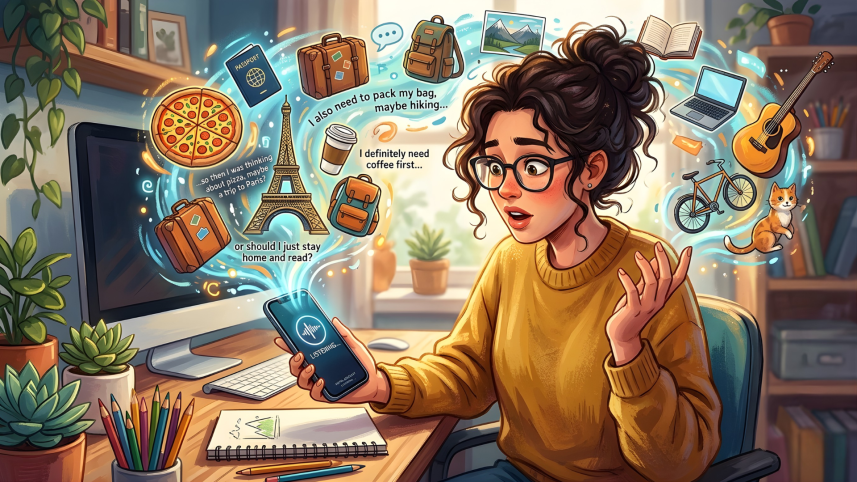
Have you ever opened up Instagram only to find suggested reels related to a conversation you just had with a friend?
Or, maybe you meant to buy a certain item and your feed immediately started showing you ads for that very thing.

Disquieted, you may have wondered, “Did the phone overhear me?”
You would not be alone in thinking or feeling this way. While the secret, ever-hearing microphone has been debunked as a mere myth by multiple studies, the concern itself reveals a deeper fear. The fear of surveillance. Of having our privacy breached.
The scary truth is that we already live within this reality. We exist within the algorithm, consistently scrolling through one reel after another.
Think about it; what is the first thing we do right after waking up in the morning? We reach for our phones. We tell ourselves that it is just to check notifications, just for a “quick scroll.” But, on most days, it never ends up being just a quick scroll.
According to research, the average Gen-Z is now scrolling for at least six hours per day on social media platforms like Instagram, TikTok, YouTube. And screen time can go much higher than that on most days, reaching up to 13-15 hours.
Which brings us to the question — why do we scroll in the first place? On most days, we do it simply as a routine activity, with little intention or purpose behind it. It is what I like to call a “filler” activity to pass the time. Requires little thought to surf your feed than, say, dusting off the book that’s been sitting on your nightstand for months and reading a page or two.
In recent years though, more and more people are starting to feel the mental fatigue of constantly consuming short-form media.
We are all suffering from a unique strain of virtual illness: “brainrot.” Much has been already said about the way our attention spans have become drastically shorter due to speed running multiple subjects in a short period of time. What is less discussed is how it has impacted our taste. How much of what we like or enjoy is affected by what’s popular on social media?
The answer? Almost everything. From our taste in fashion, books, movies, music, hobbies, our to-do lists, travel destinations — our algorithms have a big say in it. What is trending online dictates how we spend a lot of our time offline.
Currently, there’s an expression going around the Internet about the correlation between online activity and our taste in fashion. It goes like this, “You can tell a lot about a person’s screentime by looking at their fit.” Seems like a ridiculous thought at first, doesn’t it?
Unfortunately, there’s quite a bit of truth to it. Think about the evolution of fashion in the last few years. From the pandemic to 2026, we have already cycled through a gazillion trends — old money, dark academia, mob wife aesthetic, clean girl, Y2K, cottagecore, balletcore, and more. Even certain colours were trendier than others in each year, such as pistachio green (2020), burgundy (2023-present), butter yellow and brown combo (Summer 2025).
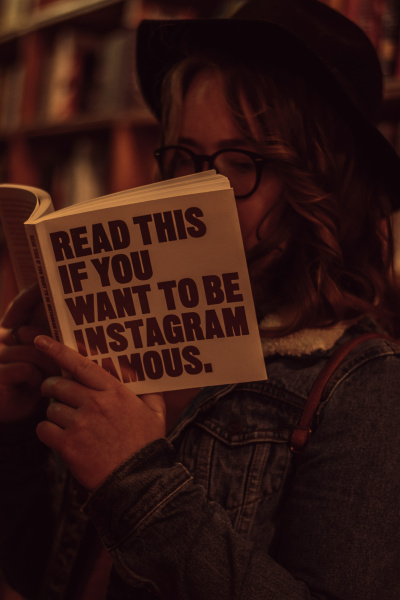
Almost every single time an item or an aesthetic takes off, you can trace the virality back to a popular figure, be it a model, a YouTube personality, or an actor. The hype is initially engineered through celebrity brand deals and PR packages. And once this aspirational image becomes accessible through fast fashion knockoffs like SHEIN and Zara, the masses hop on the trend cycle without question.
Tarannum Alam, an education student, said, “I used to doomscroll a lot until I took some measures to cut down my screen time recently. For two years, I often made impulse purchases from SHEIN without a second thought, rationalising, ‘oh well, it’s just a few dollars.’ Some of these buys were influenced by Instagram trends at the time, like the popularity of white maxi skirts in 2023.”
This is just one of many trends after lockdown that was cool until it wasn’t anymore.
Now, we have moved onto other things which will also become passé before long. And in case we do adopt a trend and stick to it for a while, like the clean girl aesthetic pioneered by Hailey Bieber, it doesn’t take too long for us to grow tired of it.
And, why not? After all, we are simply chasing trends and, by extension, chasing something that makes us look like everyone else. On one hand, we want to be part of the pack by acquiring that one item; getting pictures for Instagram at that one trending spot during our vacation to Bali or somewhere touristy; by watching the one movie everyone’s been talking about. We fear logging off for too long lest we become unaware of the cultural tides. In other words, we experience FOMO (fear of missing out).
 For all latest news, follow The Daily Star's Google News channel.
 At the same time, we are subconsciously aware of conforming too much and the risk of becoming homogenous. Building our personal taste would require us to reduce our screentime though and pull the plug on following trends.
I suspect this is what has driven the rise in posts titled “what I read/watched this week instead of doomscrolling” on Instagram lately. It is well-intentioned. After all, the idea is to get you to put down the phone.
Take a glimpse behind the veil though and it falls to shambles just a little bit. Because, here too, we shy away from the raw and the real. We subscribe to curated aesthetics. Almost without exception, all the posts I have seen under this category looked like they were pulled straight out of a Pinterest template.
Without realising it, we are once again reading and watching the same things as everyone else by following these posts. Our attempt to break free from the algorithm’s influence feels akin to Sisyphus rolling a boulder up the hill for eternity.
However, there seems to be some hope yet. This year, more netizens are attempting to rely on their socials less and rely more on physical media. They are hoping to return to physical media like magazines, catalogues, and such to authentically find music, movies, and fashion inspiration. Who knows? Perhaps, this could be the reset we desperately need from the algorithm.
Comments