


Why traditional musical instruments are disappearing from stores
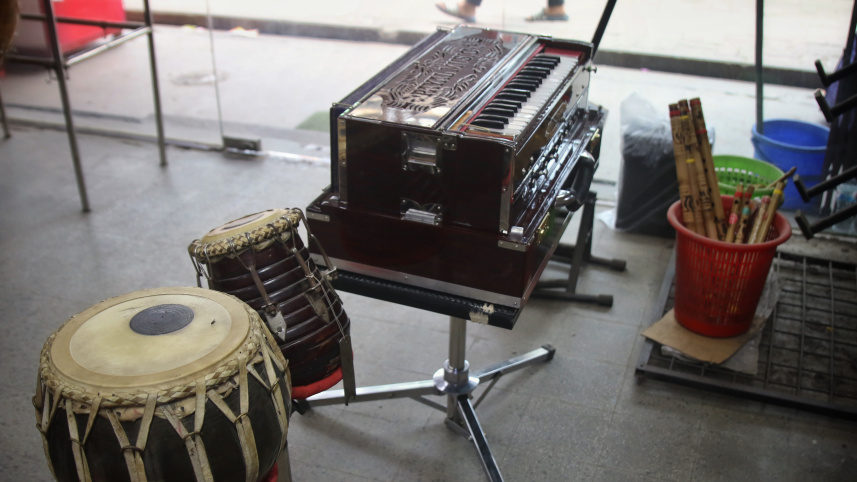
Before every Baishakh, musical instrument stores were bustling places. Most musical schools used to commence classes after Pahela Baishakh, and it was a ritual for aspiring students to get instruments for the new year. Others would come simply to repair their old instruments for a Baishakhi soiree. However, time changes everything. Today, it's hard to find customers in musical stores. Although a variety of instruments, such as guitars, ukuleles, and banjos, are displayed on the walls, unfortunately, our traditional instruments are found sitting in the corners, gathering dust!
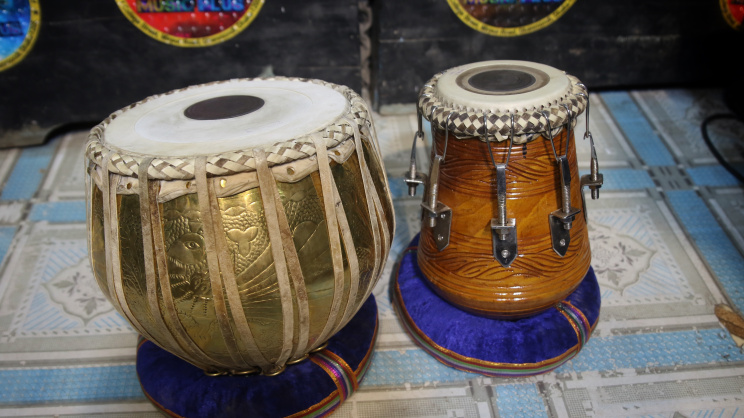

Ratan Roy, the proprietor of “Music Plus” at Science Lab, shared his experience.
“Harmoniums and tablas are hardly sold now. Perhaps a harmonium gets sold once in a while. Even two years ago, things were still relatively okay. The current situation is an absolute deadlock. This business requires massive investment, but currently, the result is zero. If you make large investments and the products are not being used, it essentially becomes a loss project,” Ratan explained.
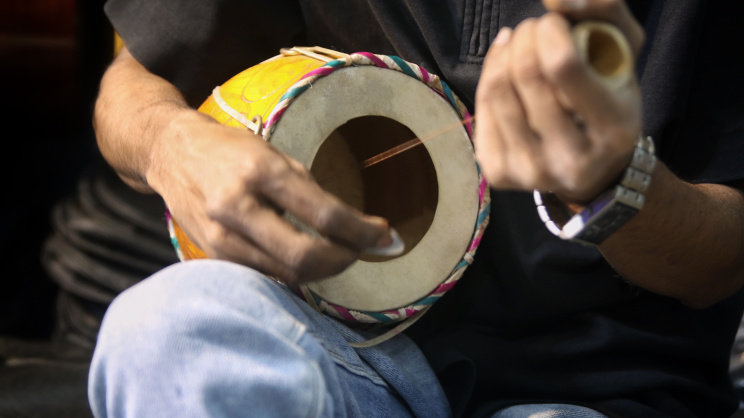
The decline of traditional instruments reflects a complicated interaction of technological shifts, changing cultural preferences and economic pressures. The most immediate and devastating factor affecting the industry is the rising cost of living.
According to another retailer, Md Jahirul Islam of “Civic Music Point”, the prices of daily essentials have skyrocketed. When families must prioritise fundamental needs and children’s education, there is no "extra money" left for entertainment or musical instruments.
Islam expressed, “There is no attraction toward music nowadays. Only after meeting essential expenses can a person have extra money for joy or to buy something for their child. That extra money simply is not there anymore.”
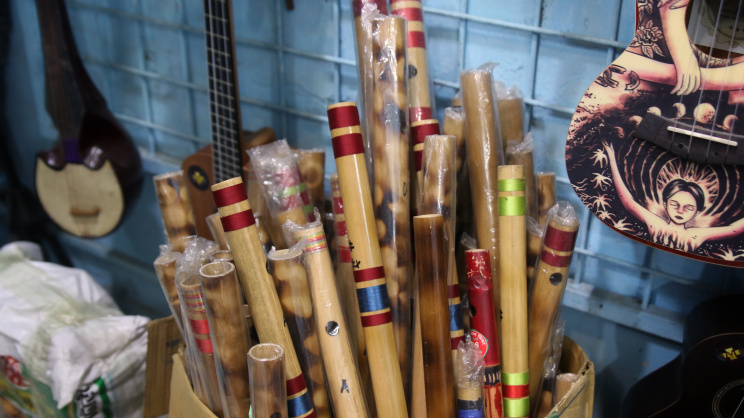
Aside from economics, the sense of traditional instruments is diminishing due to contemporary technology. There is an evident change in the way music is taught and executed.
Even in conventional groups, technology is supplanting craftsmanship. The electric tanpura has mostly taken the place of the acoustic version, and "novelties" discovered online, like the synthetic banjo, are frequently preferred over traditional instruments like the dotara.
For many young artists, traditional instruments feel unnecessary as they can now just compose, edit and produce a whole track on a laptop.
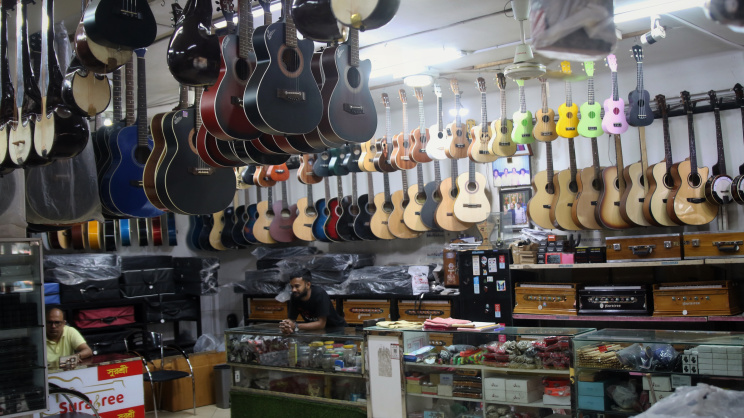
Roni Bormon, of “Surasree”, said, “Previously, there was a sense that to learn any kind of song – modern or folk – you had to learn by playing the harmonium. While some still learn properly from the 'sargam,' those numbers are much lower now. People just want to pick up an instrument and start singing songs they have heard. This is what people like Bormon consider a reason for the decline of traditional instruments.
“We need government initiatives and cultural programmes at the school level to bring the next generation back to our cultural roots,” he remarked. “Our business has been very bad for the last two or three years,” Bormon added with a pale smile.
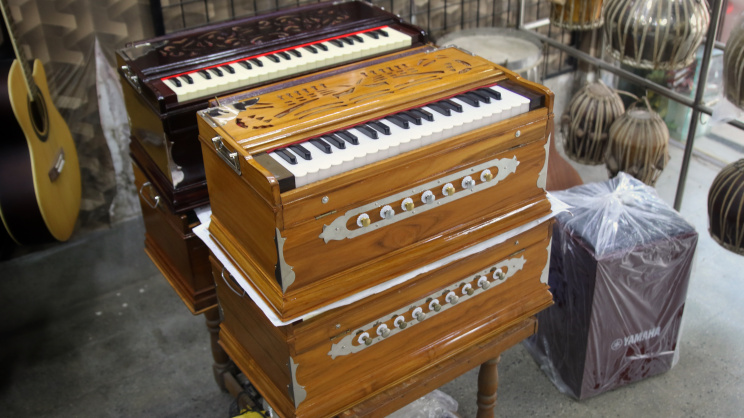
The silence surrounding our traditional instrument trade is not sudden; it has been gradual, almost unnoticeable, until one day the absence became impossible to ignore. Today, the challenge to the young generation is not just to preserve these instruments as a cultural symbol but to restore their place in the economy. Till then, all the harmoniums, tablas or dotaras will remain in the corner of a random store, waiting for you to be cared for.
 For all latest news, follow The Daily Star's Google News channel.
Comments