


Roti is the real comfort food we do not talk about

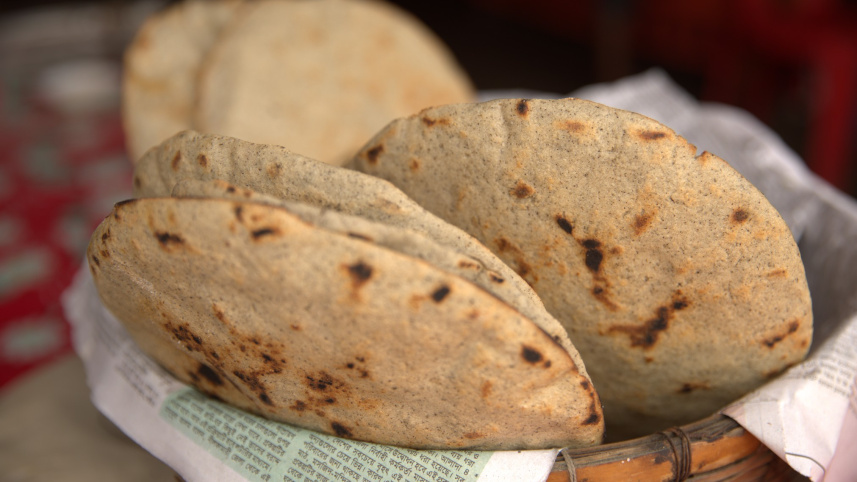
We are famously, and perhaps a bit too loudly, known as machh-e-bhaat-e-Bangali. It is, of course, our national identity. However, today, we want to talk about the roti. Why? Because let’s be honest: if rice is served two times on our table, then roti is something that at least sits there once!
Now, before you start accusing me of anything serious, let me clarify — I am not here to question our machh-e-bhaat-e-Bangali identity, let alone attempt to replace it with a belon-piri.

I am well aware of the mandate. We are simply here to put the spotlight on the roti, because, frankly, why not? If you actually peer into a Bangladeshi kitchen at 7:30–9 AM, you will surely find a war zone of flour and a rolling pin — the belon-piri — that has seen enough domestic drama to write a memoir (which we will do some other day!). So, it’s about time we gave our “circular” friend its due.
The roti, or more specifically, the flatbread universe, is vast, and the philosophy behind it is even deeper than the flour dust on your counter. I was reminded of this recently in the glass-and-steel heart of Banani. There, near Road 7B, where shiny SUVs pass by like they own the street, stands a man with a cart that doesn’t quite fit in. In a place like Banani, where everything is polished and planned, his setup feels unusually ordinary.
It’s a simple cart, really. However, if you look closer, you will see two clay stoves sitting right on it, fire quietly doing its job. No fancy equipment, no modern shortcuts. Just flour, heat, and habit.
When I asked him why he bothered with wood and clay in a world of cylinders and non-stick pans, he did not give me a marketing pitch. He gave me a legacy I will perhaps remember for a long time.
“I grew up on chaler roti,” he told me, his hands white with flour. “To me, roti is the only meal I can have anytime, and it fills my stomach. And clay is life, wood is cheap — that’s why I make it in a clay oven. You can’t get this soul from a gas burner.”
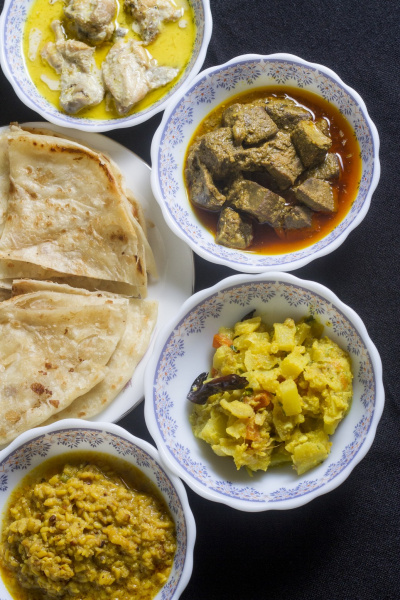
He’s right. There is a structural marvel to a chaler roti. It is the sophisticated guest of the flatbread world, a far cry from the dependable, slightly modest atta roti we wrestle with every morning. But if the roti is prose, the paratha is a decadent, slightly scandalous poem. Walk into any local restaurant and watch the pech paratha being born.
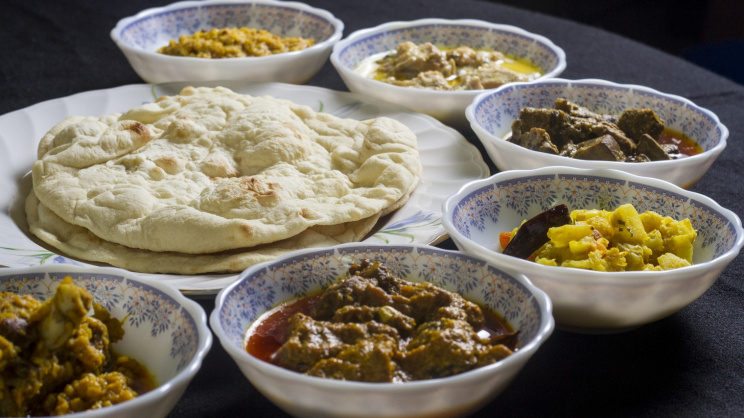
And then there is the heavyweight champion, the Mughlai paratha. Encasing a heart of minced onions and eggs, it is less of a bread and more of a structural marvel of the deep fryer that demands a three-hour nap as a mandatory follow-up.
Our geography, too, is etched in this dough. In the North, the kalai roti reigns with a smoky, rustic defiance. Made from mashkalai (black gram), it is thick, it is tough, and it laughs in the face of “delicate” city palates. Eat it with a green-chilli-heavy bhorta, and suddenly the socio-economics of the Barind Tract begin to make perfect sense. Contrast that with the ethereal chita roti (the lace bread), splattered onto a hot pan with the flair of an abstract painter. It is the most “aesthetic” thing in your kitchen, even if you can never quite replicate the technique of your grandmother.
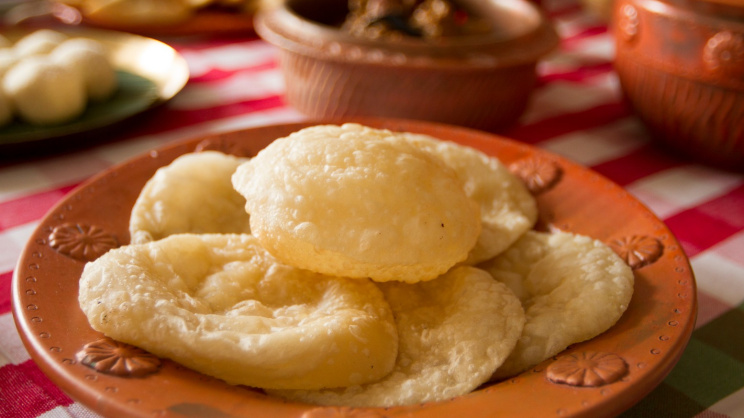
For the urbanite in a rush, there is the chapati, the humble, onion-flecked quick fix, or the street-side dal puri, alu puri, or even keema puri — the pocket-sized fuel cells of the working class. But if you seek festive elegance, there is the luchi, the golden, puffed-up queen of the breakfast table, or the rumali roti, paper-thin and folded like a silk handkerchief to catch every drop of seekh kebab spice.
Even our history is baked into the Bakarkhani of Puran Dhaka, carrying the scent of the tragic lovers Bakhar and Khani into every cup of dudh-cha. And while the garlic butter naan reminds us of our enduring love affair with the tandoor, the essence remains the same.
So, the roti list is long. And when you look at the sheer, slightly absurd and dizzying scale of it all, you start to suspect that the real peak of the agricultural revolution was not settling land or inventing the plough. It was that one dangerously optimistic person who looked at a handful of crushed grain, said, “Let’s flatten this and see what happens,” and somehow accidentally invented an entire civilisation’s comfort food.
 For all latest news, follow The Daily Star's Google News channel.
Comments