


One tree for every 28 people?! Rooftop gardening becomes Dhaka’s answer

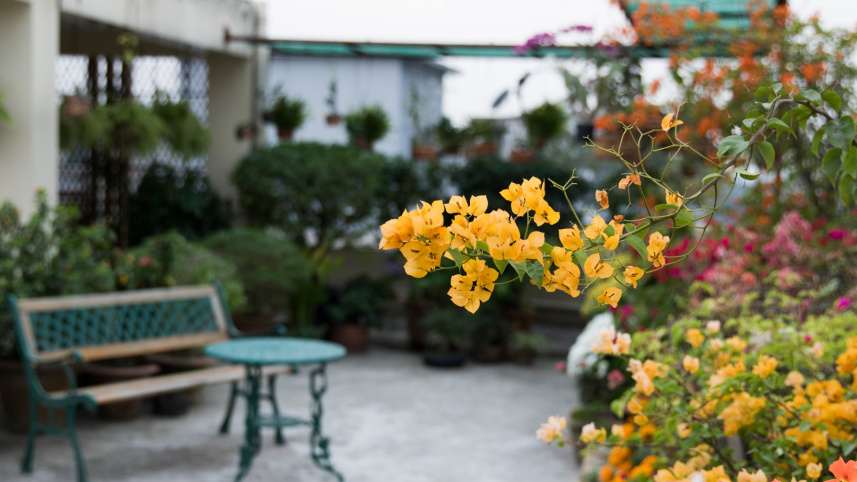
Did you know that one person requires three trees providing 550 litres of oxygen to live healthily? However, in Dhaka, the actual statistic is that there is only one tree for 28 people! The city has become a jungle, but not the kind that's green. Concrete towers climb higher each year. Glass and steel swallow what little earth remains. Parks shrink. Trees vanish. The city expands, relentlessly, and somewhere in that mix, the idea of a garden becomes a fantasy.
People miss the green spaces that once dotted the landscape. But look closer, because a change is happening. Across the rooftops. Along narrow balconies. In corners of cramped apartments. City dwellers are fighting back against the concrete jungle by turning rooftops and balconies into gardens.

RBR, a prominent journalist at a leading newspaper, has been part of this movement longer than most. "I have always loved green. In fact, when I think of décor, the first thing that comes to mind is plants, before showpieces and furniture," she says. Her philosophy is simple but radical in a city where space is measured in square feet and priced like gold.
This is the new reality of urban gardening in Dhaka. It happens because people need it. Because the air is unbreathable. Because the heat is unbearable. Because sometimes, you need to see something grow.
Small is beautiful. You don't need acres. A windowsill works. A balcony railing works. Even a tiny corner near a drain can become a sanctuary.
The heart of the garden
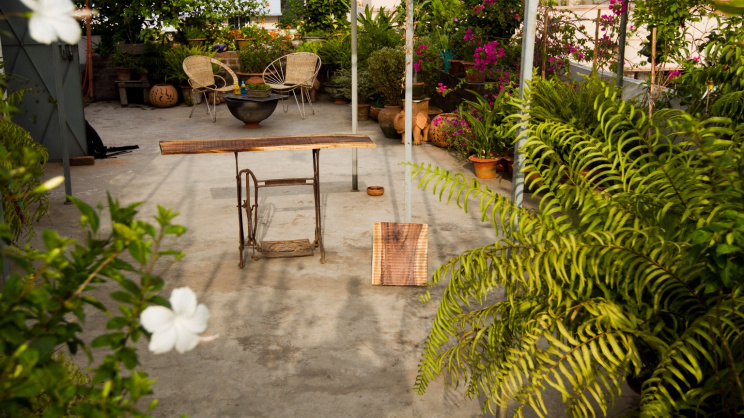
People in Dhaka find joy in gardening. It starts as a hobby but grows into more. Take RBR, for example. She loved plants from a young age and never stopped. Her rooftop in Uttara began empty. Now it bursts with fruits, vegetables, herbs, and seasonal flowers. She tends it with help from gardeners three times a week. Daily care comes from her and her house guard. Plants fill her home, too.
For others, gardening heals the mind. Asif Sufi, a 38-year-old banker, never had hobbies. The COVID-19 pandemic changed that.
"I was never into gardening. In fact, I never even had a hobby. But things changed once the COVID-19 pandemic hit. Suddenly spending every hour of every day indoors, with the world looking more uncertain by the minute, and daily updates of people’s demise really wasn’t doing favours for my mental health.
“At one point, I realised that I was out of control. Someone suggested gardening, and I promptly laughed it off as yet another dose of ‘wisdom,’" he recalls.
He started with a ZZ plant. It needed little care. Soon, he added pothos and spider plants.
"With each plant, I started googling plant-care more and current news less. Soon enough, my entire balcony and most of my room were filled with plants," he adds.
Now he has a rooftop space full of tomatoes, chillies, mint, henna, roses, and frangipanis. Gardening keeps him steady.
Tahmina Akhter, a 42-year-old schoolteacher from Mohammadpur, found escape on her rooftop.
"I used to feel trapped," she says. "The commute, the noise, the pollution. I would come home and still feel restless. Then I started planting a few pots of mint and coriander. Just to see if they would grow." Her space now has over fifty containers. It became her therapy. Evenings there bring peace.
Making space where there is none
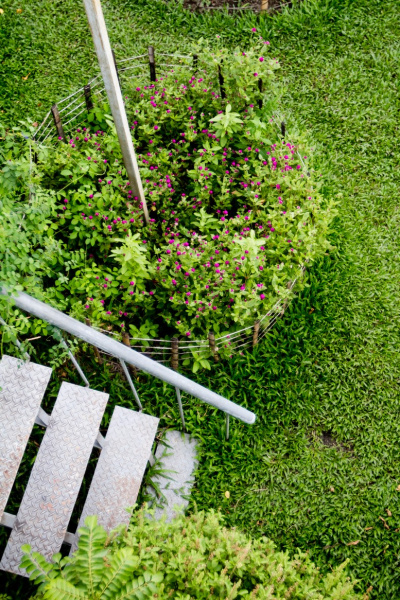
According to the Bangladesh Agriculture Information Service, approximately 4.5 lakh roofs cover more than 4,500 hectares in Dhaka city. That's land. Unused, unproductive, baking under the sun.
Rashid Hossain, a 35-year-old architect, saw that potential. Two years ago, he turned his family's Dhanmondi rooftop into a small urban farm.
"Our rooftop used to be unbearable in the summer. You couldn't stay there for more than a few minutes. Now, with the plants, it's cooler. The air feels cleaner. My mother, who has asthma, says she breathes easier up there."
Mithila, a 33-year-old working at a multinational company, grows basil, cilantro, green chillies, cherry tomatoes, capsicum, and gourds on her building's shared rooftop. "I was quite upset" when her cilantro went bad just after buying it, "and decided this is the sign to start growing things on my own!"
But not everyone has a rooftop. That's where balconies come in, though they present challenges.
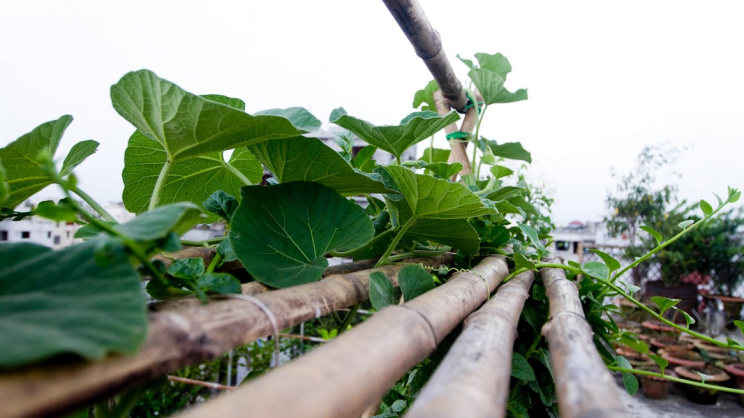
Balconies need care. "Balcony gardening is tricky," RBR claims. Floors can be ruined by water. Pipes clog with mud. Use utensils to catch drips. Hang cast iron pots from railings. If the sun hits right, you can grow tomatoes, chillies, okra, or broad beans. Add a bamboo trellis for support.
 For all latest news, follow The Daily Star's Google News channel.
 No floor space? Go vertical. Use pallet walls like shelves for plants. Creeper plants cover them in green. Corner racks turn dust spots into charms. Grill designs let vines climb. For kitchens, hang small pots on chains. Grow herbs like basil or mint. Trays with cells hold succulents. Trellis panels on walls, hook pouches or pots. Room dividers with wire netting separate spaces airily. Pocket gardens from shoe hangers work for doors. Up-cycled dressers stack drawers like waterfalls of green.
For indoors, pick easy plants. Pothos grows in low light. ZZ plants thrive in shade. Snake plants clean the air. These suit dim apartments.
Timing and choices
The monsoon season, from late June to August, is ideal for planting in Bangladesh. The rain does half the work.
RBR grows vegetables seasonally. "In fact, I was eating papaya from my gardens only a few days ago! And they are completely organic with no pesticides. Find me something on the market that matches this!"
She manages expectations, though. "Vegetables are hard to grow in quantity to meet the demands of a big family, unless you have the space and are willing to use chemicals and pesticides, which defeats the point entirely."
She grows okra and leafy greens reliably, along with starfruit, tomatoes, and guava. But the focus isn't yield. "I grow multiple things, because gardening itself is the passion, not necessarily what I am growing, so things like yield and self-sustainable food are not my focus."
Mithila grows basil, cilantro, green chillies, cherry tomatoes, capsicum, and gourds on her rooftop.
“We are a small household, so the yield we get from the chillies, basil, and cilantro is sufficient,” states Mithila, adding, “Sometimes, things don’t work out, or the environment doesn’t play ball, and I lose some plants, but hey, gardening is a matter of trial and error.”
For flowers, marigolds, hibiscus, jasmine, and zinnia withstand monsoon rains.
The "grammar of gardening"
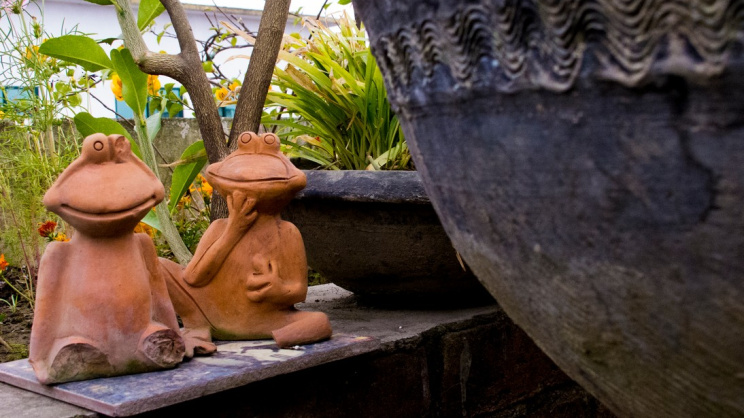
Gardening takes constant work. "Gardening is my passion... Gardening is a 24/7 job. Every plant has unique needs; some need less water, some need more, some need direct sunlight, while some need indirect sunlight," RBR states. Know the basics or get help.
That's where professional gardeners come in. In a previous interview with The Daily Star, Rashid Shimul, founder and CEO of Green Me School of Alternative Skills Development, explains the need, saying, "The gardens in our cityscape mostly belong to enthusiasts and amateur gardeners, who have taken it up as a hobby. They don't actually have time or the know-how to take care of plants. So, it is of utmost importance to go to gardening service providers for the upkeep of your green spaces."
Gardening is technical. Fertiliser ratios matter. Watering techniques vary by plant. Pest control requires specific knowledge. Every plant has unique needs; some need less water, some need more, some need direct sunlight, while some need indirect sunlight.
Services like Green Me, AR Green Garden, Green Savers, and Green Garden Landscape and Design offer comprehensive solutions. They build soil beds, source plants, and help maintain gardens.
"Spending a fortune on acquiring the plant or tree and not investing in a proper gardener will have tragic consequences for your garden," Shimul warns.
Beginner’s guide to the sky
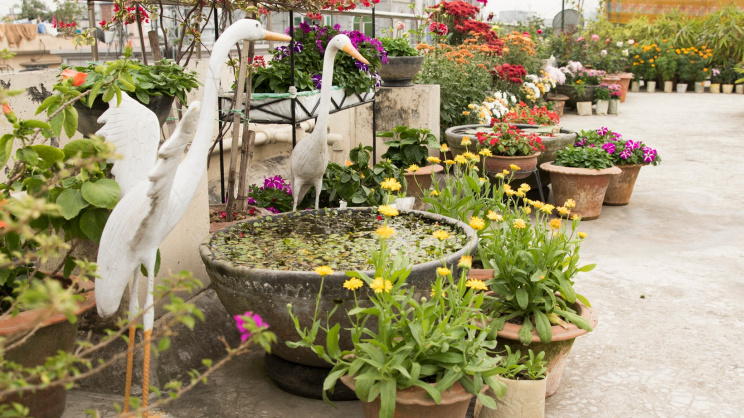
If you’re reading this and thinking, "I’d kill a plastic cactus," rest assured. Dhaka’s climate, after all that’s said and done, is surprisingly forgiving, if you follow the rhythm of the seasons. Starting is simpler than you might think.
Sun and Drainage: You need at least four to six hours of sunlight. Ensure your roof has proper slope and drainage holes, lest you turn your roof into a swimming pool.
The Containers: You don't need expensive ceramic pots. Old paint buckets, wooden crates, and even rice sacks with holes poked in the bottom work wonders.
The "Hardy" Choices: If you’re a novice, start with tomatoes, eggplants, or the near-indestructible mint and coriander. Marigolds aren't just pretty; they keep pests away from your veggies.
Sourcing your greenery
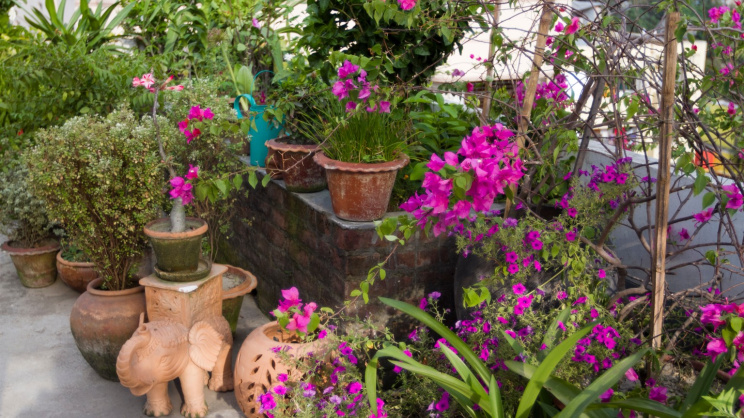
Suddenly feel like taking up gardening after reading so far? Well, then, let’s get you started on where you can pick up your new potted friends.
RBR offers guidance. "BRAC nursery is good, albeit a bit pricey. There are plenty of nurseries you can check out in Birulia, Savar, behind the rose garden," states RBR. Keep in mind, though, that nurseries outside Dhaka offer better deals, while city nurseries tend to charge a premium.
She recommends nurseries in Agargaon, Mirpur, and Eskaton. "The best one I found was near the Dhanmondi 8 field. They have plenty of options, and they communicate well."
Online options are expanding too, with platforms like Tree Haat, Bonayan.com, Aroneer, and Plant Shop, which ship across Bangladesh.
Rooftop gardening in Dhaka is moving from a small hobby to a serious movement. You can see more buildings adding green spaces to their original designs. Many schools now teach kids how to grow food in the city. Neighbours are working together to turn shared roofs into gardens that actually produce food.
The rooftops are changing. They are no longer just for water tanks or drying clothes. These spaces now show that a city can be more than just concrete and heat. If more people start planting on their own buildings, this could very well be the future.
Comments