


The EU-India trade deal: What implications for Bangladesh

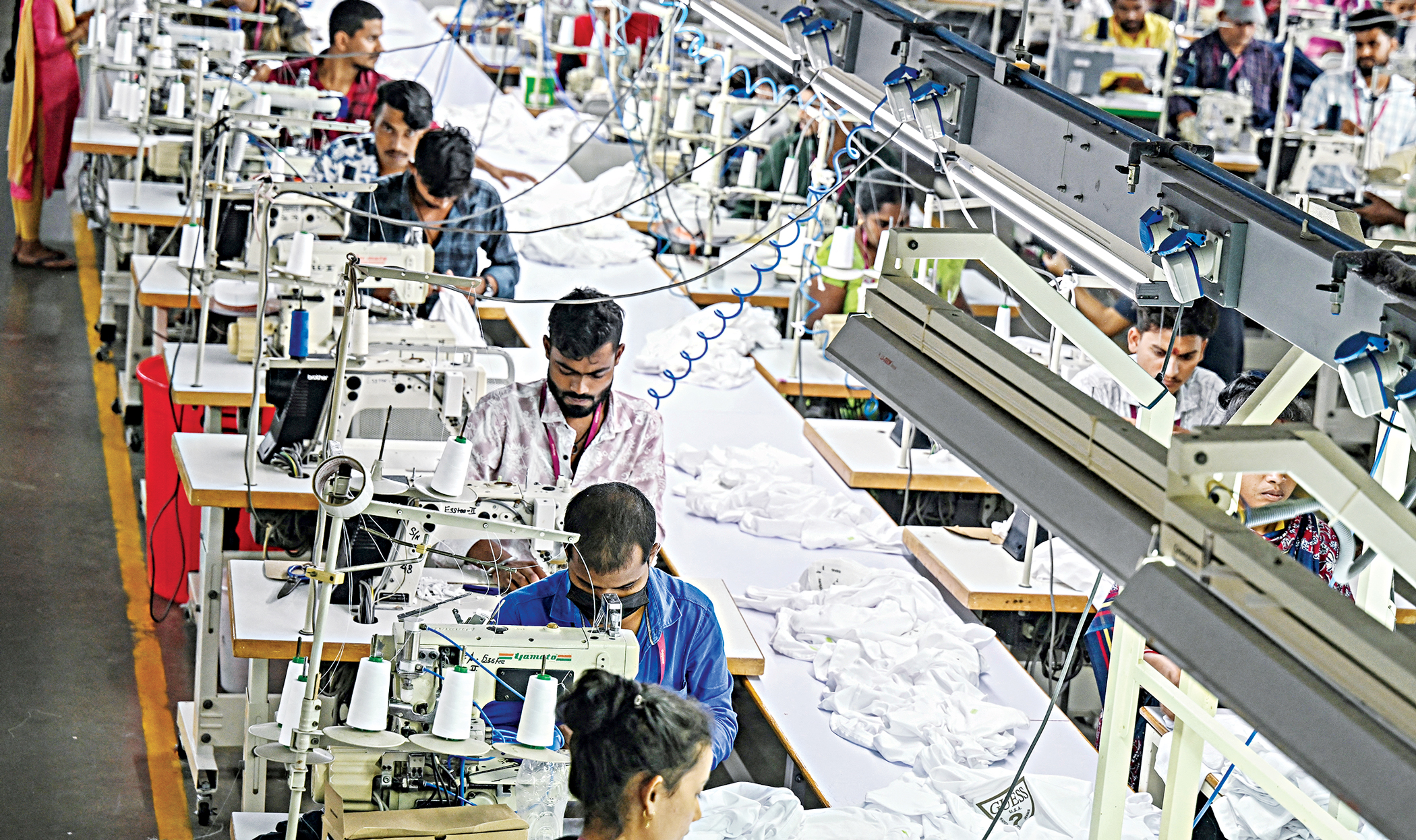
Dubbed the “mother of all trade deals,” the EU–India free trade agreement, concluded after more than two decades of negotiation, appears to be the most consequential for Bangladesh among recent trade deals involving other countries. The agreement delivers market access gains for India in those sectors that have long underpinned Bangladesh’s export success in Europe, notably textiles, apparel, leather, and footwear.
With Bangladesh set to graduate from LDC status in November 2026, and its preferential access to the EU market expected to erode after a three-year transition period, the timing of this deal could not be more unsettling. While trade agreements of other countries lie beyond Bangladesh’s control, this one demands utmost seriousness in assessing how competitive conditions would reshape in its most important export destination, and what that implies for preparedness, policy priorities, and the sustainability of an export model built largely on preferential margins rather than enduring competitiveness.

A twist of irony: from advantage to disadvantage
For decades, Indian exports of garments, textiles, leather, and footwear entered the EU facing substantial tariffs. The EU–India FTA dismantles this constraint almost entirely. For instance, it would slash duties on footwear from 17 percent to zero, and apparel and textiles from 9–12 percent to zero, substantially strengthening India’s competitiveness.
By leveraging LDC duty-free access while competitors such as India and Vietnam continued to face tariffs, Bangladesh was able to expand its share of the EU apparel market at a remarkable pace. As China’s share of EU apparel imports declined from 45 percent in 2010 to 28 percent in 2025, Bangladesh’s share rose sharply from about 7 percent to 21 percent.
This shift is particularly striking given that, in 2005, Bangladesh and India held almost identical market shares in the EU, but over the next two decades Bangladesh would be able to increase its share by three-fold as against India’s declining to 5 percent. During the same period, Vietnam’s share rose from 1 percent to converge with India’s before being further buoyed by the EU–Vietnam FTA that entered into force in 2020. Bangladesh’s rise was driven not only by tariff advantages but also by favourable EU rules of origin for LDCs, notably the single transformation rule.
Therefore, in a twist of irony, the very advantages of preferential margins that once propelled Bangladesh’s rapid ascent in the EU market are now eroding, just as key competitors secure permanent duty-free access through free trade agreements. Moreover, given the safeguard provisions embedded in the EU’s Generalised System of Preferences, there is a genuine risk that even if Bangladesh qualifies for GSP+ after graduation, its garment exports could still face full MFN tariffs, fundamentally altering the competitive balance in the EU market.
EU FTAs typically require double transformation for garments, a challenge for countries with weak backward linkages. While such requirements seem to have constrained Vietnam, they pose little difficulty for India, which has a deep and integrated textile base. This structural advantage is reinforced by India’s explicit export strategy. The Indian government has set an ambitious target of $100 billion in textile and apparel exports by 2030, from currently around $40 billion, and backed it with a layered policy framework that combines output-linked subsidies, export rebate schemes that refund embedded taxes, input-side support, and extensive infrastructure and logistics investments. These measures reflect a sustained commitment to building competitiveness, scale, and upgrading capacity.
External developments further intensify the challenge. With US reciprocal tariffs constraining India’s export prospects, Indian exporters are likely to redirect efforts toward alternative markets. The EU–India FTA facilitates this shift, intensifying competition in Europe, with Bangladesh among those most exposed.
What the numbers tell us?
The structure of exports to the EU differs sharply between India and Bangladesh. In 2024, India exported about $80 billion worth of goods to the EU from a diversified basket dominated by engineering goods, chemicals, minerals, pharmaceuticals, and agricultural products, with textiles and apparel accounting for less than 10 percent. Bangladesh’s exports, by contrast, amounted to about $21.4 billion in FY25, more than 90 percent of which came from garments. Such concentration leaves Bangladesh particularly vulnerable to shocks in a single sector, with limited scope to offset losses through diversification.
Quantitative modelling exercises undertaken by Research and Policy Integration for Development (RAPID) reinforce these concerns. Partial equilibrium estimates, when the impact is assessed separately for individual products at the HS 6-digit level, suggest that, with Bangladesh’s continuing LDC preferences, its garment exports would decline by $190 million due to EU-India FTA, with marginal losses in textiles and footwear. The picture changes dramatically once LDC graduation is factored in. When erosion of LDC preferences is combined with India’s duty-free access, Bangladesh’s garment exports are estimated to fall by more than $5.7 billion.
General equilibrium simulations using the GTAP model point in the same direction. In the scenario where Bangladesh faces post-LDC MFN tariffs, while competitors such as India and Vietnam enjoy duty-free access, Bangladesh’s exports are found to decline by 36.5 percent.
Even under a less severe scenario, where post-LDC Bangladesh retains duty-free access but faces stricter rules of origin such as double-stage transformation, exports are still projected to fall by around 16 percent.
It must be noted that these model-based estimates inevitably rely on simplifying assumptions and abstract from important real-world constraints such as adjustment frictions and buyer–supplier relationships. Even so, they provide valuable insight into the direction and relative magnitude of competitiveness pressures Bangladesh is likely to face.
Beyond tariffs: the new sources of advantage for India
It is so easy to overlook the competitive implications of the EU–India agreement that extend well beyond the headline issue of tariffs and rules of origin. Provisions on customs facilitation, regulatory cooperation, and standards alignment are expected to reduce transaction costs, improve predictability, and shorten lead times. For Indian exporters, these measures reinforce existing strengths, including stronger backward linkages and a growing ecosystem of logistics and compliance services, deepening integration into European value chains. The agreement also needs to be viewed alongside the EU’s tightening regulatory regime under instruments such as CBAM and the Corporate Sustainability Due Diligence Directive. While formally non-discriminatory, compliance capacity matters. India’s institutional readiness and regulatory cooperation with the EU may ease adaptation, whereas for Bangladesh rising compliance costs and weaker preparedness risk translating into higher effective trade barriers.
What options does Bangladesh really have?
The first foremost priority is to address the uncertainty surrounding post-graduation market access to the EU. Securing duty-free access for garments under GSP+, alongside workable rules of origin, should be treated as an urgent trade priority. Despite being identified in the Smooth Transition Strategy, progress on engagement with the EU remains limited. The UK’s recent relaxation of rules of origin for garments under its Developing Countries Trading Scheme offers a precedent Bangladesh should actively leverage.
Beyond market access, export competitiveness must be elevated to a national economic priority. This requires coordinated reforms across trade policy, energy pricing and reliability, logistics and ports, access to finance, skills development, and regulatory capacity.
At present, the most visible policy action has been the withdrawal of export subsidies, driven largely by fiscal constraints and packaged as a move toward WTO compliance. While compliance with international rules is necessary, it should not lead to a passive retreat from export support. Expanding WTO-compliant mechanisms for export financing, technology upgrading, and compliance support is essential.
 For all latest news, follow The Daily Star's Google News channel.
 Persistent governance failures also continue to impose avoidable costs. Unresolved issues such as the Savar CETP, unreliable energy supplies, congested ports, and inefficient customs procedures directly undermine competitiveness. At the same time, non-price competitiveness related to sustainability and due diligence is receiving limited policy attention, despite its growing importance. Addressing these challenges will require state investment alongside private sector initiatives.
Finally, sustaining export growth without significantly higher foreign direct investment will be difficult. Targeted incentives for FDI into man-made fibres, leather, footwear, and other export-oriented sectors, supported by predictable policies and serviced industrial land, are critical for export competitiveness.
What is most troubling, however, is the persistence of inertia. As competition intensifies and preferential margins erode with the approach of LDC graduation, the reform agenda remains largely confined to paperwork. Even from the time of the previous regime there has been no shortage of reports and recommendations on building export competitiveness, however, the key results have yet to materialise. In a dynamic world, such inaction can yield anything but competitive strength.
The author is an economist who also serves as Chairman of Research and Policy Integration for Development (RAPID), a think tank, based in Dhaka. He can be reached at m.a.razzaque@rapidbd.org.
Comments