


1971 in literature: Independence in Bangladesh, crisis in Pakistan
In seconds, the night was altered. Strobes of light flashed from the mouths of the tanks, igniting the dorms in brilliant snapshots before the shell ripped off another piece of the building. The shelling suppressed the shrieking of the students…The tanks kept their aim steady for an amount of time that seemed endless.
This is Operation Searchlight as described by Bangladeshi-American writer Nadeem Zaman in his novel In the Time of the Others (2018). The night of March 25, 1971 marked a point of no return. Almost nine months after this night, Pakistan officially conceded defeat and signed the Instrument of Surrender. Understandably, Bangladeshi fiction has made it central to its narrative imagination. From Mahmudul Haque’s novella Jiban Amar Bon written in the immediate aftermath of the war to Numair Atif Choudhury’s magical-realist novel Babu Bangladesh! (2019), Operation Searchlight has been imagined and reimagined in Bangladesh across decades. In Pakistan, the story has been much more difficult to tell.
To discuss with a Bangladeshi readership how the war percolates through media, films, and advertisements would be redundant. Setting aside this ritual preface for readers beyond the subcontinent, I find a more interesting question to be how 1971 lives (or does not live) beyond Bangladesh’s borders. Bangladesh won its liberation against overwhelming odds, fighting against the might of West Pakistani military and its formidable state apparatus. As the victors, it is but natural to commemorate the history of that spectacular emergence. But what of the other side? What about those who suffered this shattering defeat? How do they come to terms with 1971 in their cultural memory?
The war between the two wings of Pakistan was a watershed moment in the geopolitics of South Asia, the aftershocks of which we continue to feel across the subcontinent. Compared to the protracted wars of our present moment, which drag on for years without resolution, 1971 was relatively swift and decisive in its outcome. At a single stroke, Pakistan was cut down from five provinces to four; it lost its entire eastern wing and more than half of its population. With the creation of the populous nation of Bangladesh, the balance of power was fundamentally reconfigured in South Asia, bringing in its wake a long-drawn-out aftermath. Given the political significance of the war, why have there been remarkably few cultural productions beyond Bangladesh that engage with it?
This is not to suggest that no one else has written about 1971 — quite the contrary. What I wish to juxtapose is the scale: the density and weight of cultural production in Bangladesh vis-à-vis the limited engagement in Pakistan and India, where we often find cultural industries reluctant to cross the temporal boundary of 1947. In comparison to the bookshelves heaving under the weight of ‘Partition literature’ and university courses specifically dedicated to its study, the relative marginality of 1971 is evident. A detailed discussion of India’s cultural engagement with 1971, especially the Hindi film industry’s interpretation of it as another India-Pakistan war, merits separate consideration. For now, let us focus on Pakistan.
In Pakistan, a shroud of uncomfortable silence has long surrounded the war. Much like other South Asian nations, Pakistan has developed a solid reputation for censorship and ideological repression of writers. One need only think of Saadat Hasan Manto, Habib Jalib, Ahmed Faraz or Faiz Ahmed Faiz for well-known confrontations between writers and the Pakistani state. 1971 marked one of the most dramatically severe periods of state control over information. Censorship reached its peak with media blackouts, distorted propaganda, and a tight leash on foreign press. A constant barrage of dehumanising narratives about the Bengali ‘other’ — ‘separatists’ and ‘heathens’ all — further alienated many from the Bengali cause. Thus, it’s no surprise that, on December 16, 1971, with the news of their army’s surrender, many ordinary citizens were stunned, unable to reconcile it with months of bombastic rhetoric. The creation of Bangladesh and the resignation of Yahya Khan, who, until a day earlier, had been professing certain victory, unfolded at a dizzying speed for citizens carefully kept in the dark for months.
The literary vacuum surrounding 1971 in the initial years is hardly surprising in retrospect. Yet, given Pakistani writers’ long history of taking on uncomfortable topics, one must still ask: why? The Partition, with all its blood, gore, and ideological complexities, finds recurrent, unflinching representation. Why, then, not 1971? There is no single, easy answer to this question, and we must resist every impulse to reduce it to a judgment on national morality. A range of overlapping factors is at play here. Silence in the official sphere and media deception had much to do with this. Selective amnesia in state narratives was echoed in Pakistani cultural productions, where references to the war are, at best, sporadic, and often peripheral. Furthermore, state and public discourse surrounding the war was often framed as a narrative of ‘betrayal’ by ‘secessionist’ Bengalis. Pointing accusatory fingers took precedence over national introspection about war crimes or scrutiny of the state’s conduct towards East Pakistan that precipitated the demand for Bangladesh. In a Pakistan still licking its wounds from what was perceived as a strategic blow delivered by an India intent on permanently crippling it, there was little room at the national table for those with an appetite for self-critical reflection. Propaganda is rarely the stuff of which enduring cultural productions are made. Then there is also the question of time. Often, it takes years before a nation can fully reflect on a rupture of this magnitude. Pakistan was imagined as a homeland for all South Asian Muslims; this is the idea on which the nation came into existence. Being shorn of its entire eastern territory and having a substantial portion of its population opt out of the union was a blow that shook the very foundations of its creation.
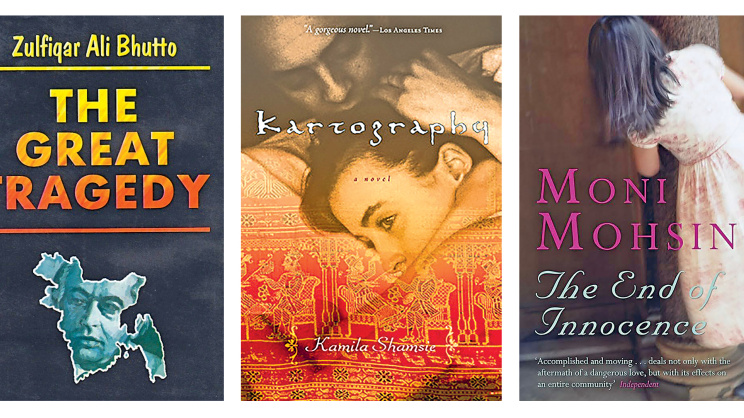
A paucity of representation there may be, but it would be incorrect to claim that there was absolutely no literary engagement with the war in Pakistan. As you may easily surmise, a considerable portion of the mainstream representation initially toed the ideological line of the state, with official vocabulary permeating literary productions. First, we have the ‘betrayal’ and ‘surrender’ narratives authored by Pakistani army officers, where the focus is on political and military miscalculations. We also have works like Zulfikar Ali Bhutto’s tellingly titled The Great Tragedy, published during the war itself. What is celebrated as ‘liberation’ in Bangladesh is simultaneously mourned in these narratives as the ‘fall of Dhaka’ and lamented as a national tragedy — understandable responses of a nation grappling with collective psychological disorientation and crisis of national identity.
School textbooks are one of the most telling indicators of state-sanctioned memory. How a nation chooses to narrate itself and fashion its past before its young citizens reveals much about the ideological temper of the times. It will not come as a surprise that 1971 appears in entirely different garbs in the school curricula of Bangladesh and Pakistan. The brave, politically awakened Bengalis of Bangladeshi textbooks often appear in Pakistan as misled separatists, mere pawns lured into larger geopolitical conspiracies. In Bangladesh, 1971 is a people’s war, in which ordinary citizens band together in a bid for self-determination. However, in much of Pakistani state-engineered narratives, 1971 is a war primarily between India and Pakistan, with Bangladesh treated as little more than a subsidiary actor in its own story. Accounts of atrocities and war crimes committed by the army are carefully skirted. An honest reckoning in school curricula would inevitably prompt difficult questions from young learners about why the army attacked unarmed civilians in university campuses or committed acts of sexual violence. Narratives of treachery more easily account for defeat.
Literature has also often come to the aid of propaganda — a reality not unfamiliar to readers in Bangladesh. It is little wonder that, amidst the existential crisis through which the Pakistani nation was reeling, we find literary works that unabashedly disseminate state propaganda. To give an example, Parveen Sarwar’s Urdu short story “Ghar Āngan” (1973) shows how insidiously state narrative infiltrates works of art. I will leave the full appreciation of this exemplary piece of statist fiction to the interested reader but let me briefly outline the plot. This is a story about a West Pakistani girl who marries an East Pakistani Muslim man against her family’s wishes. She is determined to disbelieve all the negative stereotypes about Bengalis, adopts the Bengali ways of her in-laws, and is also made to fraternise with their Hindu neighbours — a plot point that is, shall we say, hardly accidental. However, as the political heat rises preceding the war, her husband, and in-laws inexplicably change their mind, suddenly hating all things Urdu and West Pakistani; interestingly, no explanation or context is provided for this transformation. Are we surprised that the story ultimately concludes with most of her in-laws being murdered at the hands of their Hindu neighbours? No rationale is provided for this double-crossing either, except for an implied assumption of innate villainy among minorities and the all-too-familiar conflation of minorities with hostile neighbouring nations — a pattern that remains regrettably common across South Asia. As per the narrative logic, separation results in disaster for East Pakistanis — a seemingly justified outcome for their obstinate rebellion and a more palatable story than confronting the reality of Bangladesh’s emergence as a viable independent state.
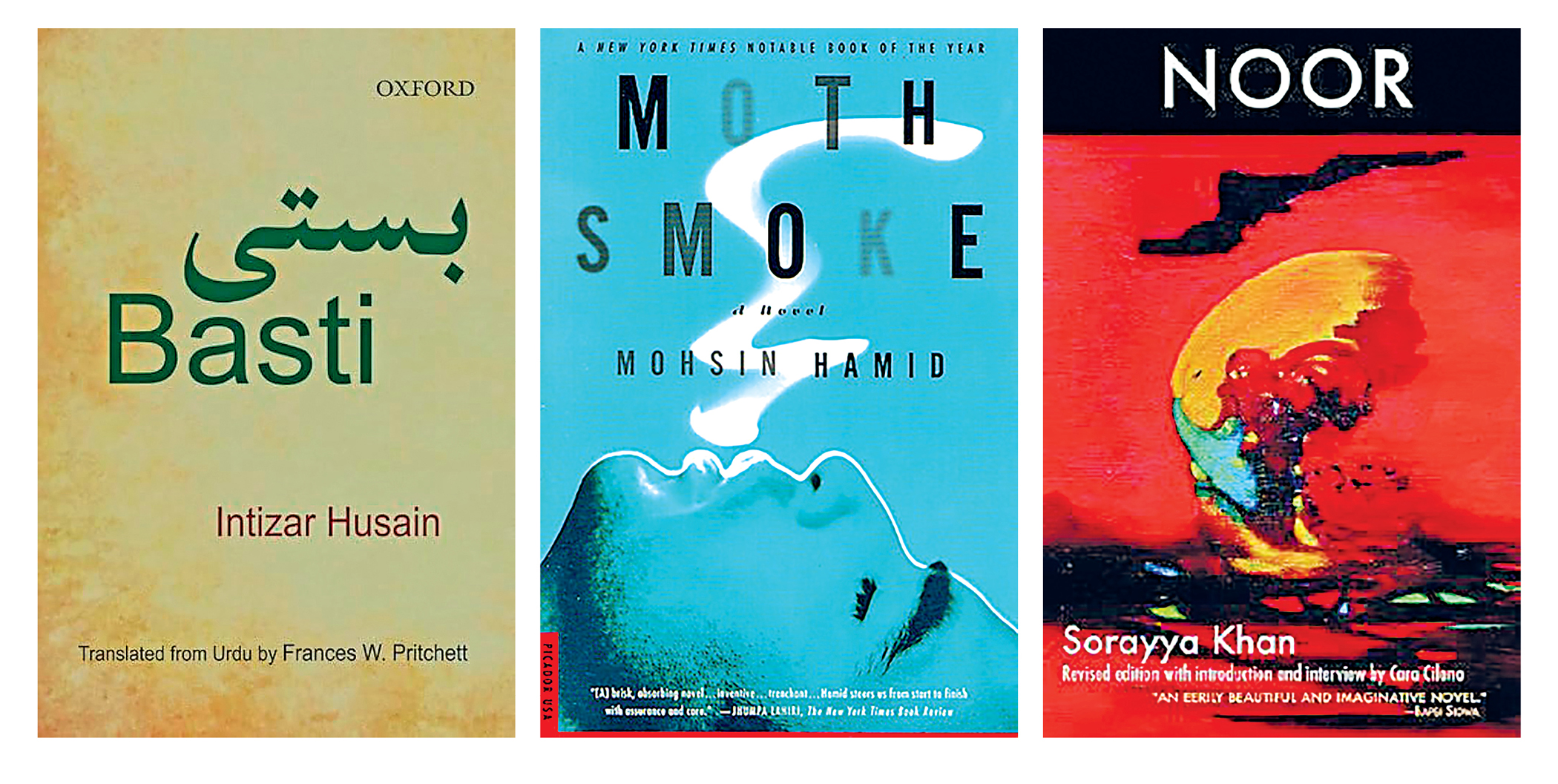
However, not all Pakistani fiction is unsympathetic towards the Bengali cause. As an optimist about the power of literature and the remarkable courage often demonstrated by writers, I would like to present some instances in Pakistani writing that dared to confront a conflict that the state was determined to forget or deflect blame for. Many will be familiar with Intizar Husain’s novel Basti (1979), which initially faced criticism in Pakistan for its refusal to single out Bengalis as the primary culprits in the war. Let me present another example from one of Husain’s lesser-discussed short stories: “Shahr-e-Afsos” (1973), a fascinating instance of surrealism deployed as a literary strategy to engage with a history that became taboo. Despite being inherently political, the story’s surrealist mode ensures that nothing in it can be specifically tied to the events of 1971. The dystopian city of sorrows, with devastated buildings and corpses lying around, closely mirrors the reality of wartime East Pakistan. While there is no single direct reference to the war itself, the hints are difficult to miss. The story features three nameless men, grappling with the meaninglessness of the actions they committed. For a war fought with a ‘higher purpose’ of protecting the integrity of the nation, to even suggest the absurdity of those actions is already a political act. In recent years, we find an increasing number of Pakistani writers returning to 1971 and probing the collective amnesia surrounding it. As Kamila Shamsie writes in Kartography (2001), “What terrible things we must have done then to remain silent about it. Is it shame at losing the war, or guilt about what we did to try to win that mutes us?” Her novel, alongside Mohsin Hamid’s Moth Smoke (2000), Moni Mohsin’s The End of Innocence (2006) and Sorayya Khan’s Noor (2004), marks a turn in Pakistani fiction for its engagement with questions of guilt and forgiveness, and its invitation to readers for personal and national self-examination.
Defeat may lead to a discursive vacuum; it may resist narration. Yet, as some Pakistani literary reflections on 1971 show, when reckoned with honestly, defeat can also produce works of enduring historical insight. Often in history, defeat has served as a wellspring of intellectual progress. Often, defeat, and the introspection it inspires among reflective segments of society, proves more artistically productive than celebrations of victory. When a people are compelled to confront the hard lessons of history, their art may acquire an unforgiving clarity. With the Pakistani state struggling to articulate such insight, as evidenced by the absence of official apology or reparations, literary reckonings ensure that 1971 remains narratable in Pakistan beyond the confines of state-sanctioned scripts.
Madhurima Sen is a researcher at the University of Oxford. Her work focuses on literary representations of the 1971 war in literary and cultural memory.
Send your articles for Slow Reads to slowreads@thedailystar.net. Check out our submission guidelines for details.