


Meet Purna, the new generation’s keeper of Old Dhaka
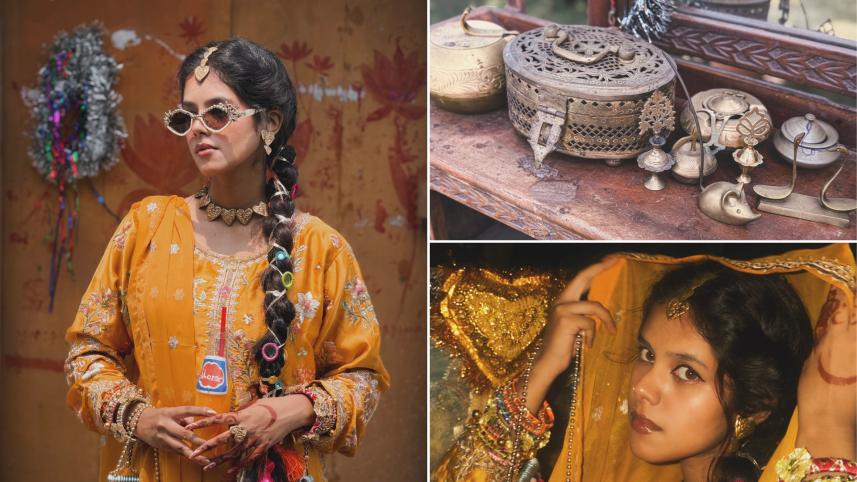
At a time when the past can feels increasingly distant, Maliha Masharat Hossain Purna is bringing old Dhaka’s colours, stories, and traditions to a new generation.
My impression of Generation Z is that they move through the world with a cultural and historical amnesia. Their online culture, behaviours, and values are constantly refreshing and prioritising what’s trending or visually striking. In that rhythm, yesterday’s post is already forgotten, last year’s event feels ancient, and national history that is decades or centuries old barely registers.

Patriotism or cultural heritage doesn’t anchor them the way it did for older generations. Raised on smartphones and high‑speed internet, how else could they be?
Yet when I came across Purna in an Instagram reel, I felt the exact opposite.
At 23, Maliha Masharat Hossain Purna stands out for her devotion to Dhaka’s old soul. She is an influencer, and in her reels, the lanes and locales are not just about nostalgia; they are living textures carrying the essence of Dhaka in the 1900s.
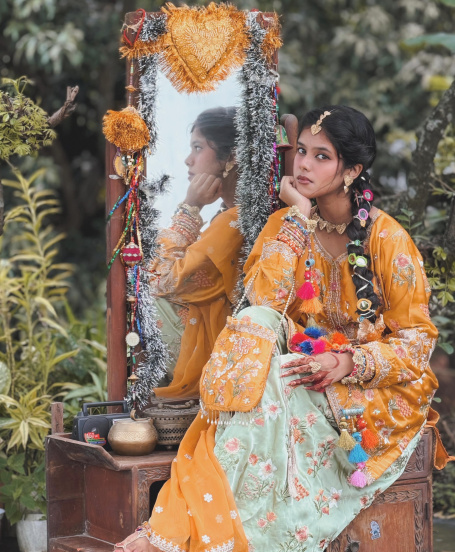
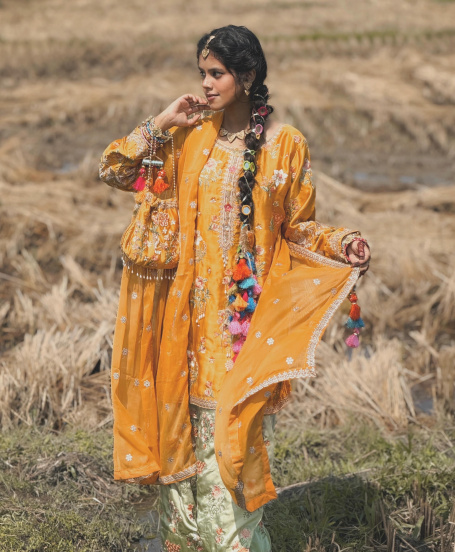
She carries a vintage heart, weaving velvet dreams much like her grandmother once did, recreating era-based looks in today’s street‑side chic. The illusion of vintage touches sealed the look: her hair tied into a braid with silk tassels in riotous colour swinging past the hip, her outfit defined by the loose shalwar, a short, straight kurti, and a dupatta. Flat leather sandals, bangles stacked high, long jhumkas brushing the neck — practical yet ornate, folk yet regal, echoing the rhythm of pre‑Partition streets and festivals.
The jewellery, bangles, tassels — even the garments — are handmade or thrifted, sometimes bought for Tk 30 from Shahbagh.
Shankhari Bazar was her first canvas, where she wandered without a plan, taking in the street’s pulse, and claimed it as her own.
Puja items stacked in corners, brassware glinting in shopfronts, rudraksha beads strung like quiet prayers, shola crowns waiting for festivals — all of that, some say, is like “a piece of Kolkata,” but she shrugs off the cliché, insisting it belongs to Bangladesh’s own Bengali culture, a weave of Hindu and Muslim traditions.
Her creative journey began at home. Purna’s mother, who stitches all her clothes by hand, is her first collaborator. From her, she inherited not only garments but memories — like the tassel her grandmother once wore, which Purna researched and re‑imagined, improvising her vintage look that feels both personal and historical.
She replicated wedding zari, which were basically shimmery metallic ribbons of gold or silver that were popular in weddings, especially in the 1970s, reminiscent of her parents’ marriage; used her grandmother’s fan to evoke vintage moods; and wore jewellery passed down through generations.
She has a collector’s instinct; these objects are not props but vessels of memory.
Her presentation style is deliberately cinematic. She chooses Hindi songs from that era, and when I saw her walking to one in that attire, I was thrilled to feel that the baton of old‑world charm has been successfully handed down to Gen Z.
Her reels are not made for virality; she films for herself, sending drafts to her mother before posting. And with the internet now flooded by 1947 Partition stories, especially those revisiting Bengal’s fashion before independence, her reel found a perfectly timed boost.
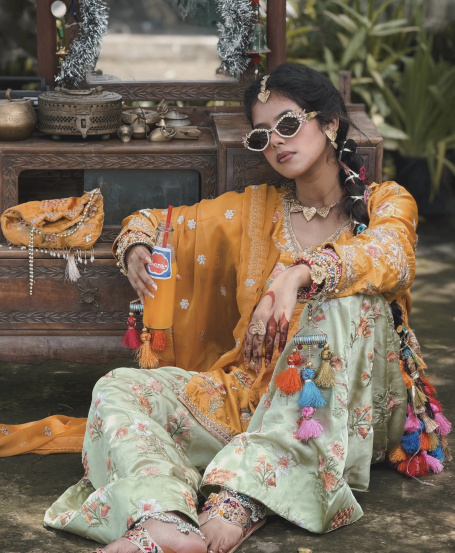
She insists that if even one young person chooses to love Dhaka in this way, its history, colours, and vibrancy will endure. In her thrifted rings, rooftop setups, and insistence on talking to strangers, she embodies a rare kind of generational defiance.
This thoughtful gesture about my Dhaka — and that too from someone this young — makes me believe the city’s mosaic of colours and stories will linger for a few more decades through young Dhakaites like Purna.
For her, connecting with people is as important as curating looks. She delights in conversations with tea sellers and strangers, and asks for a candid photo to capture the moment.
 For all latest news, follow The Daily Star's Google News channel.
 She wants highlights of other places too — Banglabazar, vinyl and cassette shops, hand‑painted signboard makers. She wants to show people what still exists, what is fading, and what deserves recognition.
Her plans to explore Dhaka through documenting overlooked corners of culture are ambitious yet grounded. At 23, she is determined to collect, preserve, and re‑imagine the city’s memory, making Dhaka look like a visual poem, where nostalgia and dreams blur into one.
Comments