


Your favourite snacks may be loaded with hidden salt

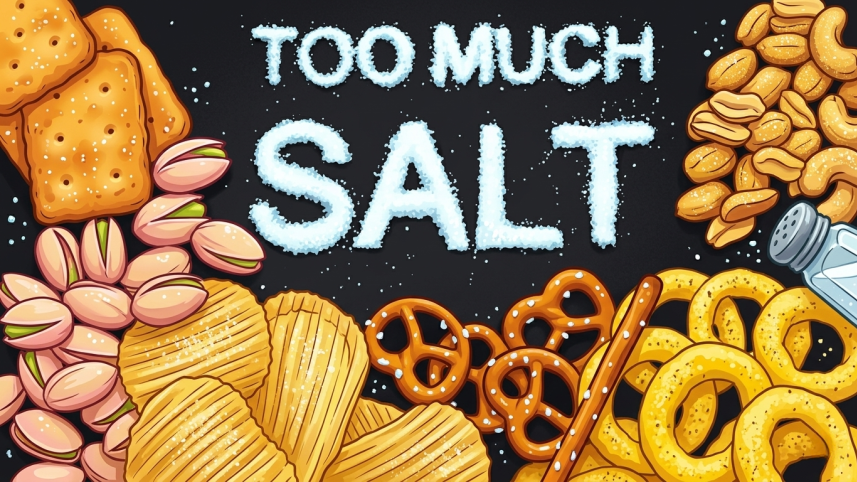
We often think of salt simply as the ingredient that brings life to our meals. However, reducing salt in our diet is one of the most vital steps we can take for our long-term health.
According to the World Health Organization (WHO), globally, high salt intake is a major health risk, linked to nearly 1.7 million deaths every year.

The invisible daily limit
Most of us do not realise how much salt we are actually eating. It is not just the pinch we add to our rice. It is the hidden sodium in almost everything we buy from the grocery store.
To help us understand these risks, Dr Chowdhury Tasneem Hasin, Chief Clinical Dietitian and HOD of the Dietetics and Nutrition department at the Continental Hospital PLC, clarified firmly that a healthy adult should strictly stay within the 4–5-gram range of salt daily.
This balance is crucial for maintaining a healthy heart and stable blood pressure. However, for those already battling high blood pressure, the rules change significantly.
"For hypertensive patients, the intake should be even lower, bringing it down to 2 to 2.5 grams daily," Dr Hasin suggested hopefully. She believes that even small reductions in the kitchen can lead to massive improvements in heart health over time.
Decoding the snack shelf
The modern diet relies heavily on processed convenience. These products are often marketed as quick fixes, but they carry a heavy sodium price tag.
This leaves no room for salt in our regular meals, like lentils or curry. Dr Hasin pointed out the deceptive nature of the snacks we crave.
She advised urgently that it is vital to read the nutritional labelling on every packet. Many consumers buy these items without ever checking the salt content listed in fine print.
Regrettably, she also mentioned that many local manufacturers in Bangladesh do not follow strict labelling standards. This makes it incredibly difficult for a common person to track their intake. We often eat hidden salt without even knowing it exists in our favourite sweet biscuits or bread.
The risk is no longer confined to the elderly. A new wave of health issues is crashing into young adults aged between 25 and 35. This age group is the primary consumer of street food and processed snacks.
Young adults are appreciating processed foods more than traditional meals. This shift in palette is leading to uncontrolled hypertension in people who should be at their physical peak. The biological impact is far more complex than just feeling thirsty.
When salt attacks the kidneys
When sodium levels in the blood rise too high, the kidneys work overtime. This constant pressure leads to long-term organ damage. Dr Hasin explained scientifically that sodium and potassium work like a seesaw in the body.
When one goes up, the other usually goes down. A high-salt diet forces potassium levels to drop. This is a disaster for heart rhythm and muscle function.
Even people with no history of kidney problems can face issues if their salt intake remains high. "The damage is often silent," Dr Hasin clarified seriously. It shows no symptoms until the kidneys are already struggling to function. By then, the road to recovery is long and difficult.
Finding a healthy balance
We cannot eliminate salt entirely, but we must learn to regulate it. In this case, we must happily return to our traditional roots. Instead of just obsessing over oats and avocados, which are not readily available for the masses, we must invest in our cheap and homemade deshi food items like chira, homemade muri, murki, etc.
Homemade treats are far safer than anything in a shiny plastic packet.
These options allow us to control exactly how much salt we add to our food. In the kitchen, there are many ways to make food pop without using a salt shaker.
"Using lemon, yoghurt, a bit of vinegar or even tamarind can enhance the taste of your curry," encouraged Dr Hasin. These ingredients provide a sharp flavour that satisfies the tongue. By using these alternatives, we can reduce sodium while still enjoying delicious meals. Small, mindful steps today can save thousands of lives from the silent threat of salt.
 For all latest news, follow The Daily Star's Google News channel.
Comments