


Nayeem Ashraf returns to build Bangladesh culinary industry
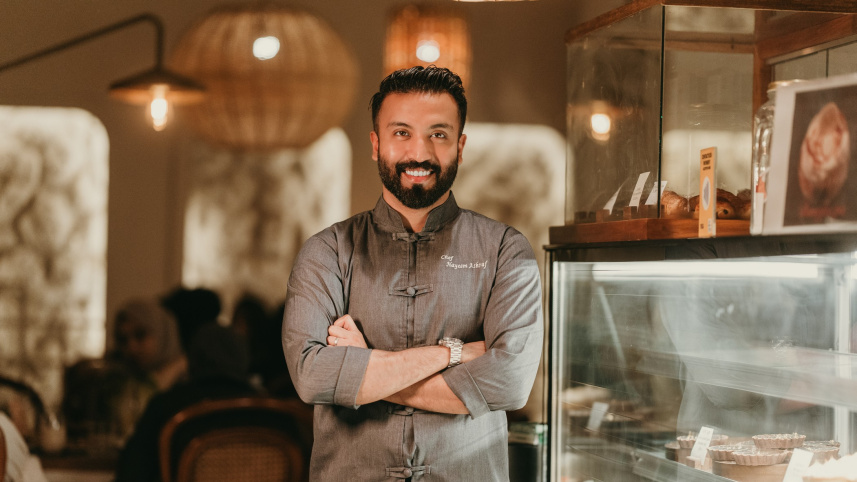
Most people do not leave a stable future to enter a kitchen. Chef Nayeem Ashraf did exactly that.
At a time when a degree from Canada usually leads to structured careers and predictable outcomes, he chose something far less defined. Not because it was glamorous, but because it felt real.

“It actually started as a part-time job,” he says. “I was working in restaurants while studying, and over time, I realised I was enjoying that more than what I was studying.”
That quiet realisation would go on to disrupt everything expected of him.
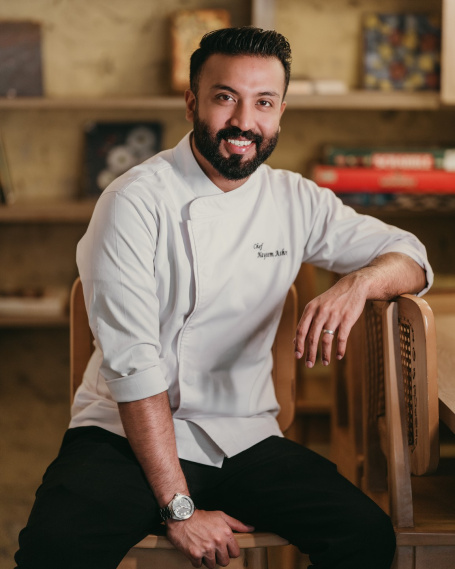
From marketing graduate to kitchen line
Ashraf completed his studies in marketing in Canada. By most standards, he had done everything right. But instead of entering the corporate world, he stayed back and continued working in kitchens.
“I had already started building experience there,” he explains. “So, after graduation, I just continued.”
When he returned to Bangladesh, the plan was different. His family expected him to join the family business. It was stable, familiar, and made sense. But it did not feel right.
“I tried, but I didn’t enjoy it,” he says simply. “My heart was in the kitchen.” That sentence, understated but firm, defined his next step.

Choosing a career that didn’t yet exist
The challenge was not just personal. It was social.
At that time, being a chef was not widely seen as a serious profession in Bangladesh. The word “cook” carried little prestige, and the idea of pursuing it after studying abroad felt like a step backwards to many.
Convincing his family took time.
“I told my father, help me this one time,” he recalls. “I’ll come back and prove that this was the right decision.” He went on to study at Le Cordon Bleu, where for the first time, he found himself fully engaged.
“In school, I was not a very good student before,” he admits. “But there, I was among the top. Because I was actually interested.” It was not just training. It was clarity.
The reality of the local industry
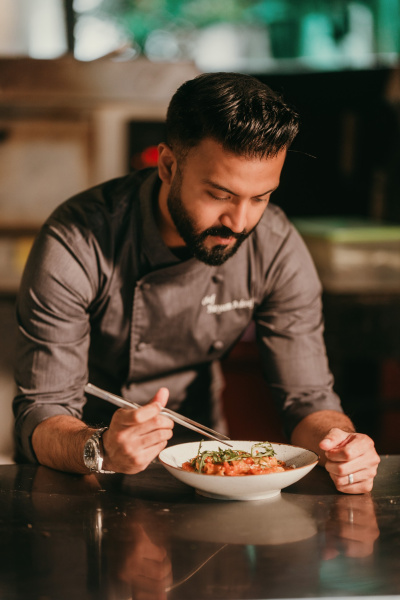
After graduating, he interned at Nobu, where he experienced a completely different kind of kitchen. “There was structure. There were systems. Everyone knew what they were doing,” he shares.
It was a professional environment where discipline and respect for craft were non-negotiable. It also showed him what the industry could look like at its best. But instead of staying, he chose to return.
“I knew that if I stayed abroad, I would just be another chef there,” he reflects. “But here, there was something to build.”
Coming back to Dhaka exposed a gap between training and practice. “I had a bit of a kitchen shock,” he admits.
 For all latest news, follow The Daily Star's Google News channel.
 Kitchens lacked structure, standardisation, and trained professionals. “Most people had learned through experience, not education. And that creates gaps,” he explains.
The working conditions were equally revealing. Long hours, low pay, and little recognition were normalised. “People were working ten to twelve hours a day, no holidays, and they didn’t even question it,” he says.
For him, the issue was not just operational. It was systemic.
Rather than stepping away, he chose to engage directly with the industry. Through his work in restaurant kitchens and later in his own ventures, he began introducing structure, consistency, and training.
His most personal expression of this approach came with the launch of his restaurant, Ciao.
Ciao was not just a business idea. It was a long-held intention shaped during his years abroad. “As a chef, it’s everyone’s dream to have their own restaurant,” he says. “I wanted a place that would reflect my personal journey.”
The restaurant focuses on Italian cuisine, but its core philosophy is rooted in discipline and simplicity. Fresh ingredients define the menu. “Everything is done fresh, day by day. We buy ingredients every morning,” he explains. Even the dough follows a strict process, fermented for seventy-two hours to achieve the desired texture.
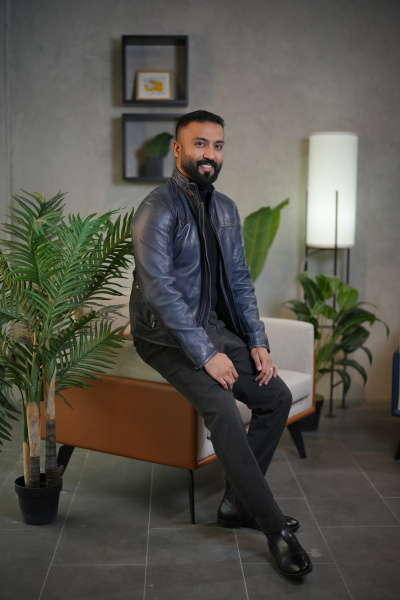
SHINEE: Creating a system that did not exist
Alongside his restaurant, Ashraf addressed what he saw as the root issue in the industry: lack of education.
In 2022, he founded the School of Hospitality Integrated Education Epicenter (SHINEE) with the aim of building trained professionals rather than informal workers.
“I didn’t want to create just cooks,” he explains. “I wanted to create chefs who understand what they’re doing.”
The school focuses on technical training, discipline, and professional awareness. Students are taught not just how to cook, but how kitchens function, how systems operate, and how to think about food critically.
“If you are educated, you understand your value,” he elaborates. “Then you can ask for better conditions and respect.”
Redefining the profession
Chef Nayeem Ashraf’s journey sits within a larger shift taking place in Bangladesh. The definition of a chef is changing from a background role to a recognised profession built on skill, education, and structure.
“People still think being a chef is just cooking,” he says. “But it’s discipline, knowledge, and management.”
His work across restaurants and education reflects that complexity. He is not only running a kitchen or teaching students. He is contributing to the formation of an industry that is still developing.
“I could have stayed abroad,” he says. “However, I felt there was more impact here.”
That decision continues to shape everything he builds.
Photo: Courtesy
Comments