


Beyond the festival stage: Identity in modern Bangladesh

Bangladesh is home to numerous communities, each with its own history, customs and ways of understanding the world. Despite this diversity, many people know little about their everyday lives, contemporary concerns or cultural contributions. Their traditions are admired from a distance, but their voices are not always heard with the same attention.


For cultural activist Tuku Talukder and designer Tenzing Chakma, preservation does not mean keeping culture trapped in the past. It means creating the conditions for it to remain visible, respected and relevant. Their reflections reveal a culture negotiating tourism, social media, changing lifestyles, disappearing languages and commercial fashion, while continuing to assert its place within contemporary Bangladesh.

Beyond songs, dances and festivals
Indigenous cultures often receive public attention during festivals such as Biju or around the International Day of the World’s Indigenous Peoples, observed on 9 August. For the rest of the year, however, their languages, foods, social practices, ecological knowledge and contemporary experiences rarely receive the same visibility.
Talukder believes this gap is partly the result of insufficient institutional support.
“There is a lack of government patronage and positive promotion,” she shares. “If there were active efforts to nurture these communities and their traditions, people would certainly know more.”
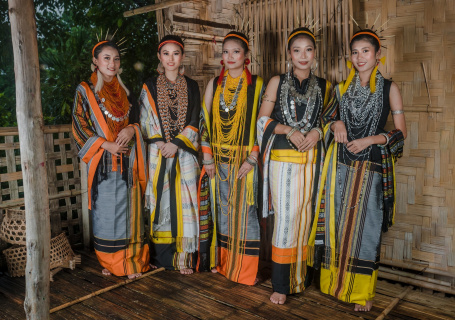
She argues that indigenous culture is too often reduced to songs, dances, and colourful performances. Although these are important forms of cultural expression, they represent only part of a much wider reality. Community structures, relationships with nature, traditional knowledge, food habits, languages and values are equally significant.
Representation becomes shallow when people are invited to perform but are not given space to explain their identities, concerns and aspirations in their own words.
“Promotion should not happen only on Indigenous Day or during festivals like Biju,” Talukder clarifies. “It needs to be year-round and inspirational.”
From embarrassment to cultural confidence
Food reveals how prejudice can gradually change.
Talukder remembers how her local dishes were once treated negatively by outsiders. Foods associated with indigenous communities were sometimes mocked because their ingredients, smells, or preparation methods were unfamiliar.
Today, visitors to the Hill Tracts are more willing to try such dishes. Young indigenous creators also use social media to talk about foods they may once have felt embarrassed to mention publicly.
“So, what if people talk?” Talukder asks. “They talk because they don’t know.”
This shift matters because cultural loss does not always begin with the disappearance of an object or practice. Sometimes it begins when people are made to feel ashamed of their own language, clothing, food or customs.
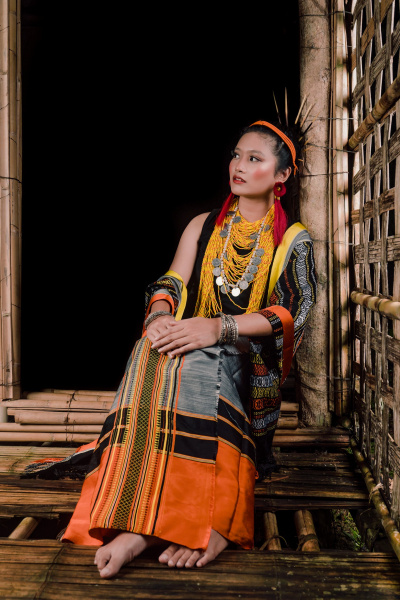
A larger culture inevitably influences a smaller one, Talukder observes. At one point, indigenous women sometimes avoided wearing the pinon because outsiders considered it unusual. Some adopted sarees in public spaces to avoid unwanted attention.
Now, the pinon is being embraced again, particularly by younger generations. Social media has helped turn what was once treated as “different” into a visible expression of pride.
However, digital visibility remains uneven. Poor mobile connectivity in many villages prevents residents from participating fully in online cultural promotion. Those living closest to traditional practices may have the least access to the platforms where these cultures are discussed.
 For all latest news, follow The Daily Star's Google News channel.
Weaving nature into identity
For designer Tenzing Chakma, indigenous textiles provide another record of cultural memory.
“The idea comes entirely from nature, from colourful nature,” he says. “Most indigenous clothing is vibrant because the concepts come from the changing colours of the seasons. The patterns are a traditional part of our identity.”
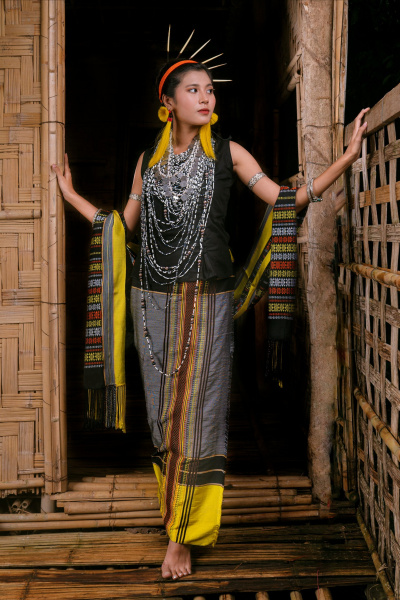
The colours and motifs of textiles such as the pinon-hadi are not merely decorative. They reflect landscapes, seasons, inherited skills and the visual language of a community.
According to Chakma, traditional textiles once relied mainly on a limited palette that included red, black, blue and yellow. Over time, the range of colours and variations expanded as lifestyles, environments and consumer preferences changed.
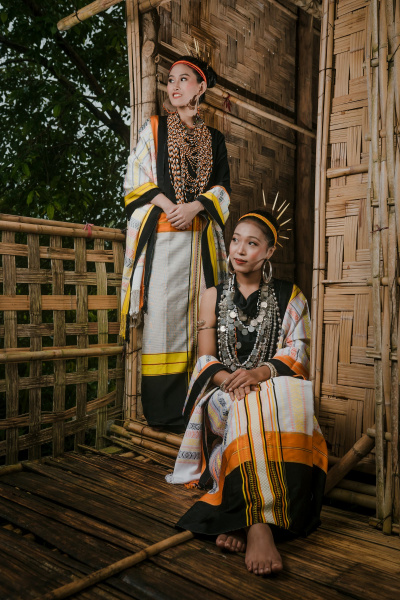
For him, this evolution does not necessarily weaken tradition. Culture can adapt while retaining its roots.
Chakma’s years of working with artisans also taught him that the value of weaving lies in its process.
“Patience!” he says. “You must have the patience to understand the craft.”
From artisans, he learned the names of different parts of the weaving process, the discipline required to produce a textile and the influence of seasons. The rainy season, for instance, can create difficulties for weaving.
He is especially interested in reviving original cotton thread produced directly from cotton plants, as well as natural dyes. Before chemical dyes became common, colours came from natural materials. Returning to those processes would be valuable, he says, though it would also be expensive and time-consuming.
Preserving a living culture
Talukder is particularly concerned about traditions and languages that are gradually disappearing. Preservation, she argues, requires accountable institutions and consistent community involvement rather than occasional cultural programmes.
Younger generations also need reasons to feel proud of their heritage. Social media can help, but digital content alone cannot preserve a language, craft or cultural practice. Families, schools, community organisations, cultural institutions and policymakers all have roles to play.
Chakma remains hopeful about the interest shown by Gen Z. Young people are wearing indigenous-inspired clothing, creating videos and presenting cultural identity with greater confidence.
His advice to them extends beyond fashion.
“Respect each other’s culture,” he says. “If we respect one another, we can learn from each other.”
That respect begins with curiosity, but it must lead to something deeper: listening to indigenous voices, learning the meanings behind traditions, crediting cultural creators and recognising communities as active participants in modern Bangladesh.
Indigenous cultures do not need to remain frozen to survive. They need space to develop without losing ownership of their stories. Their future depends not only on preservation, but on whether the wider society is prepared to understand them as living, changing and equal cultures.
Models: Bristi Dewan, Arpa Chakma, Bijoya Chakma, Trijita Khisa, Eritrina Chakma, Kochpana Chakma
Wardrobe and jewellery: Sozpodor by Tenzing Chakma
Comments