


The lantern town of HOI AN

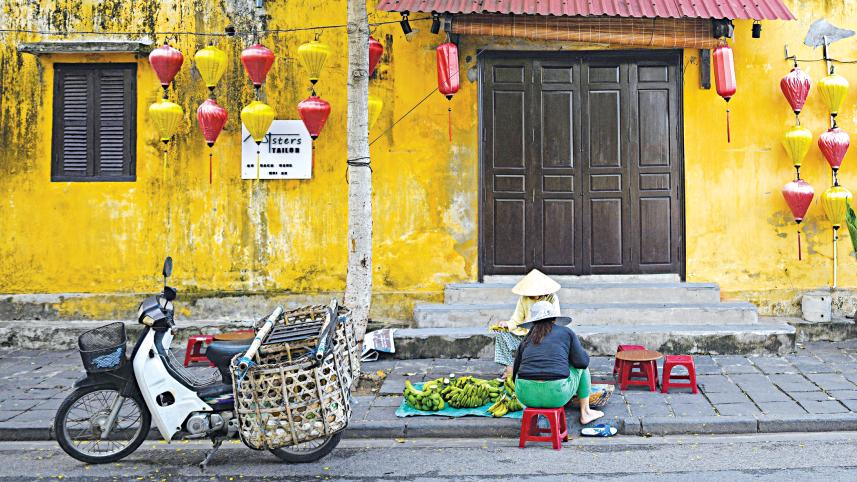
No travel experience of Vietnam would be complete without encountering the charm of Hoi An, a UNESCO World Heritage Site. Every nook and cranny of this two-thousand-year-old town felt like something out of a fairytale.
Leaving behind the bustling coastal city of Da Nang, we reached Hoi An -- just 30 kilometres away -- while there was still some daylight left. Our guide, PhiPhi, kept calling it "Hoi An Ancient Town," and as we entered it, "town" did feel like the right word -- neither rural nor urban, but balanced between the two, tranquil and inviting. In Vietnamese, Hoi An means "peaceful meeting place," a name as poetic as the town itself.

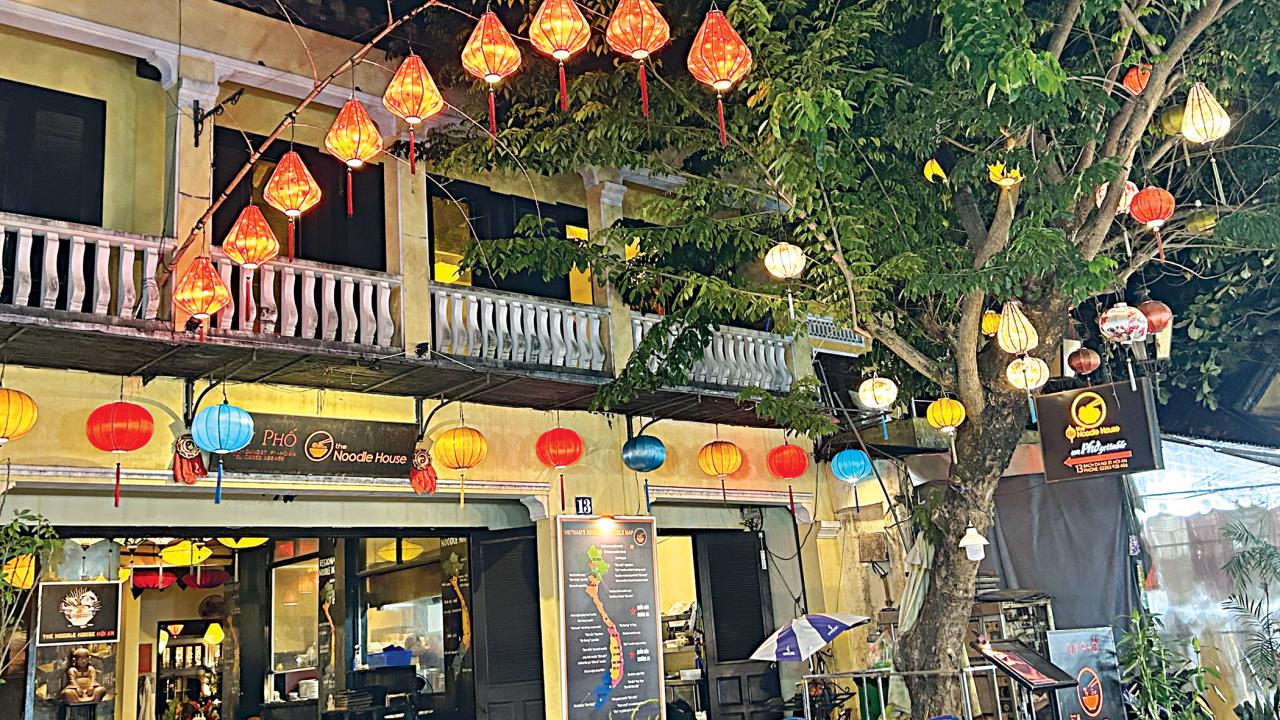
Even before the sun slipped beyond the horizon, lanterns flickered to life one by one -- strings of red, blue, yellow, and green lights illuminating the town like scattered jewels.
PhiPhi had arranged dinner for our group, who had all travelled together from Da Nang by bus. Although the sun had just set, an early dinner before exploring did not seem like a bad idea. Through a maze of lantern-lit alleyways, PhiPhi led us to a restaurant where steaming dishes had already been laid out, and the rich aromas stirred our appetites. The wide array of dishes felt overwhelming at first, but our curiosity soon took over, and we couldn't resist tasting a little of everything from Vietnam's celebrated cuisine.
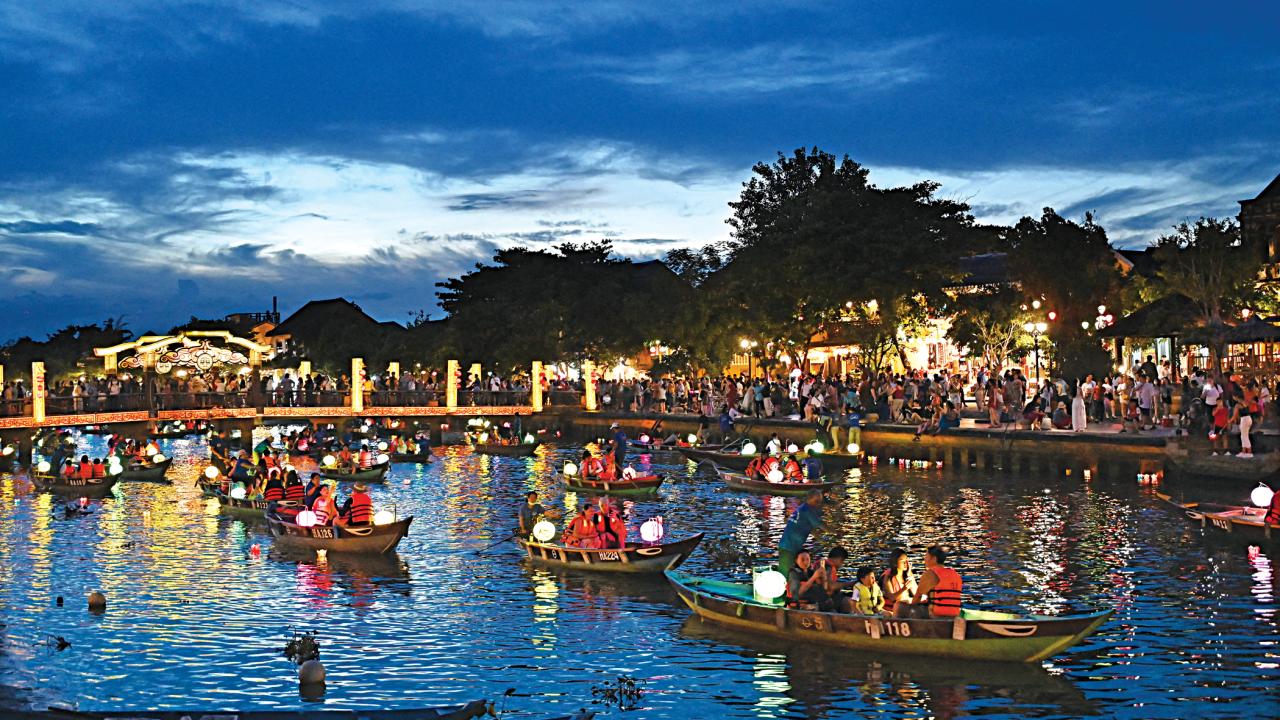
After dinner, the group dispersed to explore on their own. My daughter and I wandered until we reached a river glinting under lantern light. The sight was mesmerising. Boats swayed gently, their lights reflecting across the water.
The Thu Bon river flows through central Vietnam, and its branch, the Hoai river, runs through the heart of Hoi An. Hoai means "remembrance," a fitting name for a river that once sustained the first fishing settlements here. Over centuries, the Hoai witnessed the rise and fall of traders who made Hoi An one of Southeast Asia's busiest ports.
As we approached the pier, it was hard to tell whether the lanterns outnumbered the boats or the other way around. After a brief round of bargaining, we climbed into one of the small boats -- each carrying no more than five or six passengers. The motor hummed to life, and we glided across the river, passing through other boats and watching the quiet rhythm of life unfolding along the water's edge.
Farther along, a glowing sign caught our eye: "Hoi An Memory Land," an islet clearly built for tourists. Yet it felt charmingly authentic and mindful of its environment.
Halfway through the ride, the boatman invited us to join a local ritual: lighting a candle in a paper boat and setting it afloat. All around us, others were doing the same -- sending their wishes gliding down the river with tiny flickering flames. My daughter and I each set our own paper boat adrift, watching it join hundreds of others bejewelling the water. It was a sight to remember and a memory to hold close.
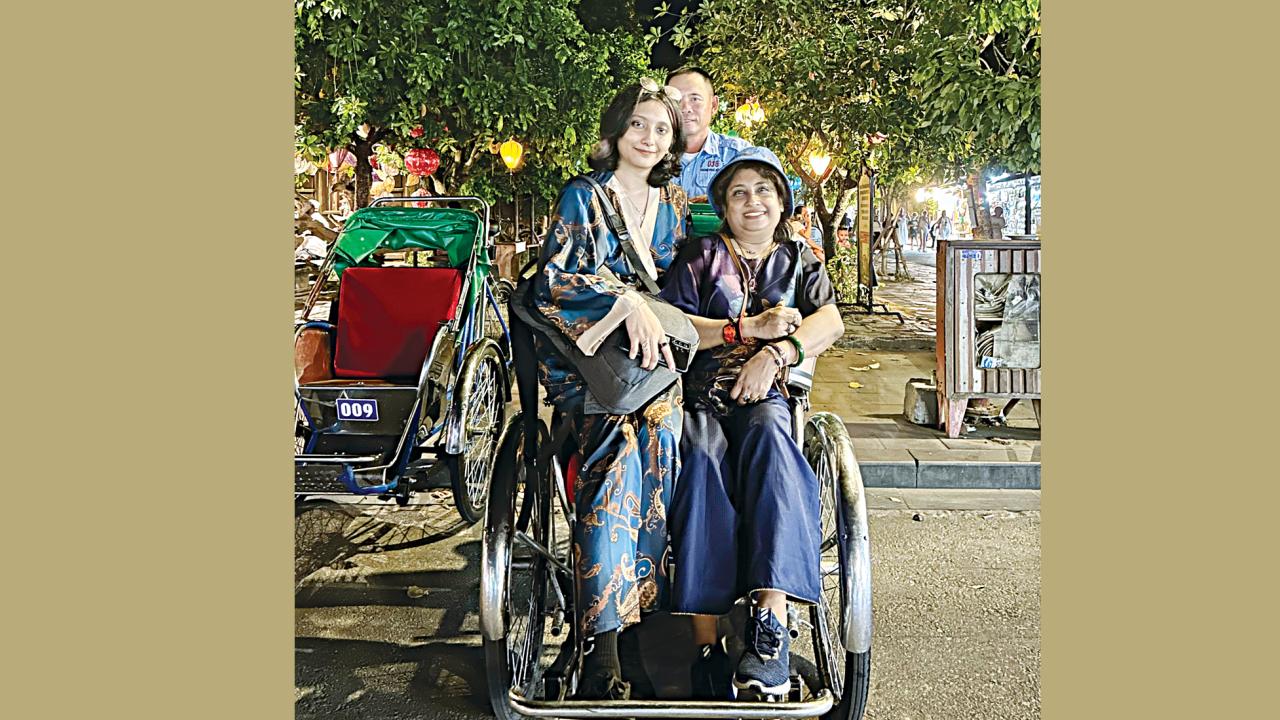
When we returned to shore, the town felt more alive. We walked for a while and soon found cyclos -- Vietnam's distinctive rickshaws. Unlike back home, the riders here pedal from behind the passengers. After a quick negotiation, we climbed in, and our rider carried us slowly through the narrow streets, weaving past bustling shops and bargaining tourists. Yet, even amid all the motion and noise, the Ancient Town somehow held on to its quiet, enchanting charm.
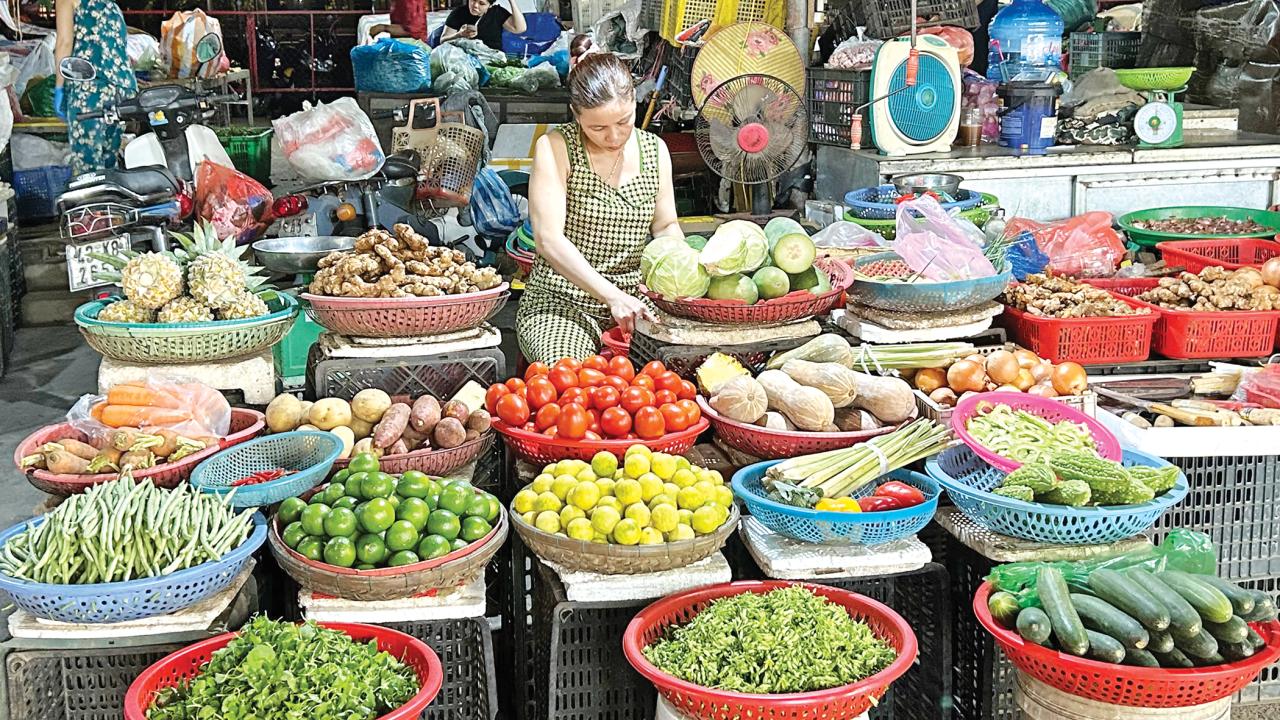
Hoi An at night felt timeless. Stores overflowed with silk lanterns, embroidered clothes, and wooden carvings, while vendors on vans sold souvenirs and small crafts that captured everyday Vietnamese life. Some of the most iconic images of Vietnam -- cyclos and people wearing nón lá, the conical hats that shielded them from the sun -- appeared everywhere, from trinkets on vans to shops and galleries across the country. Between the souvenir stalls, tiny markets offered fresh fruits and vegetables, and the air was filled with the rich aroma of roasted coffee beans from nearby cafés.
But even as the city seemed like something out of a fairytale, one cannot help but notice the effort of its modest residents. Hoi An thrives on the labour of its 150,000 people, whose livelihoods revolved around the tourism industry. Their clothes were not drab, but plain and modest -- much like the quiet, hardworking way they lived.
When our cyclo ride ended, we continued on foot. By then, the town's transformation was complete -- every lantern glowing, the air humming with life. Hoi An felt like a world from Thakumar Jhuli, the old Bengali tales where kingdoms awaken under moonlight.
The town's history was visible at every turn. Once home to the Cham people who migrated from Java, Indonesia, Hoi An later became a trading hub under their rule. The Chams followed Hinduism, and by the 10th century, Arab traders had introduced Islam to the region. In 1471, the Vietnamese assumed control, and for the next few centuries, merchants from Japan, China, and Europe sailed here to trade silk, spices, and ceramics. Europeans called it "Faifo," while the Chinese and Japanese often regarded it as a second home. The influence of these cultures is still palpable in the wooden architecture, tiled roofs, and vibrant culture that permeate the town, located in Vietnam's Quang Nam province.
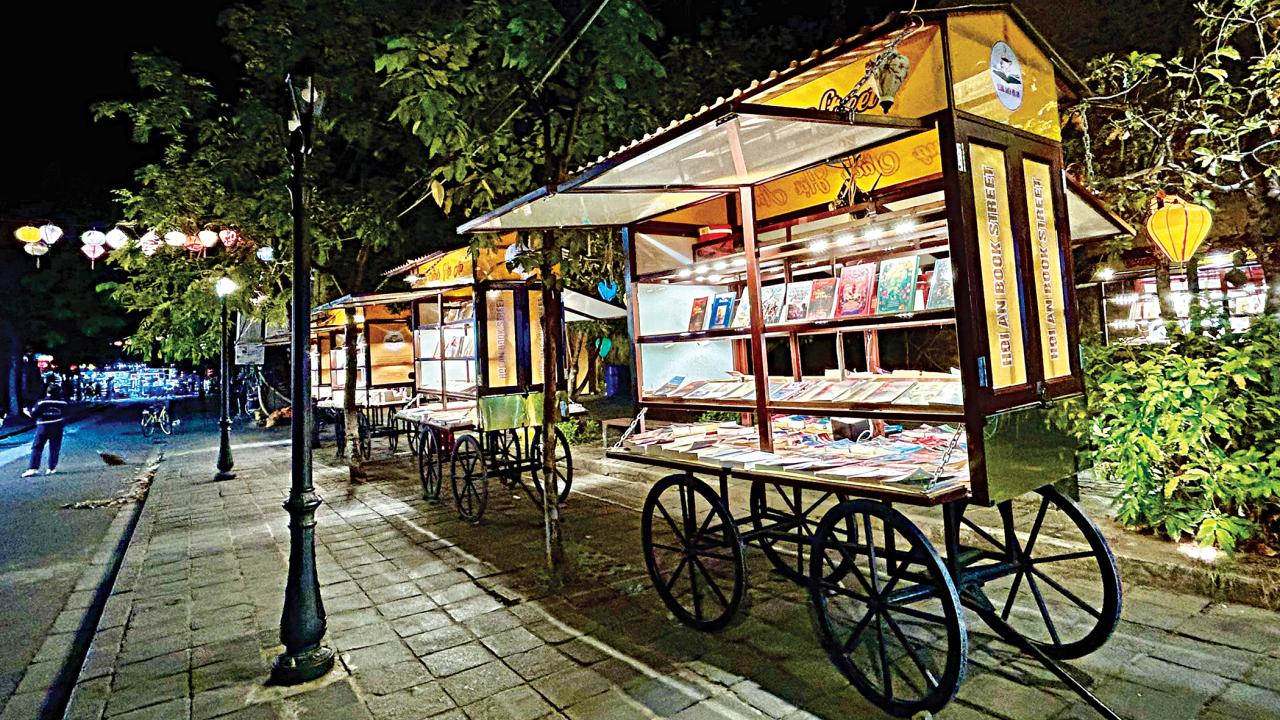
As we wandered from one alleyway to the next, people milled in and out of ancient buildings that had been repurposed into shops and homes. Cafés serving the famous Vietnamese egg and salt coffees, along with restaurants and souvenir shops, lined the alleyways; the chatter of buyers, sellers, and bargainers continued well into the night. We stumbled upon a few vans stocked with shelves of books, inviting passersby to browse, pick one up, or read if they wished -- though no vendors were in sight.
 For all latest news, follow The Daily Star's Google News channel.
Strolling through streets lined with homes from a bygone era, with large windows, bougainvillaea shrubs, and no house taller than a storey or two, it was impossible not to feel nostalgic. Of course, silk and paper lanterns of every colour and design adorned each house, flickering even through the branches of trees. Yet what truly delighted us were the yellow-walled houses scattered across town. These homes brightened the golden-hued alleys and also served a practical purpose--the yellow paint absorbed less heat, keeping interiors cool in Vietnam's tropical weather. The colour also symbolises joy, prosperity, and luck in Vietnamese culture. As we gazed at these striking houses, we couldn't help but think of Vincent van Gogh's The Yellow House.
The town's ancient houses, temples, and streets have been zealously preserved by its strict laws. Rather than wreaking havoc on the past in the name of development and progress, Hoi An has chosen to weave history and tradition into its residents' everyday lives. It offers not just a glimpse into a stiller and less deafening world, but also a rare reprieve from the chaos of modern life.
By the time we returned to our hotel, the town was still aglow. The river shimmered with drifting candles, and the air felt touched by magic. Hoi An, the "peaceful meeting place," had kept its promise -- a meeting not just of people and cultures, but of memory and light.
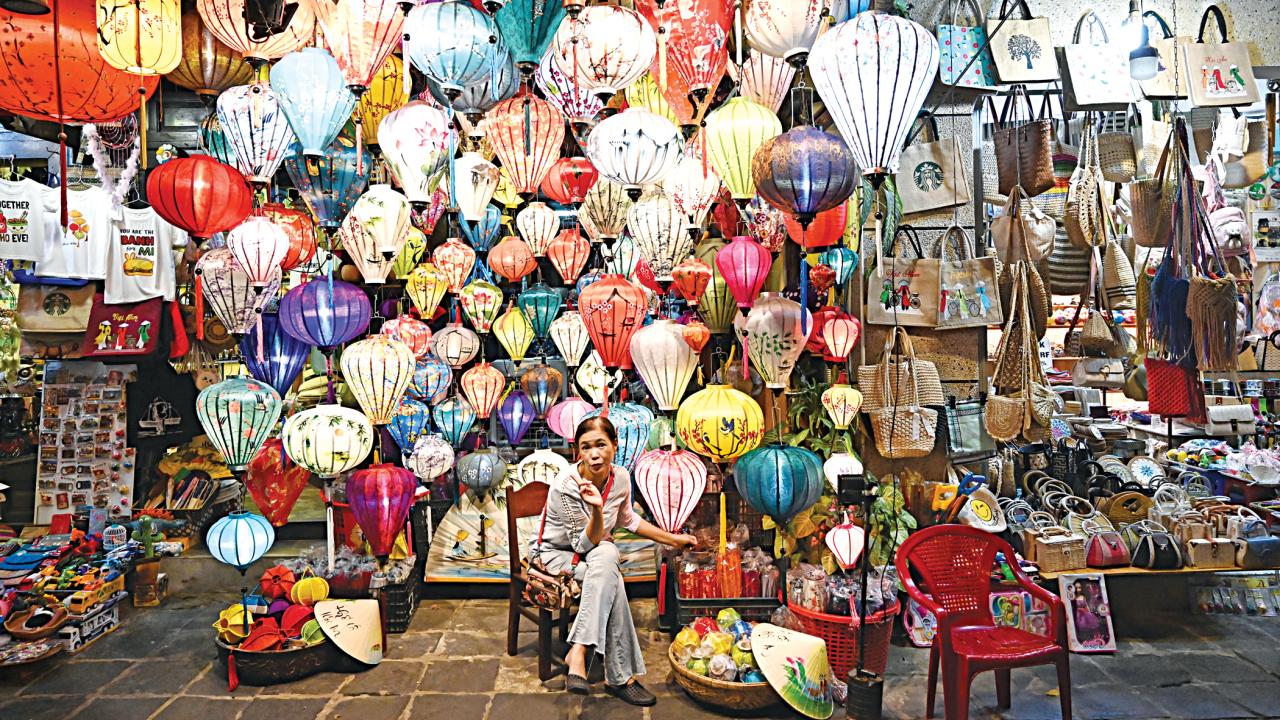
Photo: AFP, Khama Mahmud
Comments