


Measles vaccine still unknown in some pockets of Sylhet

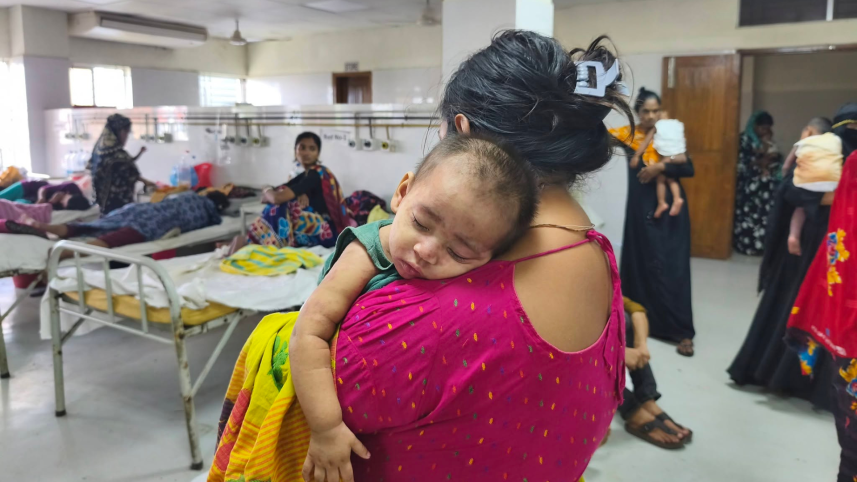
Children from marginalised communities, including tea garden workers, nomadic Bede families and residents of remote haor areas, account for a significant share of unvaccinated measles patients in Sylhet division. Limited access to vaccination and a lack of awareness have left many of them vulnerable to the disease.
Dr MA Haque, a specialist in neonatal, paediatric and adolescent medicine at Moulvibazar Sadar Hospital, said more than 60 percent of admitted patients were children under five, and more than 60 percent of those children were unvaccinated.

He said patient histories showed that many of the unvaccinated children came from tea gardens, haor areas, Bede settlements and other disadvantaged communities.
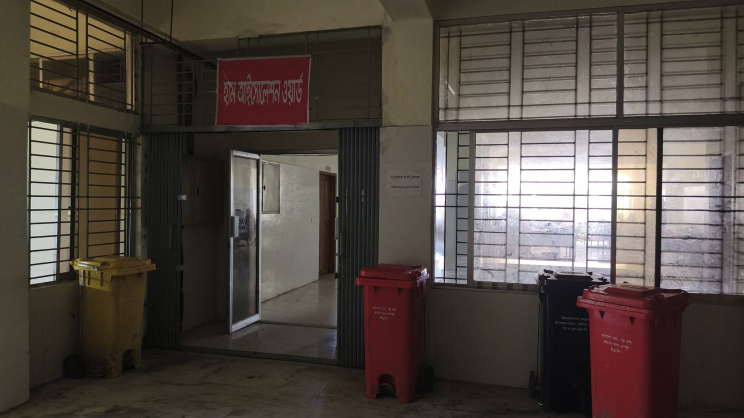
This correspondent spoke to at least 20 patients and their relatives from these communities yesterday at the hospital’s measles isolation ward. Only four of the children had received the measles vaccine, while some parents said they had not even known their children needed to be immunised.
For families who move from place to place, reaching vaccination services can be difficult. For others, even when services are available, information about them does not always reach their homes.
Champa Akter, a member of the Bede community in Chandnighat of Moulvibazar municipality, said her three-year-old child had never been vaccinated because they had received no information about the vaccine.
“We do not live permanently in one place. Our profession requires us to travel constantly. No one ever approached us to inform us that our children needed the measles vaccine,” she said.
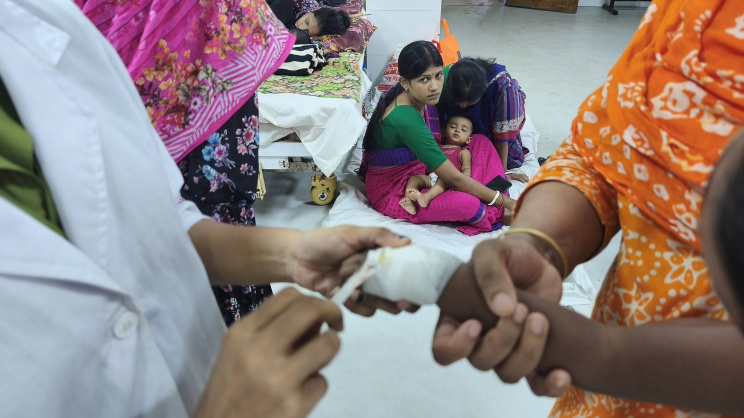
For Binoy Baidya, who lives in Karimpur Tea Garden in Rajnagar upazila, distance was another barrier. He said his nine-month-old son had missed vaccination because their home was at the far end of the garden, where announcements about immunisation rarely reached.
Dilip Namasudra of Ontehori, a remote haor area in the same upazila, said vaccinators did not visit their locality regularly.
Meanwhile, Puja Sarkar of Sarkar Bazar said her 11-month-old son remained unvaccinated after a doctor advised against vaccination, citing his physical weakness.
Health officials, however, said lack of awareness among parents also remained a major reason children from marginalised communities missed vaccinations.
Abdur Rahman, an Expanded Programme on Immunisation (EPI) inspector in Moulvibazar, said parental negligence was also a major reason children from marginalised communities missed vaccinations.
He said vaccination centres and schedules had been designated for every ward and residents were informed about them, but many parents still failed to take their children for vaccination.
He added that health workers were responsible for ensuring vaccination coverage in tea gardens, haor areas and Bede settlements. Complaints about failures to inform residents or provide vaccination would be investigated, he said.
Dr Haque also called for area-specific awareness campaigns, including through mosques and temples, to improve vaccination coverage and prevent further transmission.
The pressure on the hospital is also increasing as more patients seek treatment.
Dr Pronoy Kanti Das, superintendent of the 250-bed hospital, said the facility was struggling to provide care as patient admissions exceeded its capacity.
Dr Mohammad Noore Alam Shamim, assistant director (Disease Control), Office of the Director (Health), Sylhet, said, “We have recently visited the Dharmapasha and Tahirpur areas of Sunamganj, and today even went to Sylhet Shamsuddin Hospital; there, too, we found people from marginalised communities who have not received the vaccine.
We are working in these areas. Under the newly launched vaccination drive, no one will be left out -- there is simply no scope for anyone to be excluded. Even if some missed out in the past, this time everyone must come under the vaccination coverage; there will be no room for anyone to be left behind.”
He added that 1,069 suspected or confirmed measles cases had been reported in Sylhet division since January 1.
 For all latest news, follow The Daily Star's Google News channel.
 As of today, 563 patients were hospitalised in Sylhet division and 179 deaths had been recorded, including 169 suspected and 10 confirmed cases. In the past 24 hours, 16 new confirmed cases and one death were reported.
Comments