


Jehad, symbol of a movement
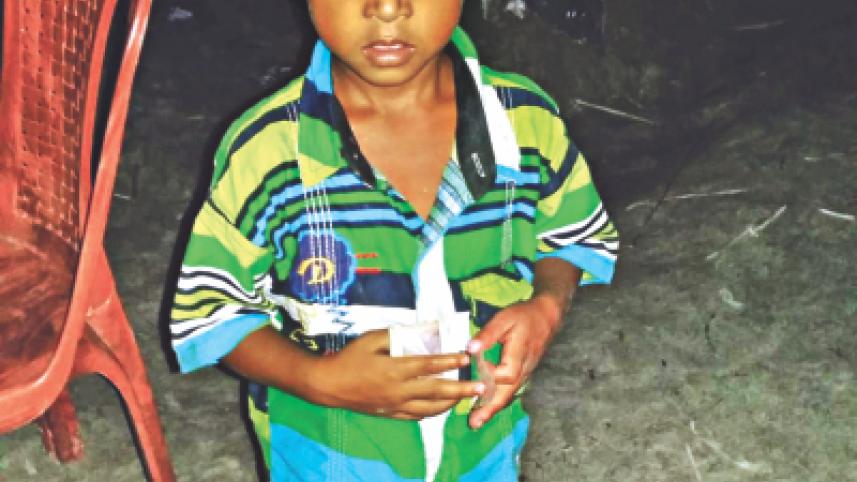
The events of March 24, 2011 are still vivid in Shahjahan Sheikh's mind.
It was a day when he had learnt that a national identity card is more important than a human's life and that life in an enclave means living like a nonentity.

However, it was also the day when his son, Jehad, was born. To the enclave dwellers, Jehad's birth has come to symbolise the beginning of a movement that sought to realise their rights.
He was a resident of Madhya Mashaldanga, a Bangladeshi enclave, in Dinhata sub-division of Cooch Behar, where about 5,000 Bangladeshis lived.
The eventful day began with his wife Asma Bibi, 25, going into labour pains in the morning.
But their neighbourhood, like all the others in the enclave, had no healthcare service whatsoever: no hospital, no doctor and not even a pharmacy.
Shahjahan immediately informed his neighbours of the matter and some youths offered help instantly. They put Asma on a rickshaw-van and took her to Dinhata Sub-divisional Hospital, some 13 km away from the enclave.
But to Shahjahan's dismay, the hospital staffs refused to admit Asma, who was screaming in pain out on the van, as she was a resident of a Bangladesh enclave inside India with no ID.
Upset by the hospital authority's behaviour, Shahjahan and those accompanying him pleaded with the doctors to ignore the formalities about a patient's residence and to treat a pregnant woman whose life was in danger.
They even declared that they would not object if they were arrested on charge of intrusion. But Asma should be admitted, they insisted.
When the hospital super arrived, he too repeated that Asma could not be admitted without an ID.
This triggered a protest among the enclave dwellers. Many inhabitants of the enclave had joined Shahjahan by then, threatening to stage a huge demonstration in which all the 14,000 enclave dwellers would take part.
They stuck to their guns saying Asma should be admitted even if they were to go to jail en masse.
The leaders of India-Bangladesh Enclaves Exchange Coordination Committee informed the district magistrate and the police super of Cooch Behar of the matter.
As the news of their threat to hold demonstrations surfaced in media, the authorities of State General Hospital were forced to admit Asma. She gave birth to a baby boy on the night of March 24. The boy was named ''Jehad'' as a symbol of the first movement launched by the enclave people.
So that was also the day when Shahjahan learnt about the power of people who come together for a just cause.
Jehad is four years old now but he has not got his birth certificate yet.
"We have not anticipated that our emancipation would come so quickly," said Shahjahan.
Shahjahan and Asma took their son to a programme held yesterday night marking the functional exchange of the Bangladesh-India enclaves. The programme began with a brief history of Jehad's birth and how it initiated a movement.
Five residents of Bangladesh enclave, who were arrested and served in jails in connection with the demonstration demanding Asma's admission four years ago, were also present at the programme. India-Bangladesh Enclaves Exchange Coordination Committee organised it.
 For all latest news, follow The Daily Star's Google News channel.
 "The enclave people are peaceniks. The problems and deprivations that the people have had for the last 68 years will be over now," said Diptiman Sengupta, joint secretary of the committee.
Comments