


Film production continues across Middle East despite war
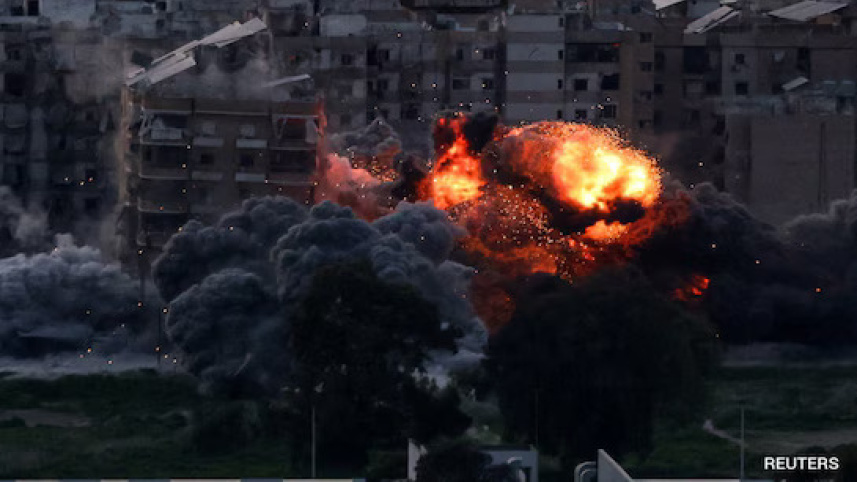
Film and television production across the Middle East is continuing despite the ongoing Iran war, with regional studios saying the conflict has complicated logistics but not brought filming to a halt.
Producers across Israel, Jordan, the United Arab Emirates and Saudi Arabia say security concerns, missile attacks and restricted airspace have created challenges. Yet, they insist that most shoots are moving ahead, adapting to the volatile situation.

“We just keep filming in between the [air raid] sirens,” an Israeli television producer, who spoke anonymously, told The Hollywood Reporter as the conflict entered its second week.
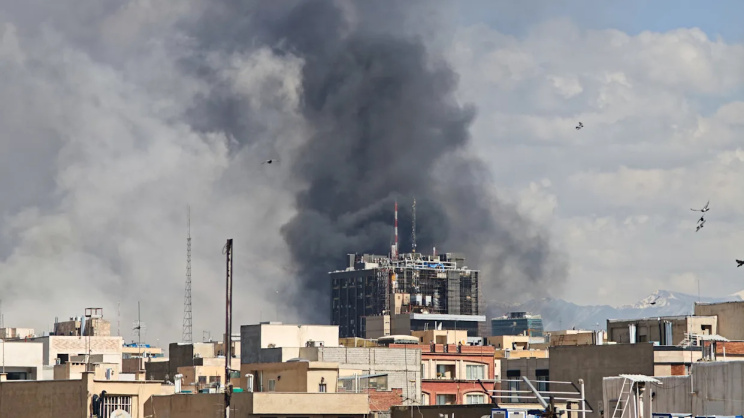
In Israel, broadcaster Keshet briefly shifted to continuous news coverage following the February 28 killing of Iran’s supreme leader Ali Khamenei — an event widely seen as the immediate trigger of the war. However, the network soon began restoring its entertainment lineup.
By March 2, Keshet had aired the season finale of the comedy panel show “Mo’adon Layla” (“Night Club”) and recorded a special episode of the sketch programme “Eretz Nehederet” (“What a Wonderful Country”). The show was filmed without a studio audience due to security restrictions.
Across the region, production hubs report that while the conflict has complicated operations, filming schedules largely remain intact.
“This is not the first war around us,” said Jumana Sharbin, general manager of Olivewood Film Studios in Jordan. The studio has previously hosted international productions including “Dune: Part Two” (2024) and “John Wick: Chapter 4” (2023).
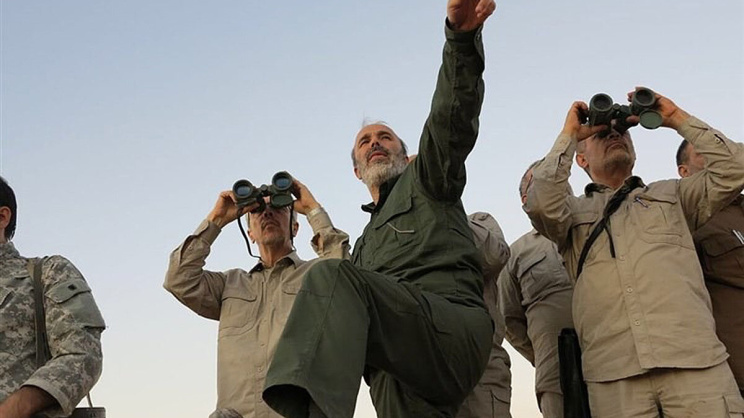
Sharbin noted that Jordan had remained stable during earlier regional conflicts, including wars in Iraq, Syria and Lebanon, as well as the crisis in Gaza. During those periods, she said, international productions continued without major disruptions.
According to Sharbin, several projects are currently underway at Olivewood, including a local drama, the Korean series “Kingdom of Women”, and another regional television production.
The United Arab Emirates also reports stable production activity.
“From an industry perspective, the UAE continues to operate in a stable and organised way,” a spokesperson for Central Films in Abu Dhabi told The Hollywood Reporter. “The public — including the film community — feels safe and confident being here.”
Saudi Arabia has experienced a similar situation. Studios there say the war has had limited impact on the industry so far.
Film AlUla, the film commission for the kingdom’s northwestern region, said the conflict has not affected its operations because no productions are currently shooting there. The most recent project — Mackenzie Munro’s young-adult romance “Chasing Red” — wrapped filming several weeks earlier.
Despite regional tensions — including a March 3 drone strike that struck the US Embassy in Riyadh — daily life across Saudi Arabia has continued largely uninterrupted. Cinemas, cafes and restaurants remain open, operating on Ramadan schedules and often staying open until 3am or later.
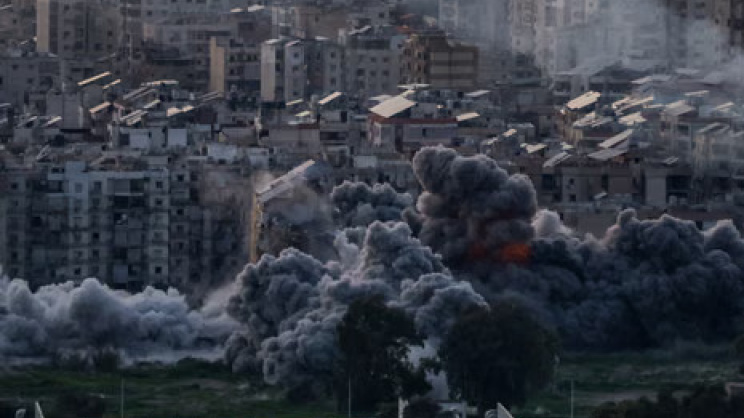
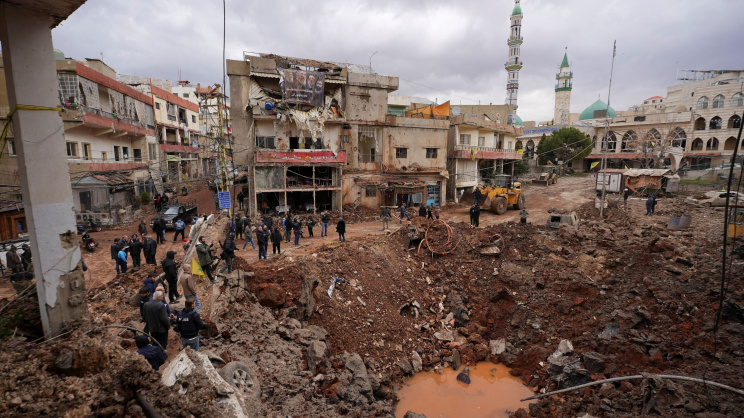
The conflict entered its ninth day on Monday, with continued military exchanges across the region. Israel reported new strikes targeting central Iran and Beirut, while Iran’s Revolutionary Guard announced additional missile launches.
Governments across the Gulf also reported Iranian drone activity in Bahrain, Qatar, the United Arab Emirates and Kuwait.
For the film industry, the biggest disruption has been to international air travel — a crucial component of cross-border productions.
A March 9 briefing by aviation risk group Opsgroup said the UAE and Qatar had resumed limited flights, but “large parts of Middle East airspace remain closed.” The advisory followed missile and drone attacks across the region, including a March 7 strike that briefly halted operations at Dubai International Airport.
Kuwait also reported that an attack had struck fuel storage tanks at its international airport over the weekend.
The uncertainty has led some international producers to pause planned shoots in the region.
 For all latest news, follow The Daily Star's Google News channel.
 “Companies have understandably paused while they assess the broader regional situation,” a Central Films spokesperson said.
Industry observers say the coming weeks will be critical as international studios, insurers and financiers evaluate the risks of filming in the Middle East.
For many within the region’s film community, however, the crisis extends beyond logistics and production schedules.
“At this moment of deep suffering and uncertainty across the Middle East, our first response must be human,” said Dana Blankstein Cohen, executive director of the Sam Spiegel Film and Television School in Jerusalem.
Cohen noted that students and faculty at the institution are grappling with displacement, anxiety and instability while continuing to engage creatively with the reality around them.
She added that the school is expanding initiatives to support storytelling in Arabic led by Palestinian filmmakers and will present eight new projects later this month through its Series Lab.
“In moments like these, the role of artists is not only to witness reality but to defend our shared humanity through stories,” Cohen said. “Peace is not something we can simply wait for. It is something we must actively pursue and create together.”
Comments