


Pahela Baishakh Alpona: When Dhaka turns into a canvas
Now that the hullabaloo of Pahela Baishakh is over, the festival colours have yet to fade. The sprawling asphalt streets of Dhaka became a canvas for residents, when the age-old Baishakh alpona painting took place. This Pahela Baishakh 2026, decorative street painting took centre stage and, for once, stole a bigger spotlight than the parade.
I say this because in Uttara Sector 5, the green lane beside the lake -- a sanctuary for birds and a favourite walkway for morning strollers -- was painted with a decorative stretch of white alpona. It was a first in my 23 years of living in this suburban township.

Folk floor art, or alpona, is a decorative tradition created on the ground using rice paste, chalk, coloured powders, and paint, mostly during cultural festivals. My first encounter with alpona was at my uncle’s wedding in the late seventies. It had to be painted at night because the red stone staircase and courtyard were always busy during the day.
To cut the story short, my association with alpona drawing is inseparable from cousins, music, food, fun, and laughter in the dead of night. To relive that joy, I always make it a point to attend street alpona events.
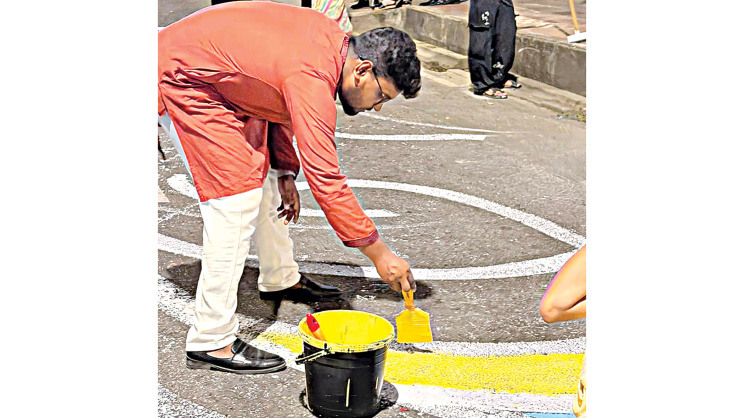
In modern urban celebrations like Pahela Baishakh, alpona has expanded from courtyards and homes to entire streets, where artists and community members paint intricate designs overnight, turning roads into vast canvases. Dhaka’s streets come alive with this traditional Bengal art form -- a temporary, ornamental painting that transforms public spaces through colour, motifs, and symbolism.
Manik Miah Avenue, the sidewalk beside the Fine Art Institute at Dhaka University, and more recently Gulshan, Banani Road 11, and Uttara have all joined the list. Here, alpona is considered both art and ritual, embodying joy, unity, and tradition while creating a festive atmosphere that draws crowds together and turns the city into a living canvas of heritage.
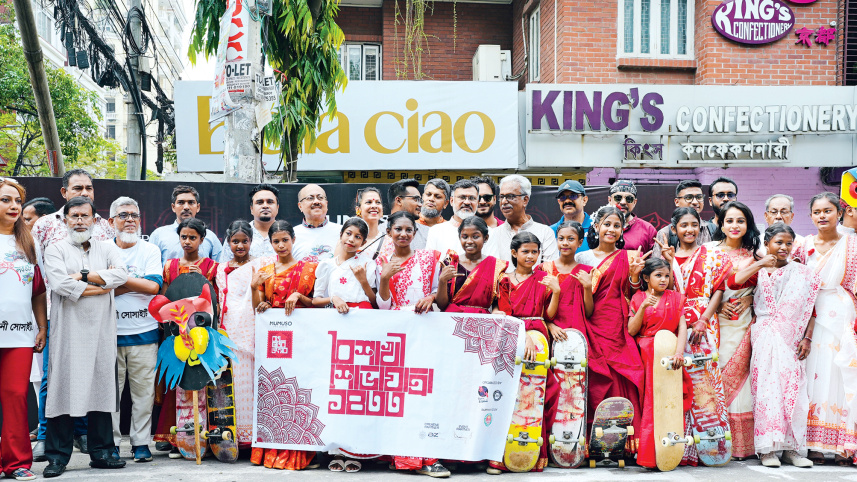
Nowhere was this more vivid than Banani Road 11, where the cultural celebration Rong Dhonger Utshob 1433 unfolded overnight. Organised by Together for Bangladesh and the Banani Society, the event transformed the road into a sprawling mural of intricate alpona patterns, painted by artists, volunteers, and residents who gathered under the night sky. The atmosphere was electric -- filled with laughter, music, and the aroma of traditional food stalls -- creating a communal spirit that carried into the dawn, as Faisal Ahmed Bhubon, a system engineer at Amber IT, described.
The word “alpona” in Bangladesh carries a broader cultural meaning -- it is tied to community celebration, artistic expression, and national identity. During the Bengali New Year, streets in Dhaka are transformed into vast alpona canvases, where geometric motifs, lotus flowers, fish, birds, and folk symbols are painted to welcome prosperity and joy.
My cousin brought along her expatriate colleague, newly posted in Dhaka, and her first Pahela Baishakh experience was jaw-droppingly awesome. Yet, we struggled to explain the finer nuances and full cultural depth of an alpona painting event in English.
Alpona is best left untranslated in cultural contexts, because it embodies a uniquely Bengali tradition that goes beyond mere decoration -- it is a living art form of community and festivity.
At Rong Dhonger Utshob 1433 in Banani 11, creativity and spontaneous public participation made alpona painting the centrepiece. And just as the sun rose to a new dawn, the Bangladesh Street Kids Aid Group performed skateboarding across the alpona-covered street, blending youthful energy with cultural artistry.
The presence of the DNCC administrator and the presidents of Banani Society, Gulshan Society, and other dignitaries in these mass celebrations reinforced the message of culture, creativity, and social harmony in urban life, connecting younger generations to their cultural roots.
This year’s alpona celebrations across Dhaka -- from Shahbagh to Banani, Gulshan -- were more than just decorative art; they were a collective expression of identity and resilience. The night-long festivity, blending paintbrushes, performances, and community spirit, reaffirmed Pahela Baishakh as the cultural heartbeat of the city, where tradition and modernity meet on the streets in vibrant colour.
And until the colours fade, the festivity remains in the heart, reminding you of the red strokes you once painted at the turn of the road.
 For all latest news, follow The Daily Star's Google News channel.
Comments